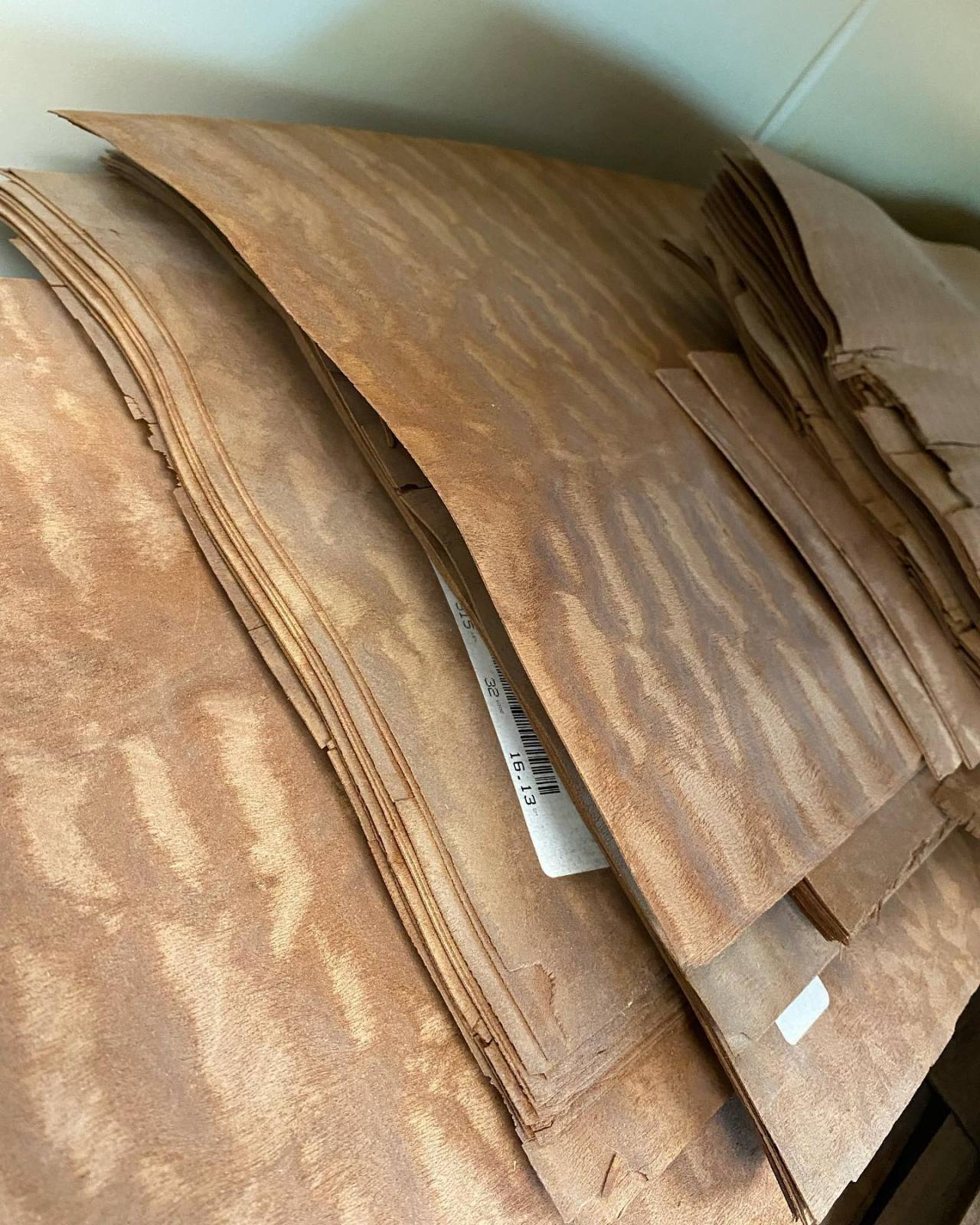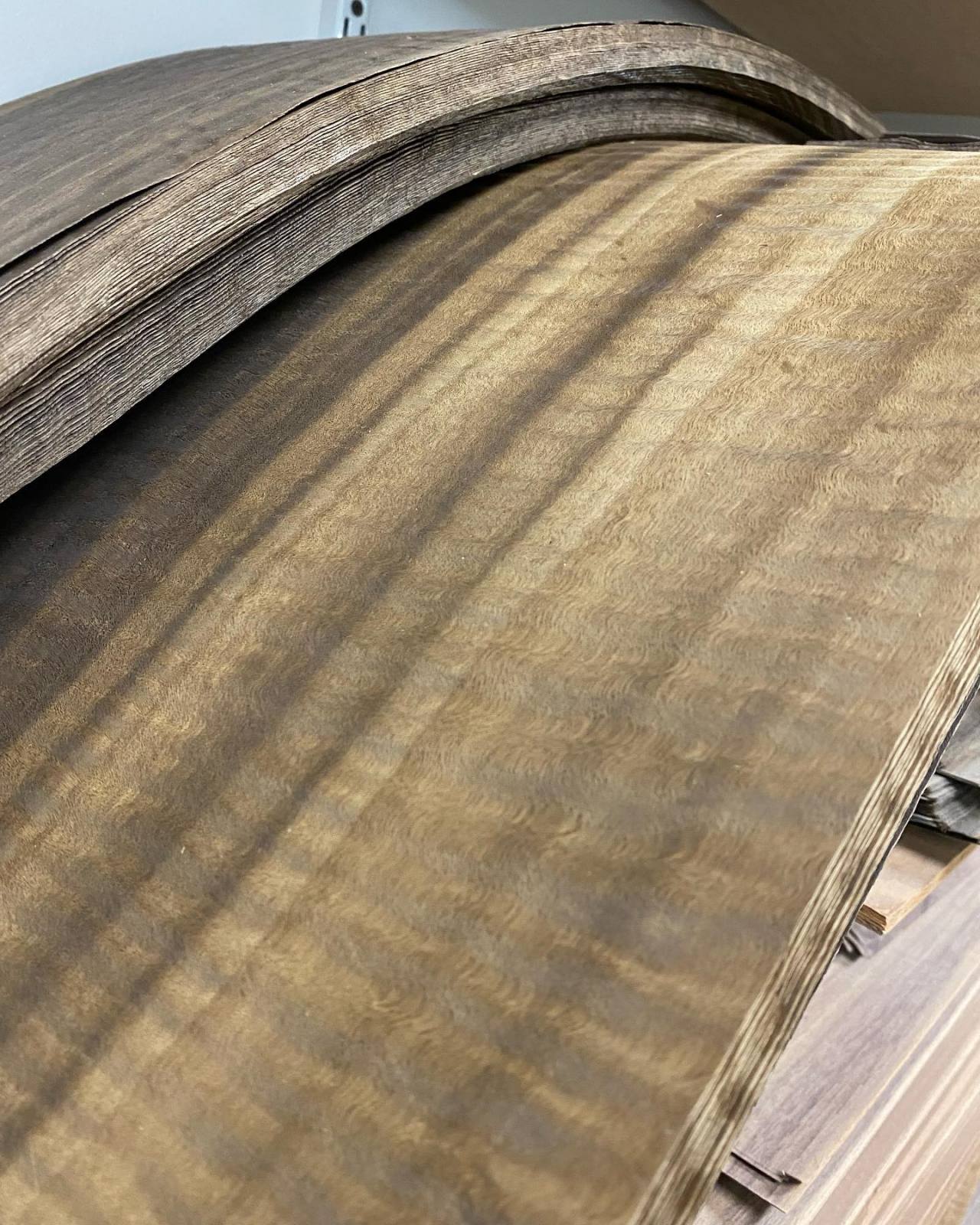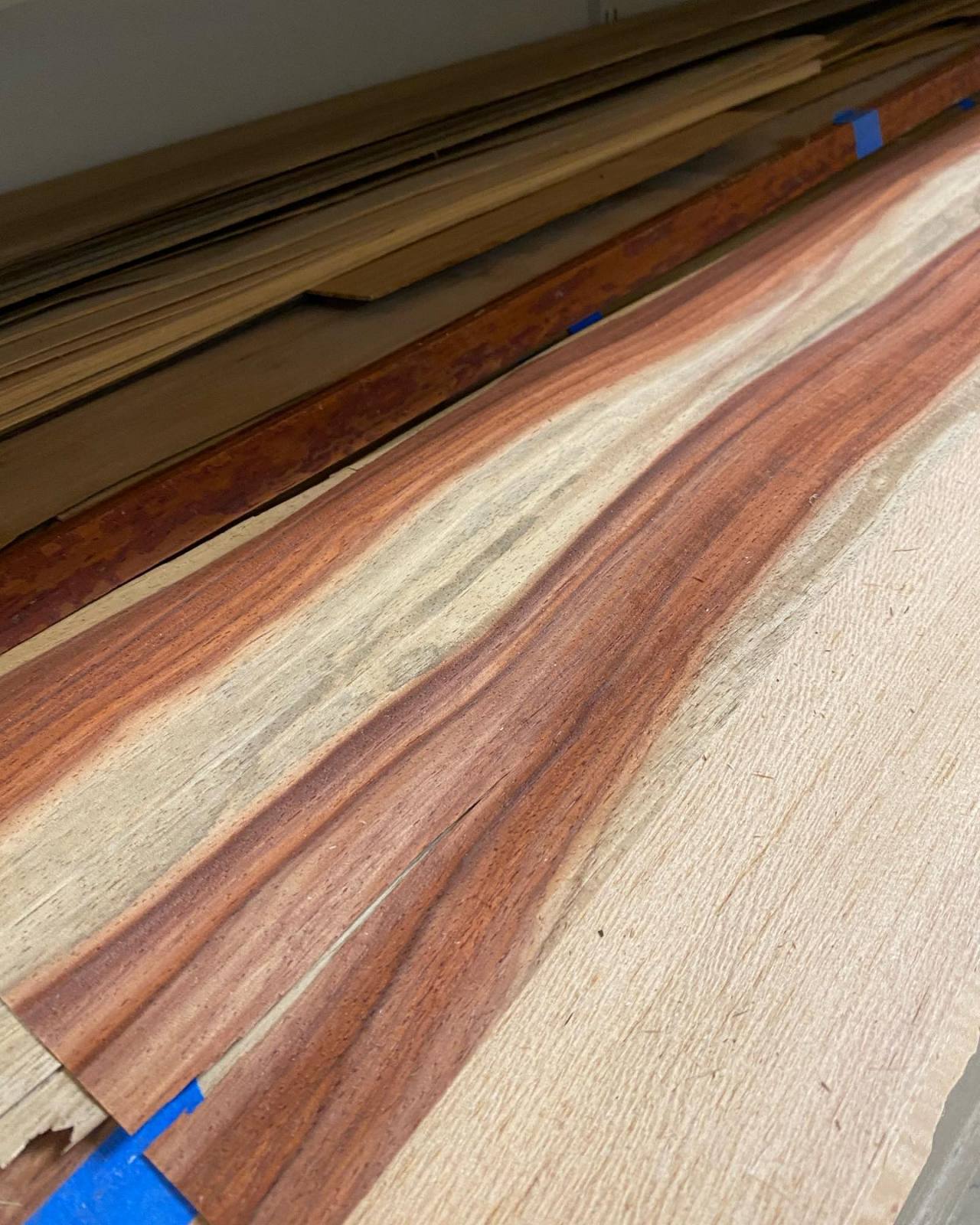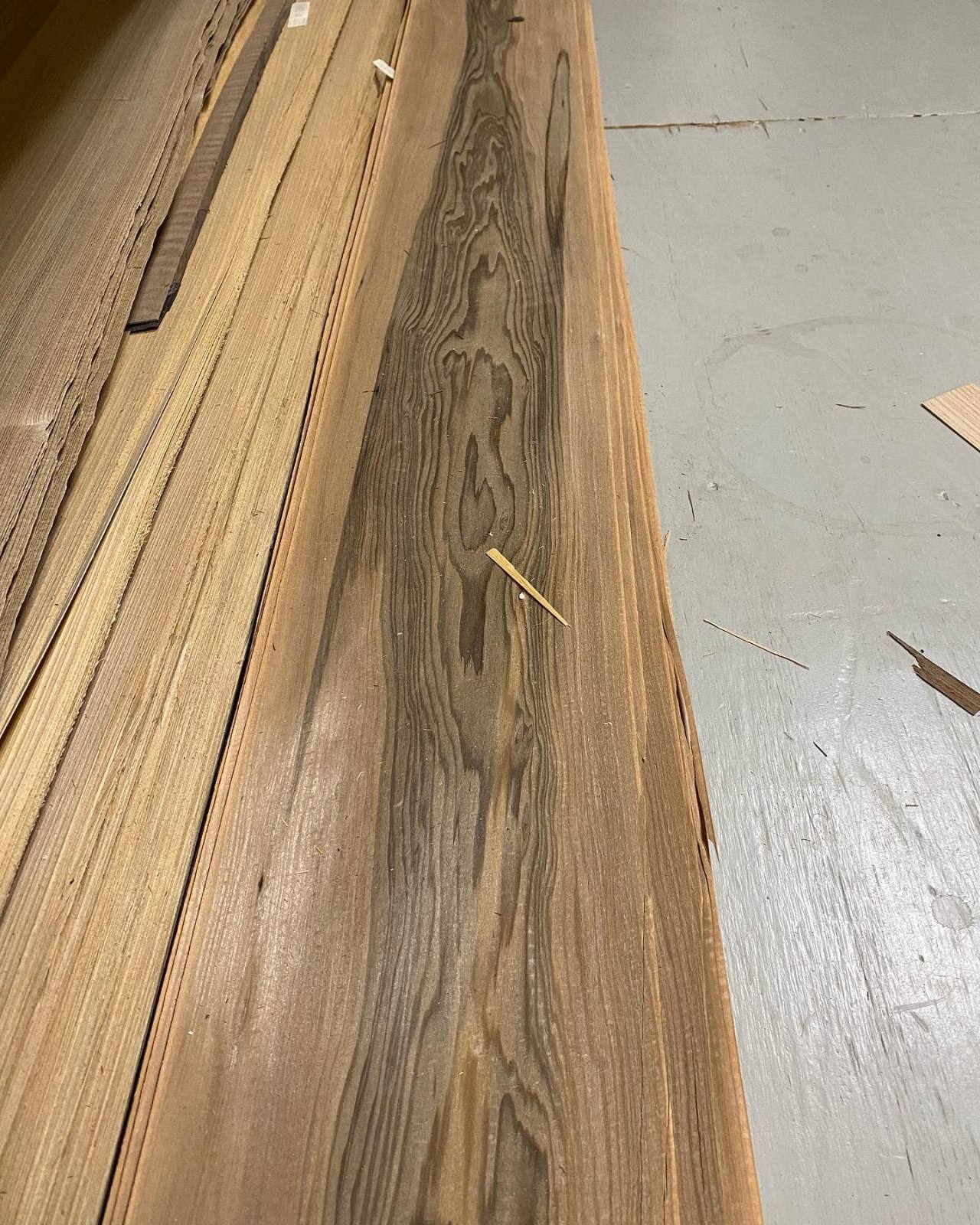
How Grain Direction Affects Flat Panel Cabinet Design

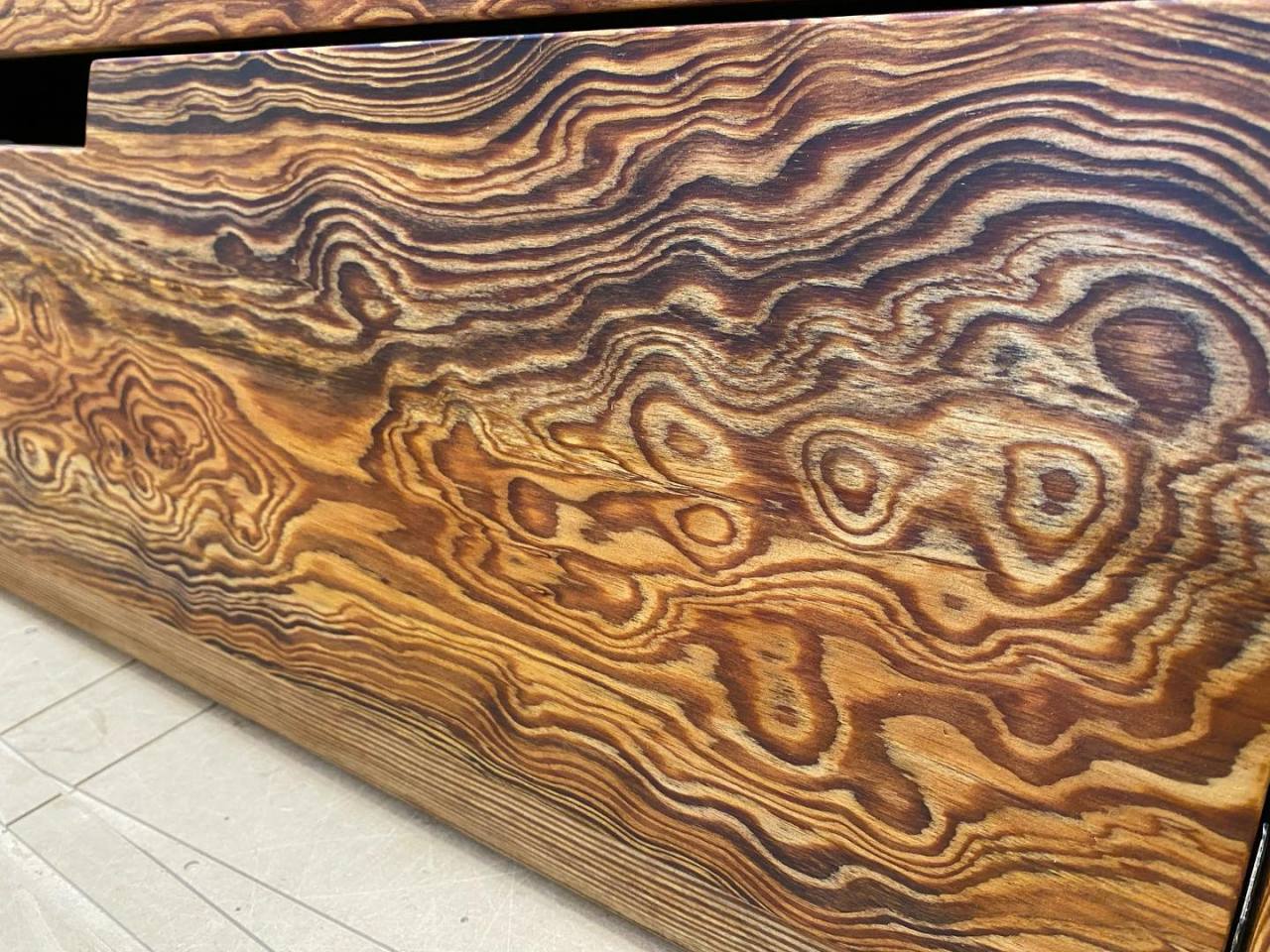
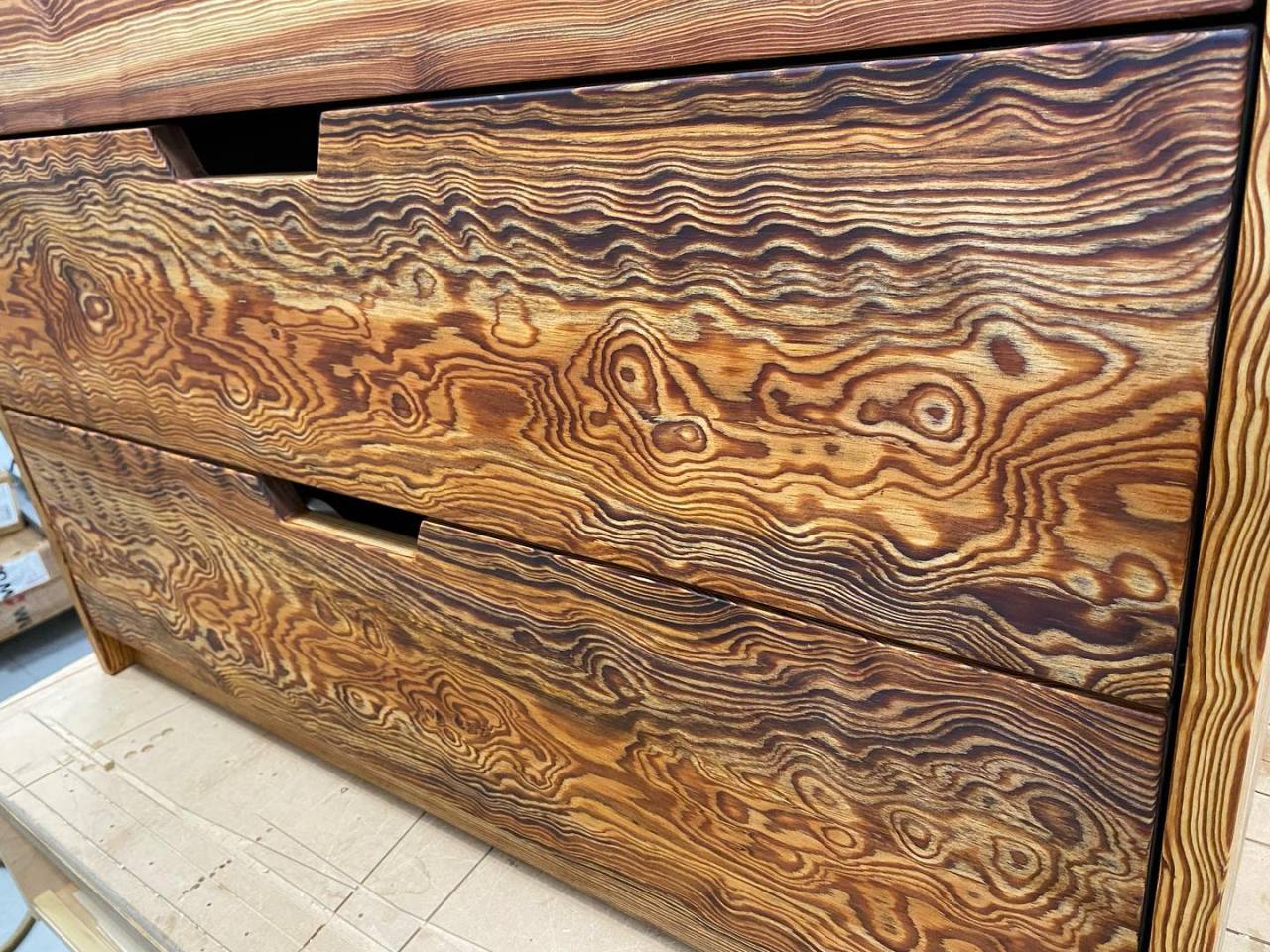
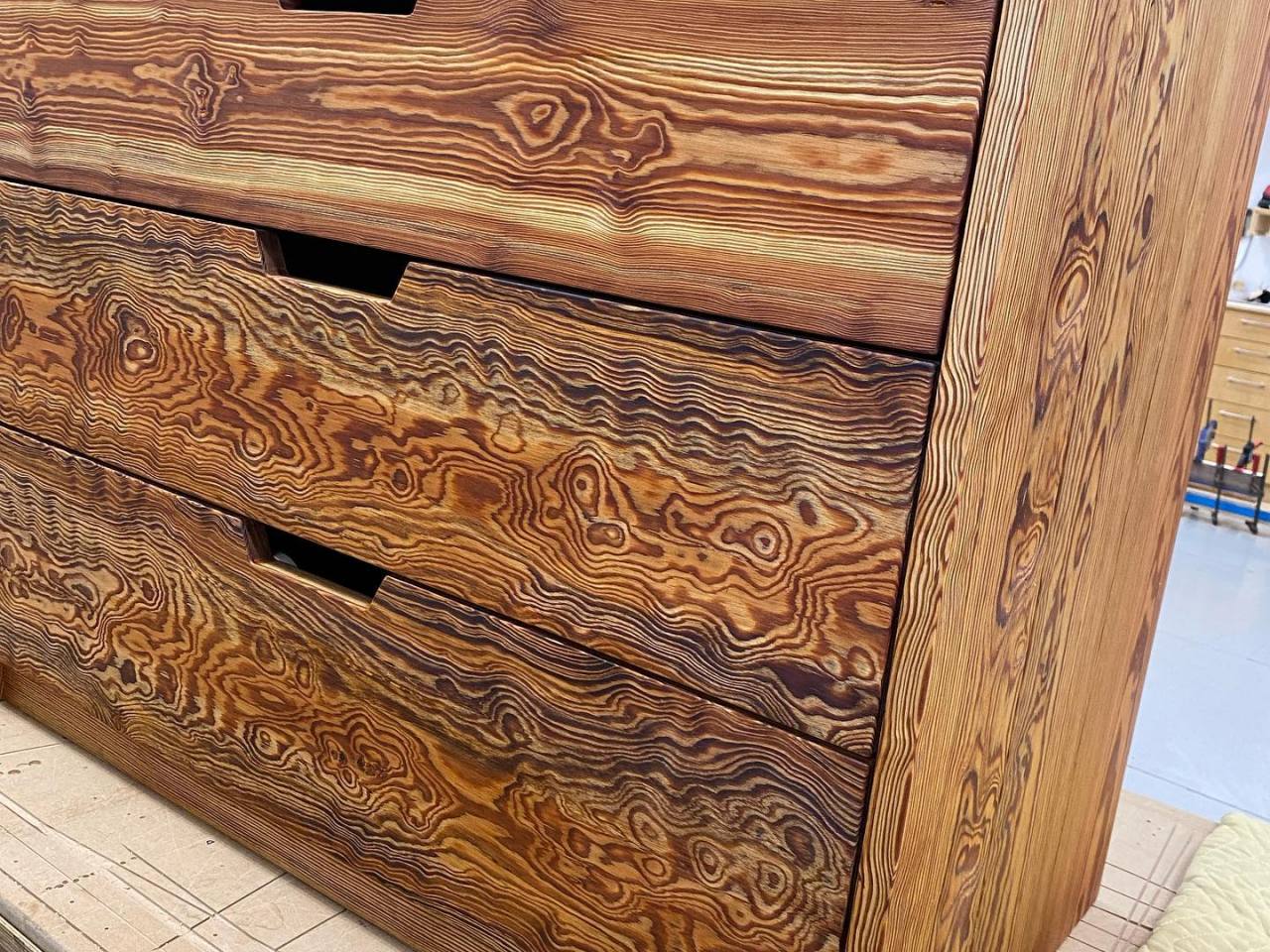
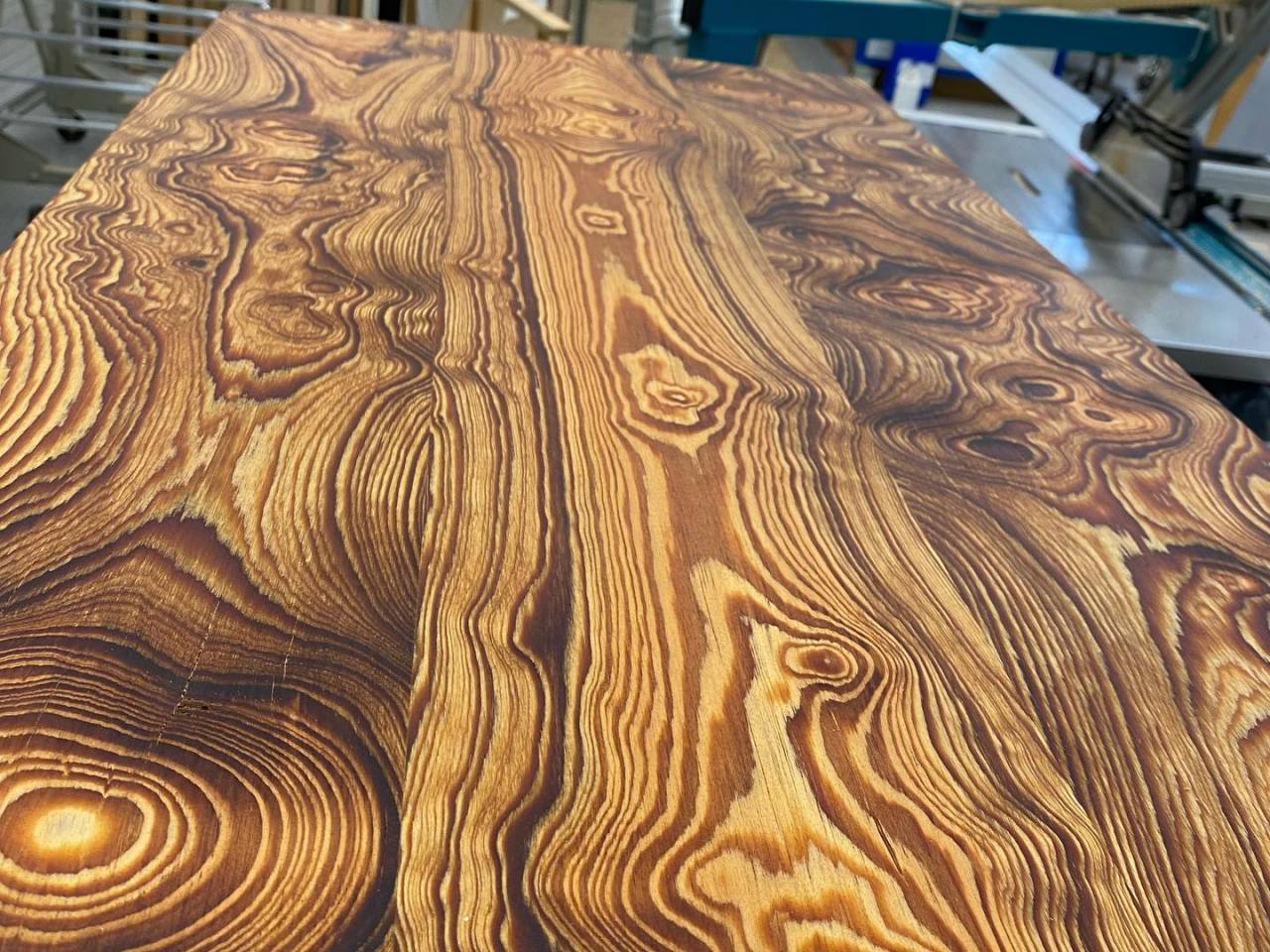
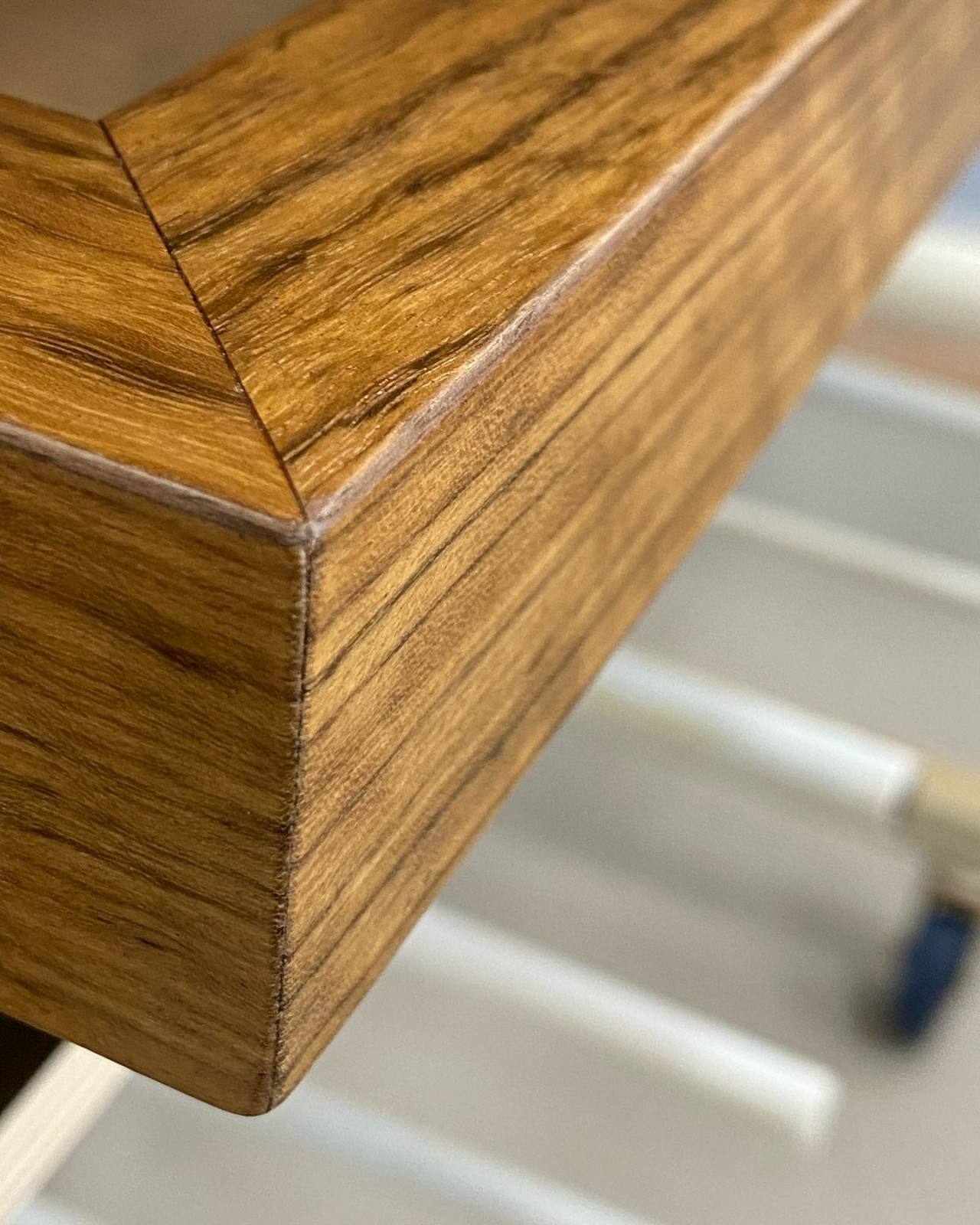
Wood grain is one of the most powerful design tools available in custom cabinetry, and in flat panel cabinet design it plays an outsized role. Unlike door styles with raised panels, decorative profiles, or painted finishes that draw the eye through visual complexity, a flat panel door in a natural wood veneer presents the grain as the primary — and often only — visual element on its surface. The direction that grain runs, the way it is matched across doors and drawers, and the species and cut of veneer chosen all have a direct and significant impact on how a kitchen looks and feels.

For homeowners planning a contemporary kitchen with wood veneer flat panel cabinets, understanding grain direction is not a technical detail to leave entirely to the cabinet maker. It is a design decision that shapes the character of the entire room.


What Grain Direction Actually Means

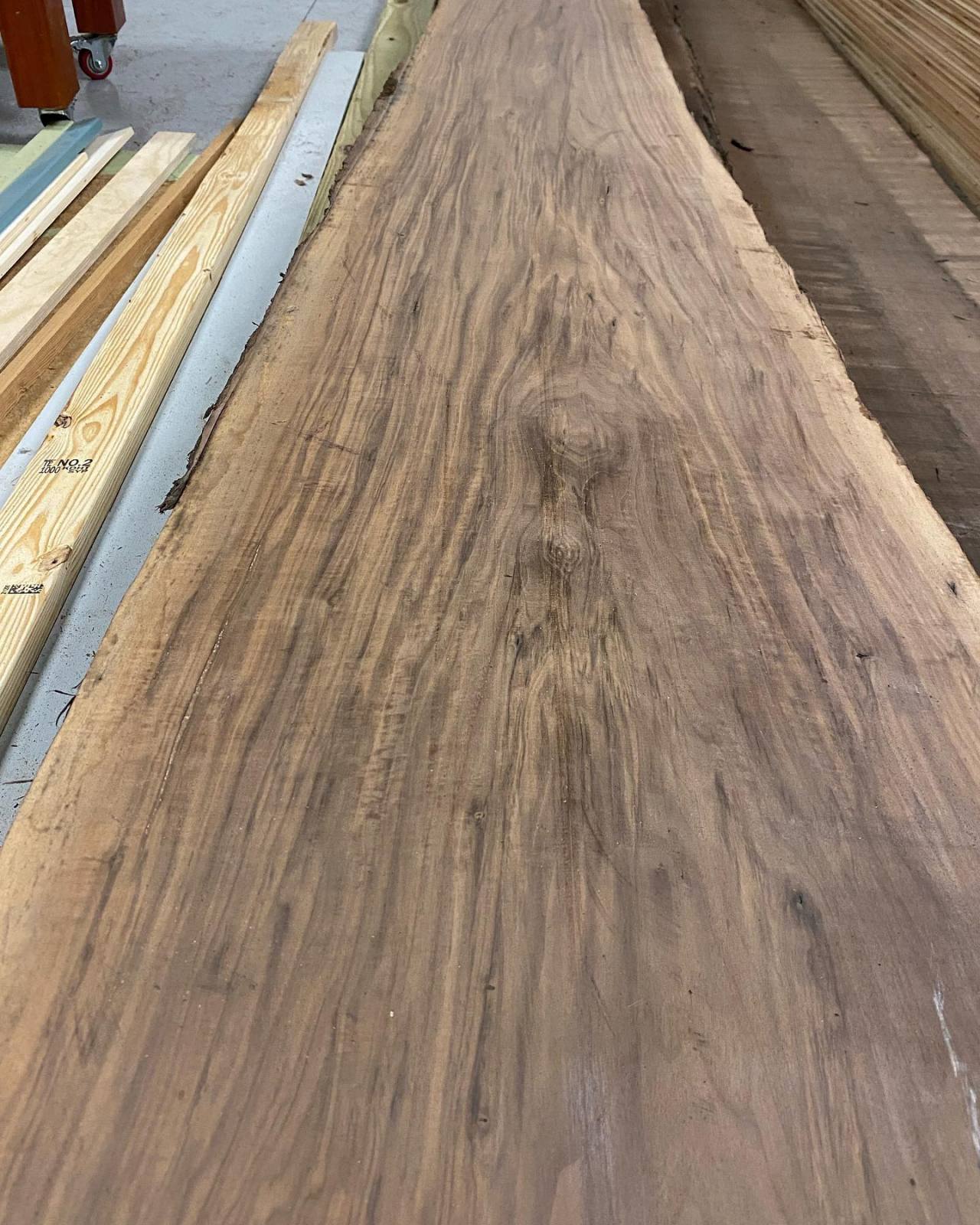
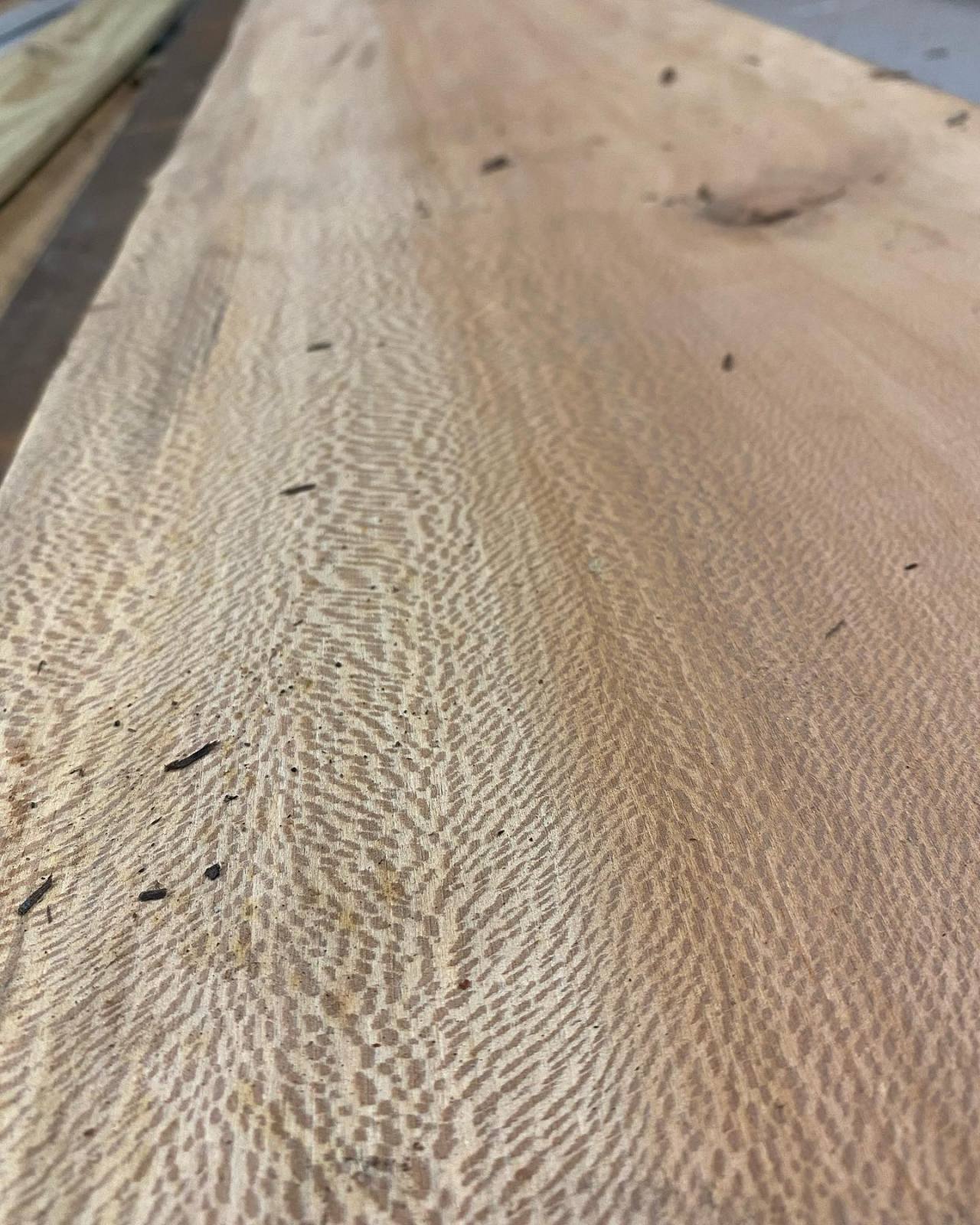
Every piece of wood has a grain — the linear pattern created by the growth rings and fiber structure of the tree as it is sliced into veneer or milled into lumber. The direction that grain runs on a cabinet door face is determined by how the veneer is oriented when the door is built.

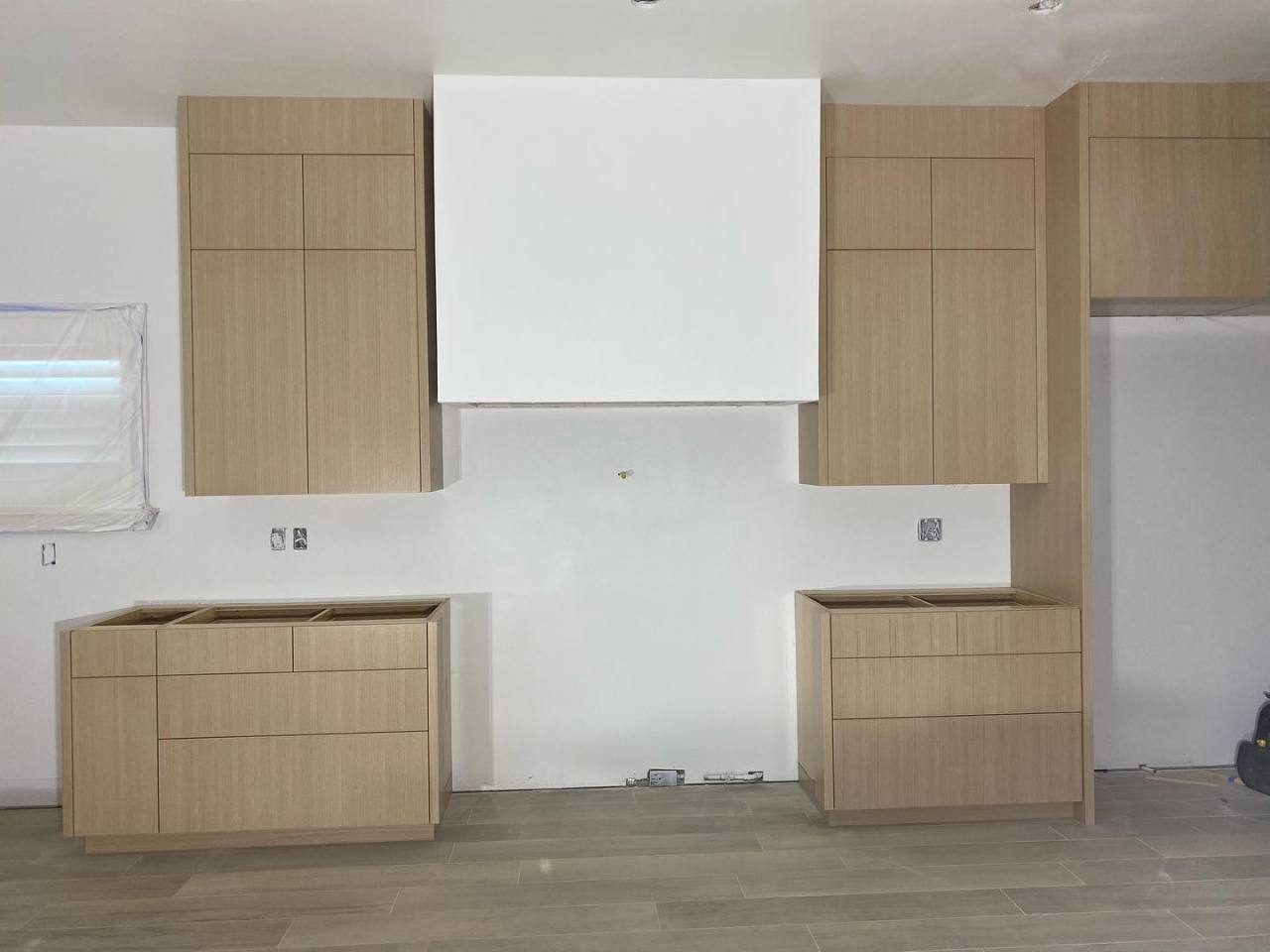
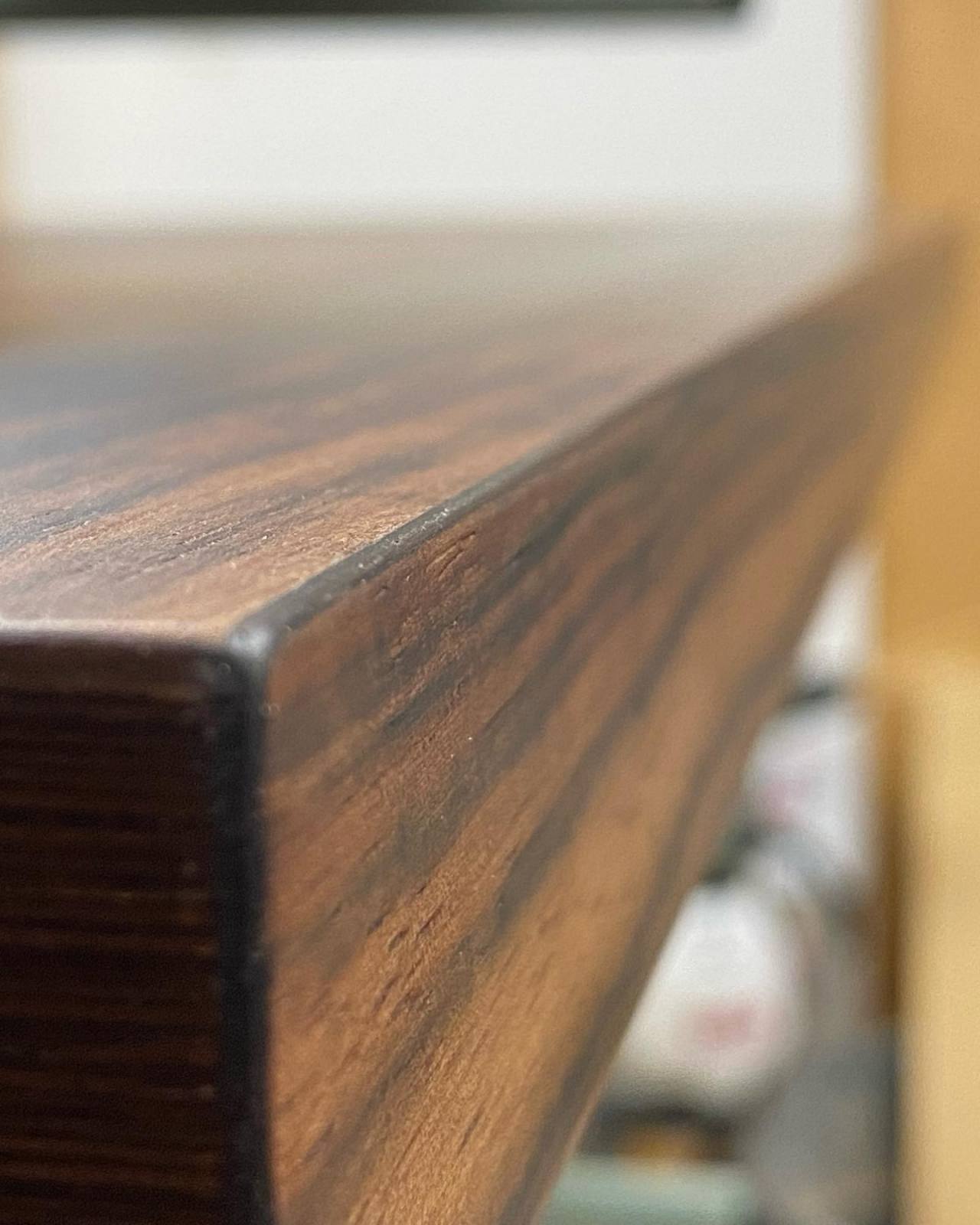
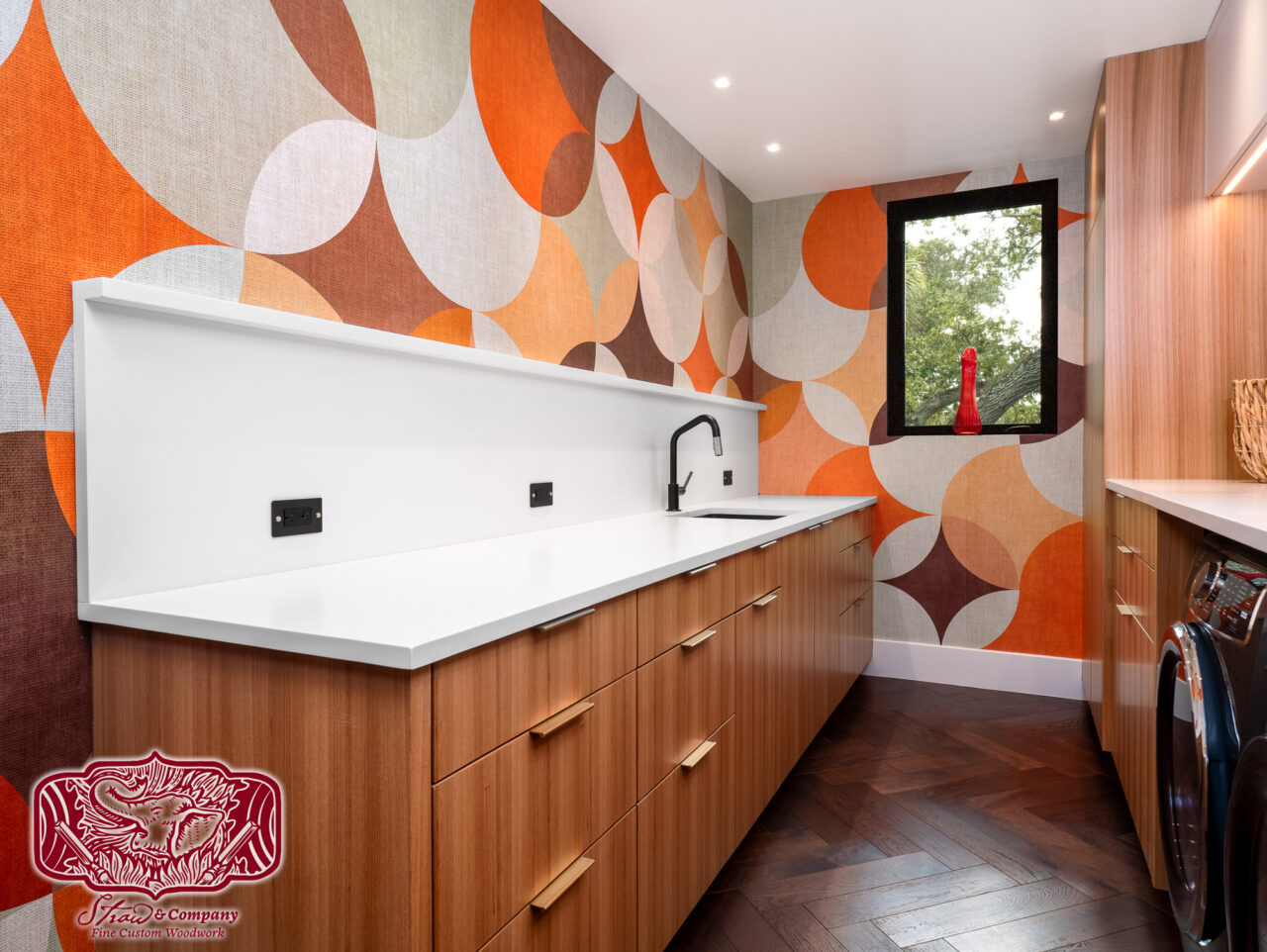
The two primary orientations are vertical grain and horizontal grain. Vertical grain runs from the top of the door to the bottom, parallel to the vertical edges of the cabinet. Horizontal grain runs from left to right, parallel to the top and bottom edges. Each orientation produces a fundamentally different visual effect, and the choice between them is one of the most consequential decisions in a wood veneer flat panel kitchen.

There is no universally correct answer. The right choice depends on the proportions of the kitchen, the height of the cabinets, the species and figure of the veneer, and the overall design intent. What matters is that the decision is made deliberately rather than by default.


Vertical Grain: Height, Formality, and Visual Structure

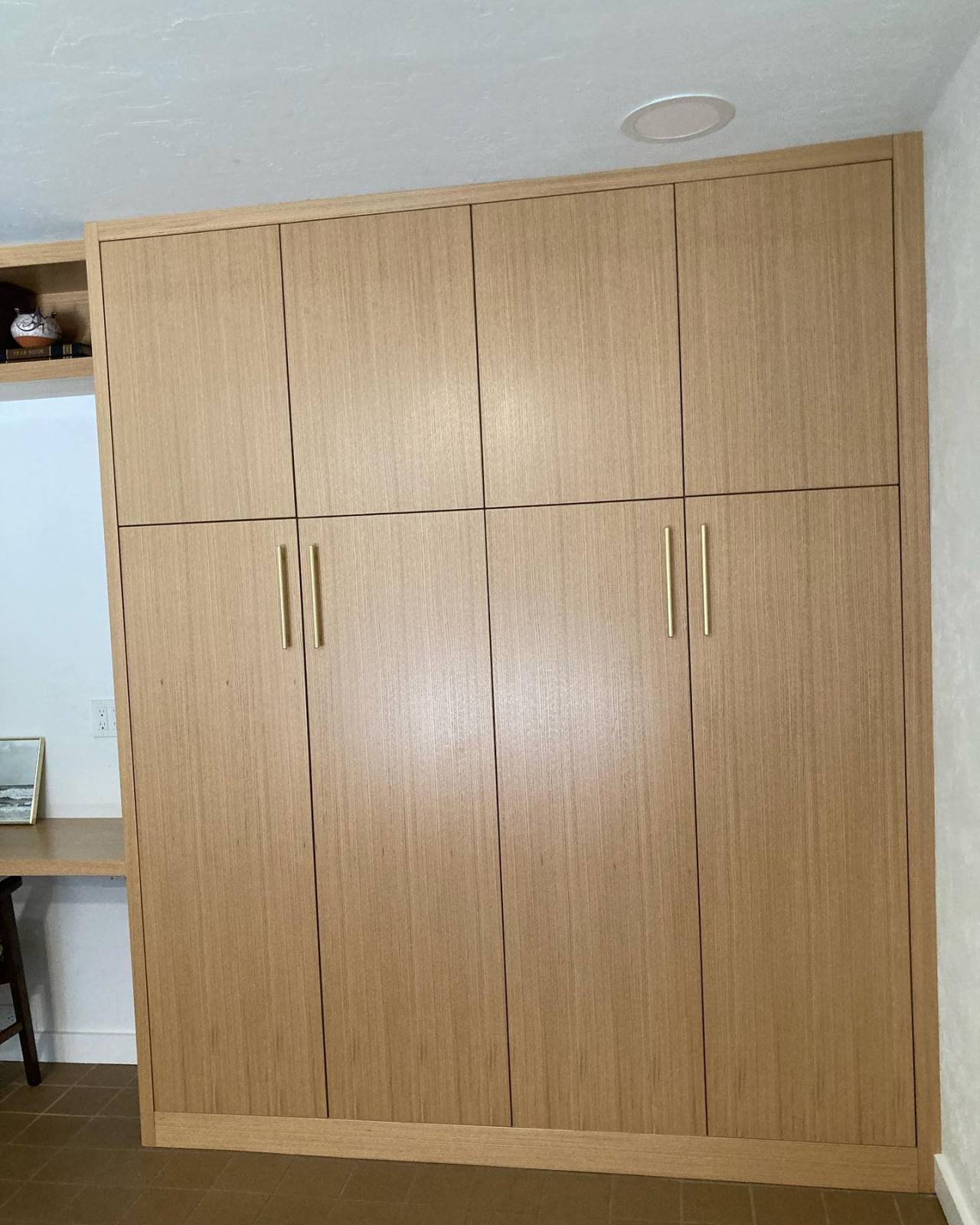
Vertical grain is the more traditional of the two orientations and remains the most common default in production cabinetry. When grain runs vertically on a flat panel door, the eye follows it upward, which emphasizes the height of the cabinet and gives the kitchen a sense of verticality and structure.

In kitchens with standard ceiling heights, vertical grain can make the cabinetry feel taller and the room feel more generous. In kitchens where the upper cabinets extend to the ceiling, vertical grain creates a strong upward movement that reinforces the architectural intent of the design.

Vertical grain also tends to read as more formal and composed. The regularity of lines running parallel to the cabinet edges gives the surface a disciplined quality that suits kitchens with a refined, precise aesthetic. For a contemporary kitchen where order and geometry are central to the design language, vertical grain often feels like the natural choice.

The challenge with vertical grain in a multi-door kitchen is consistency. Because each door is cut from veneer with its own character, achieving a coherent vertical grain pattern across a long run of upper or lower cabinets requires careful veneer selection and sequencing. A cabinet maker who does not pay close attention to this can produce a kitchen where the grain direction is technically consistent but the visual result feels random and disconnected.


Horizontal Grain: Movement, Warmth, and Contemporary Flow

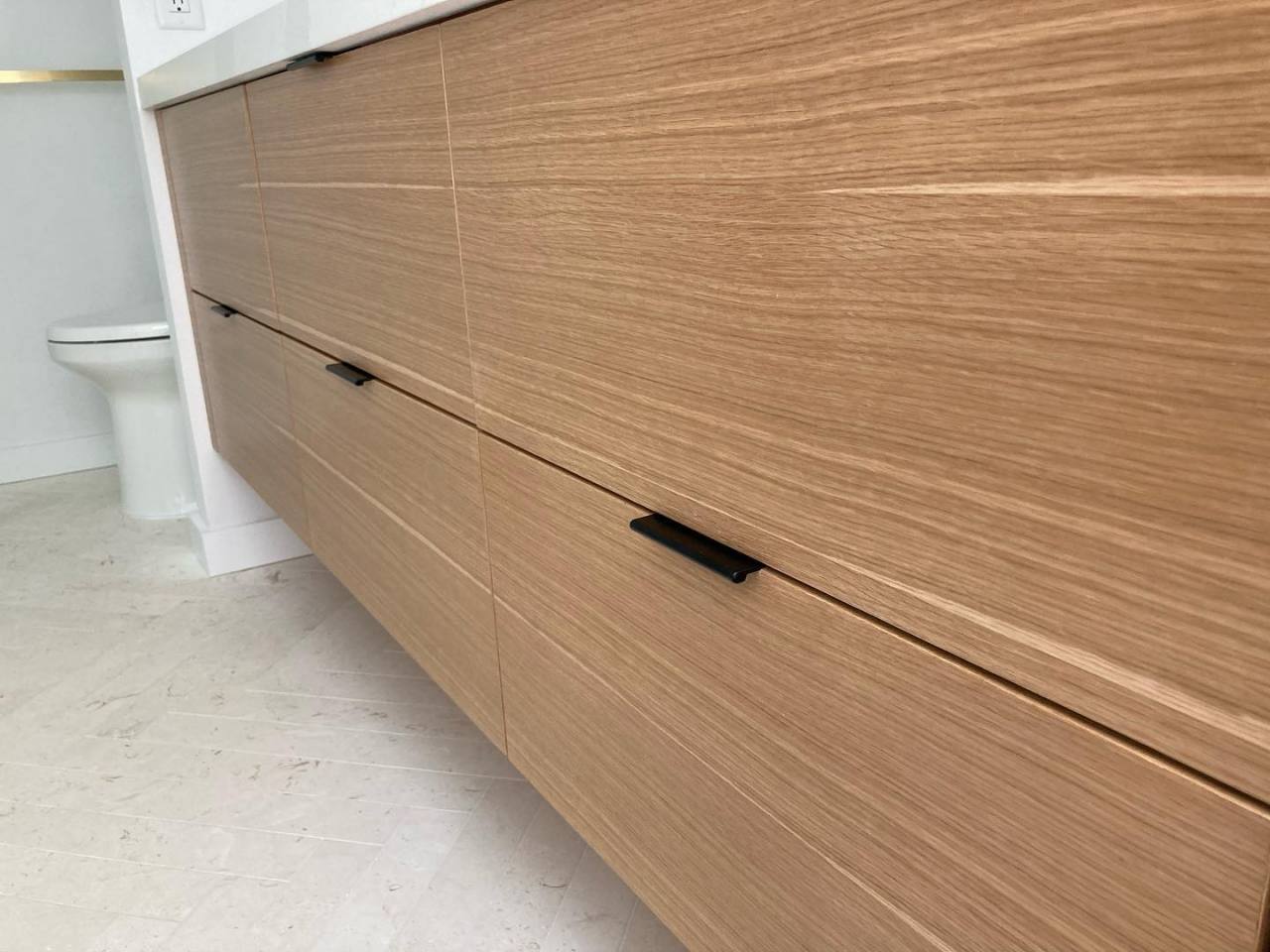
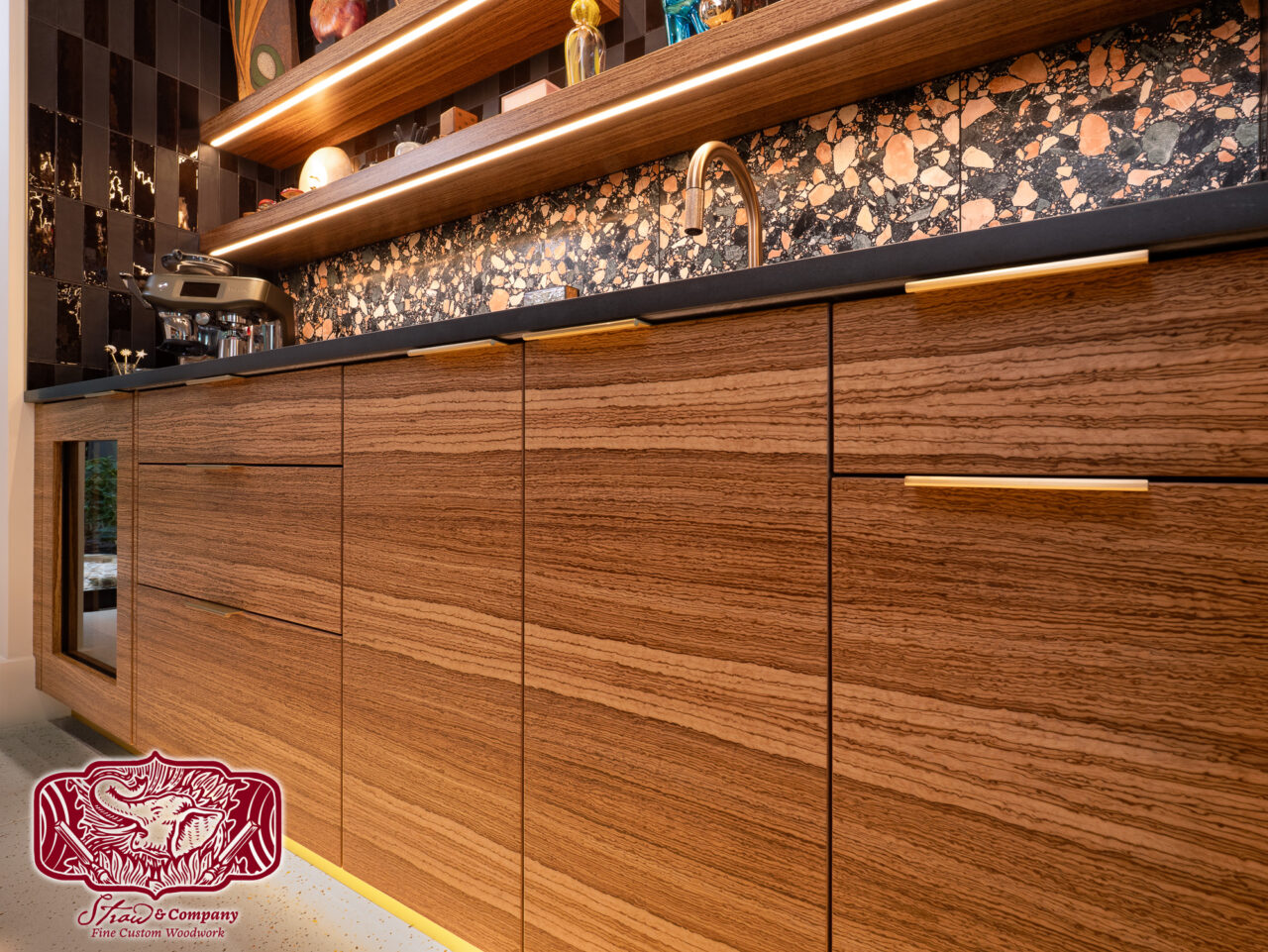
Horizontal grain has become increasingly associated with contemporary kitchen design, and for good reason. When grain runs horizontally across a flat panel door, the eye follows it laterally across the cabinet face, creating a sense of movement and flow that feels relaxed and organic rather than formal and structured.

In a long run of base cabinets, horizontal grain creates a continuous visual band that ties the cabinetry together and emphasizes the horizontal lines of the kitchen — the countertop, the toe kick, the top rail of the upper cabinets. This reinforcement of horizontal geometry is a hallmark of modernist interior design and one of the reasons horizontal grain has become so prevalent in high-end contemporary kitchens.

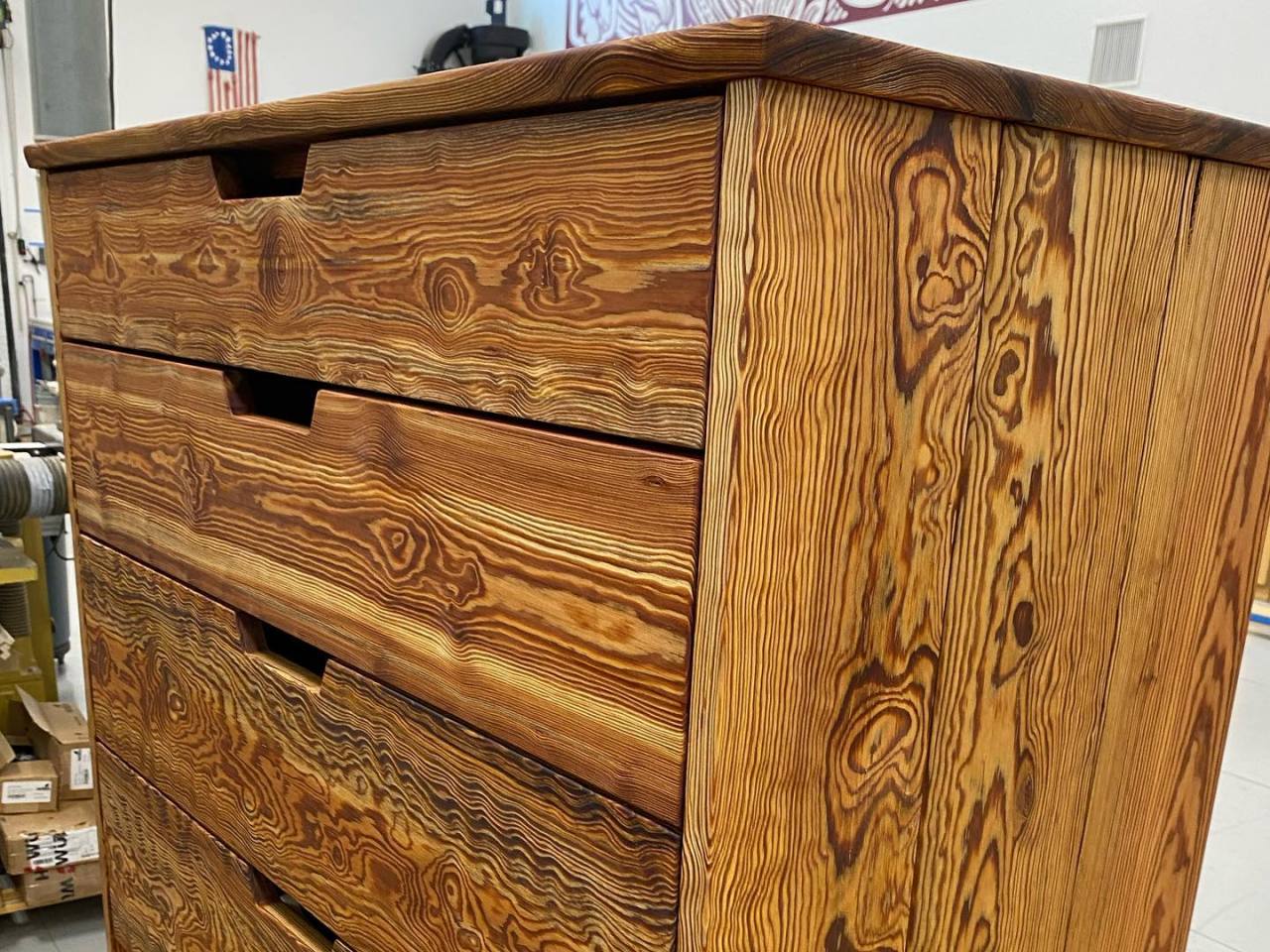
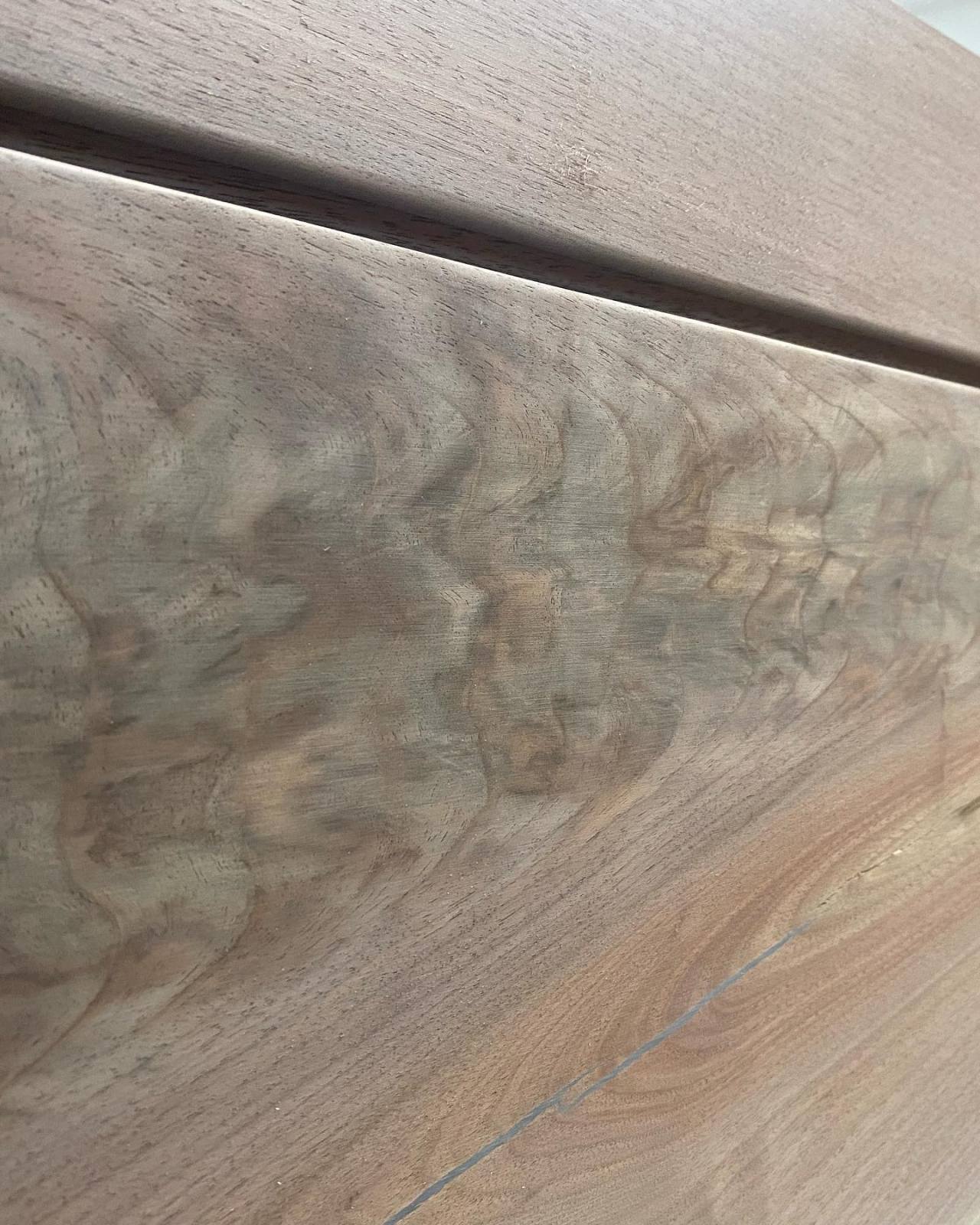
Horizontal grain also tends to show the natural character of the wood more expressively. The figure, the color variation, and the subtle movement within the veneer are all more visible when grain runs across the face of the door rather than up and down. For homeowners who want the warmth and authenticity of natural wood to be a defining feature of their kitchen, horizontal grain often delivers a more compelling result.

The technical challenge with horizontal grain is achieving continuity across multiple doors. When grain runs horizontally, the eye naturally attempts to follow it from one door to the next. If the grain does not align — if it shifts abruptly in color, figure, or direction at each door edge — the result can feel fragmented and visually unsettling. Achieving true horizontal grain continuity across a run of cabinets requires book matching or sequence matching of the veneer, which is a level of craft and planning that only custom cabinetry can reliably deliver.


Veneer Matching: The Craft Behind Grain Continuity

Veneer matching is the process by which individual veneer leaves are arranged and joined to create a consistent and intentional pattern across a door face or across multiple doors. It is one of the most technically demanding aspects of wood veneer flat panel cabinet making and one of the areas where custom cabinetry most clearly separates itself from production options.

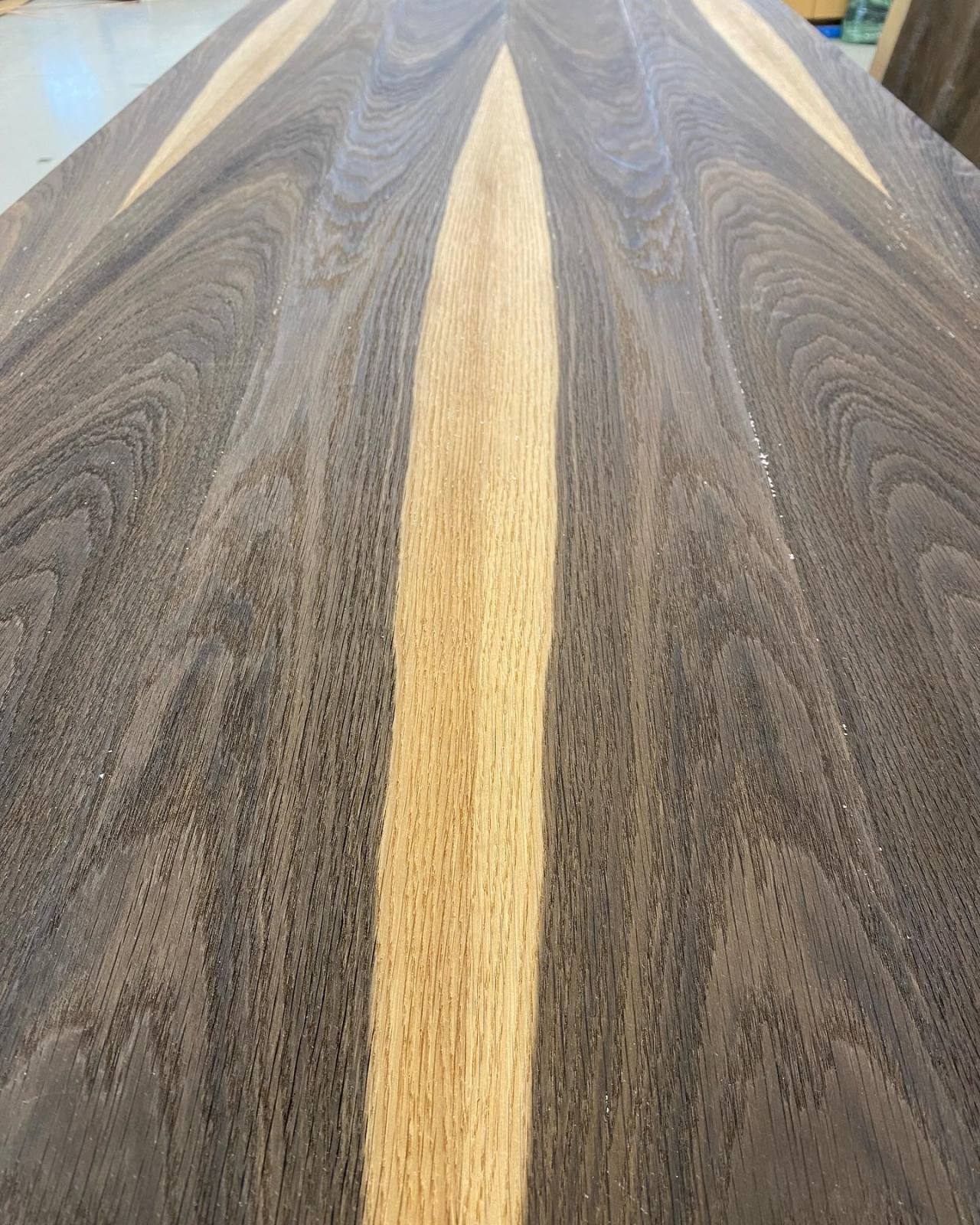
Book matching is the most common method. Two consecutive veneer leaves are opened like the pages of a book and joined at their center edges, creating a mirrored grain pattern across the face of the door. When done well, book matched veneer produces a symmetrical, balanced surface with a natural elegance that is immediately apparent.

Slip matching places consecutive veneer leaves side by side in the same orientation rather than mirroring them. This produces a more uniform, repeating pattern that can feel more subtle and contemporary than book matching. It is often preferred in kitchens where the design intent is quiet and restrained rather than expressive.

Sequence matching takes veneer consistency a step further by cutting all of the doors and drawer fronts in a kitchen from the same sequence of veneer leaves, ensuring that the grain, color, and figure are as consistent as possible across every surface. In a kitchen where wood veneer is the dominant visual element, sequence matched veneers transform the cabinetry from a collection of individual doors into a single cohesive composition.

Mixing Grain Directions Intentionally

Some of the most compelling contemporary kitchen designs use grain direction as a deliberate compositional tool — running grain vertically on upper cabinets and horizontally on lower cabinets, or using a different grain orientation on an island to distinguish it visually from the perimeter cabinetry.

When this is done with intention and precision it creates a kitchen with genuine visual sophistication. The contrast between orientations defines zones within the space, adds depth to the overall composition, and demonstrates a level of design thinking that goes well beyond choosing a door style and a finish color.

When it is done without intention — when grain directions mix because of inconsistent sourcing or lack of planning — the result is visual confusion. The kitchen feels unresolved, and no amount of quality hardware or expensive countertop material will fully compensate for it.


Why Grain Direction Is a Conversation Worth Having Early

Grain direction, veneer matching, and veneer sequencing are decisions that need to be made before a single cabinet is built. Once the shop drawings are approved and production begins, changing the grain orientation or the matching method is not a minor revision — it requires new material and new doors.

Working with a custom cabinet maker who raises these questions early in the design process is a sign that they understand the full scope of what flat panel veneer cabinetry requires. It means the finished kitchen will reflect a coherent set of decisions rather than a series of defaults.

In a flat panel kitchen, the wood is the design. Grain direction is how that design is directed.


Straw Woodwork builds custom wood veneer flat panel cabinetry with careful attention to grain direction, veneer matching, and visual continuity. If you are planning a contemporary kitchen and want cabinetry that treats the wood as a design element, we would love to talk about your project.
 

Luxury Italian-Inspired Custom Kitchen Cabinet Design

The Italian kitchen has long represented the highest standard in residential design. It is not simply a matter of aesthetics — though the aesthetics are undeniably compelling — it is a philosophy of design that treats the kitchen as the most important room in the home and approaches its construction accordingly. Italian-inspired custom kitchen cabinet design brings that philosophy into any home, combining refined proportions, exceptional materials, and a level of craft that is immediately apparent and impossible to replicate at a production level.

For homeowners planning a luxury kitchen renovation, understanding what defines Italian-inspired cabinet design — and what it demands in terms of construction and material quality — is the foundation of making decisions that will stand the test of time.


The Design Philosophy Behind the Italian Kitchen

Italian kitchen design is rooted in a set of principles that have remained consistent for decades despite shifting trends. The first is proportion. Italian design treats the kitchen as an architectural composition rather than a collection of individual cabinets. Every element — the height of the upper cabinets, the depth of the base cabinets, the relationship between the island and the perimeter cabinetry, the spacing of hardware — is considered in relation to everything else. Nothing is arbitrary.

The second principle is material integrity. Italian-inspired design does not use materials to imitate other materials. Wood looks like wood. Lacquer looks like lacquer. Stone looks like stone. The authenticity of each material is respected and expressed rather than concealed or approximated. This commitment to material honesty is one of the reasons Italian-inspired kitchens age so gracefully — they do not rely on surface effects that fade or date.

The third principle is restraint. Luxury in Italian design is communicated through quality rather than quantity. A single run of beautifully proportioned cabinets in a flawless high-gloss lacquer finish communicates more sophistication than an elaborate kitchen filled with decorative detail and ornament. Less, when executed with exceptional craft, is always more.


High-Gloss Lacquer: The Signature Finish of Italian-Inspired Cabinetry

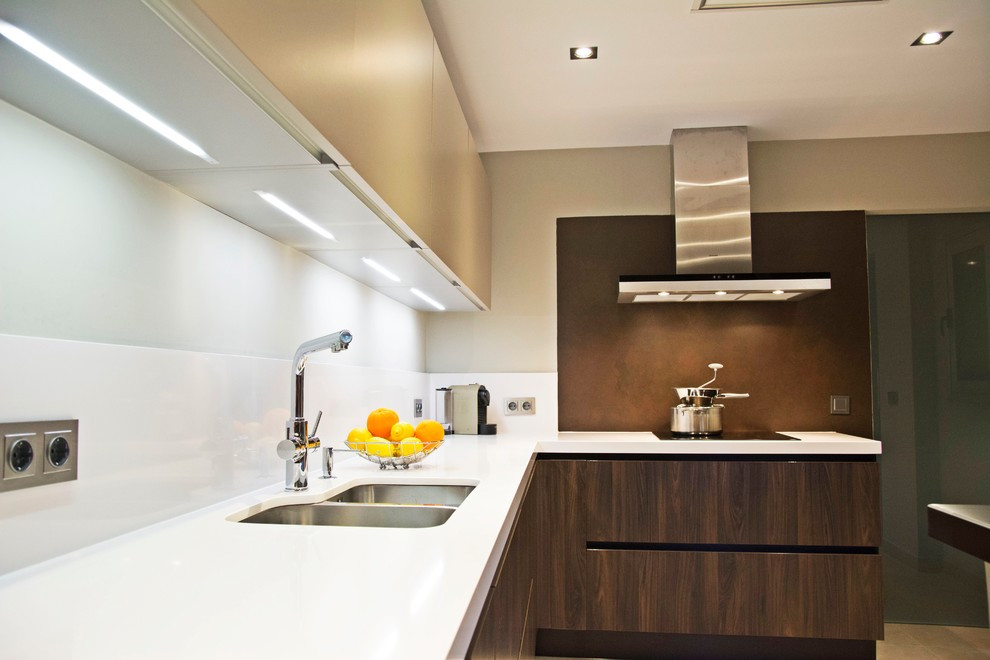
No finish is more closely associated with Italian-inspired kitchen design than high-gloss lacquer. Applied to flat panel doors over an MDF substrate, a properly executed high-gloss lacquer finish produces a surface that is mirror-smooth, intensely reflective, and extraordinarily demanding to achieve at a high standard.

The appeal of high-gloss lacquer in a kitchen is both visual and spatial. The reflective surface bounces light around the room, making the space feel brighter and larger. In a kitchen with carefully considered lighting, high-gloss lacquer cabinet doors become part of the light design of the room — picking up and distributing light in a way that matte finishes simply cannot.

The color palette associated with Italian-inspired high-gloss lacquer runs from the purest whites and off-whites through deep charcoals, warm taupes, and rich jewel tones. Each color reads differently in gloss — whites become luminous, dark colors become deeply saturated and almost lacquer-like in their depth. The choice of color in a high-gloss Italian-inspired kitchen is a significant design decision that should be made in the context of the room’s natural light, architectural finishes, and overall material palette.

Achieving a true high-gloss lacquer finish at the quality level associated with Italian-inspired design requires multiple application and sanding cycles, a dust-controlled finishing environment, and a level of technical skill that separates genuine custom cabinet makers from production shops attempting to approximate the look.


Natural Stone and Wood: Grounding Luxury in Warmth

While high-gloss lacquer is the signature finish of Italian-inspired kitchen design, the most sophisticated expressions of this aesthetic balance the lacquer’s reflectivity with the warmth and texture of natural materials. Natural stone countertops — marble, quartzite, or bookmatched stone slabs — bring organic variation and tactile richness to a kitchen that might otherwise feel too perfect and cold.

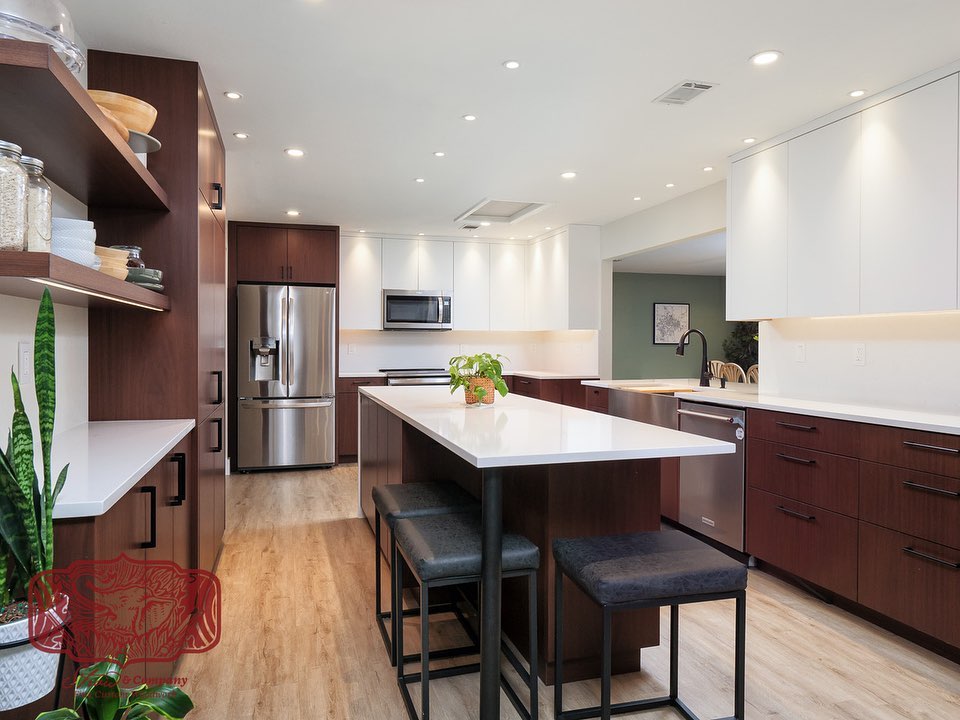
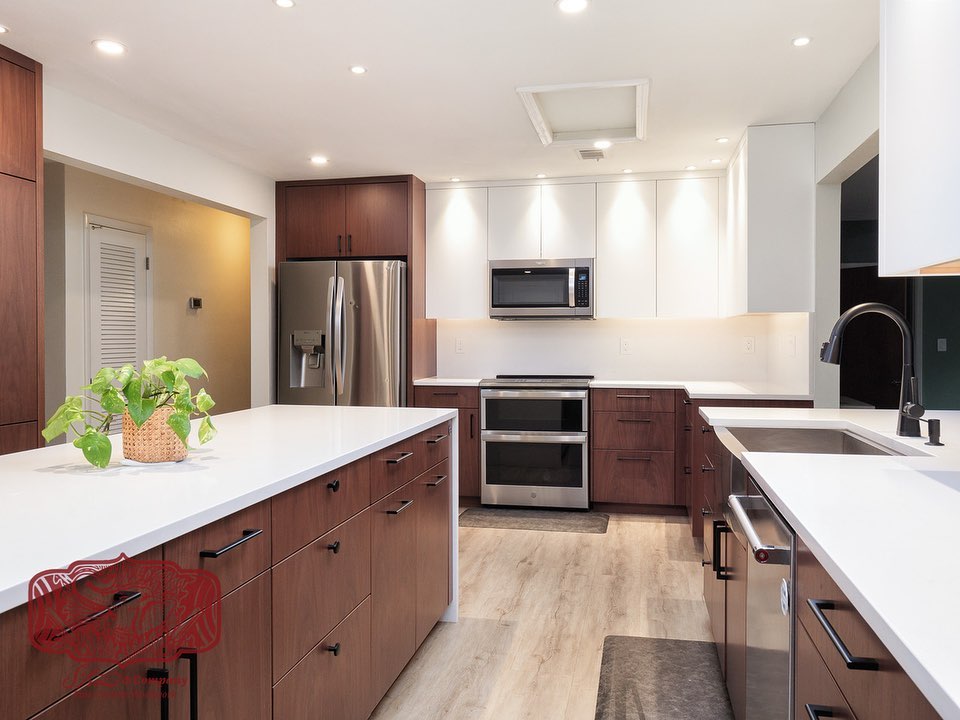
Wood veneer elements serve a similar purpose. A kitchen island faced in a warm walnut or European oak veneer against a run of white or grey high-gloss lacquer perimeter cabinets creates a contrast that is both visually dynamic and deeply satisfying. The wood grounds the lacquer, the lacquer elevates the wood, and the two materials together produce a result that neither could achieve alone.

This interplay between the refined and the natural is central to the Italian design sensibility. It is what prevents an Italian-inspired kitchen from feeling sterile or showroom-like and what gives it the warmth and livability that makes it a genuinely pleasurable space to spend time in.

Integrated Appliances and the Seamless Kitchen

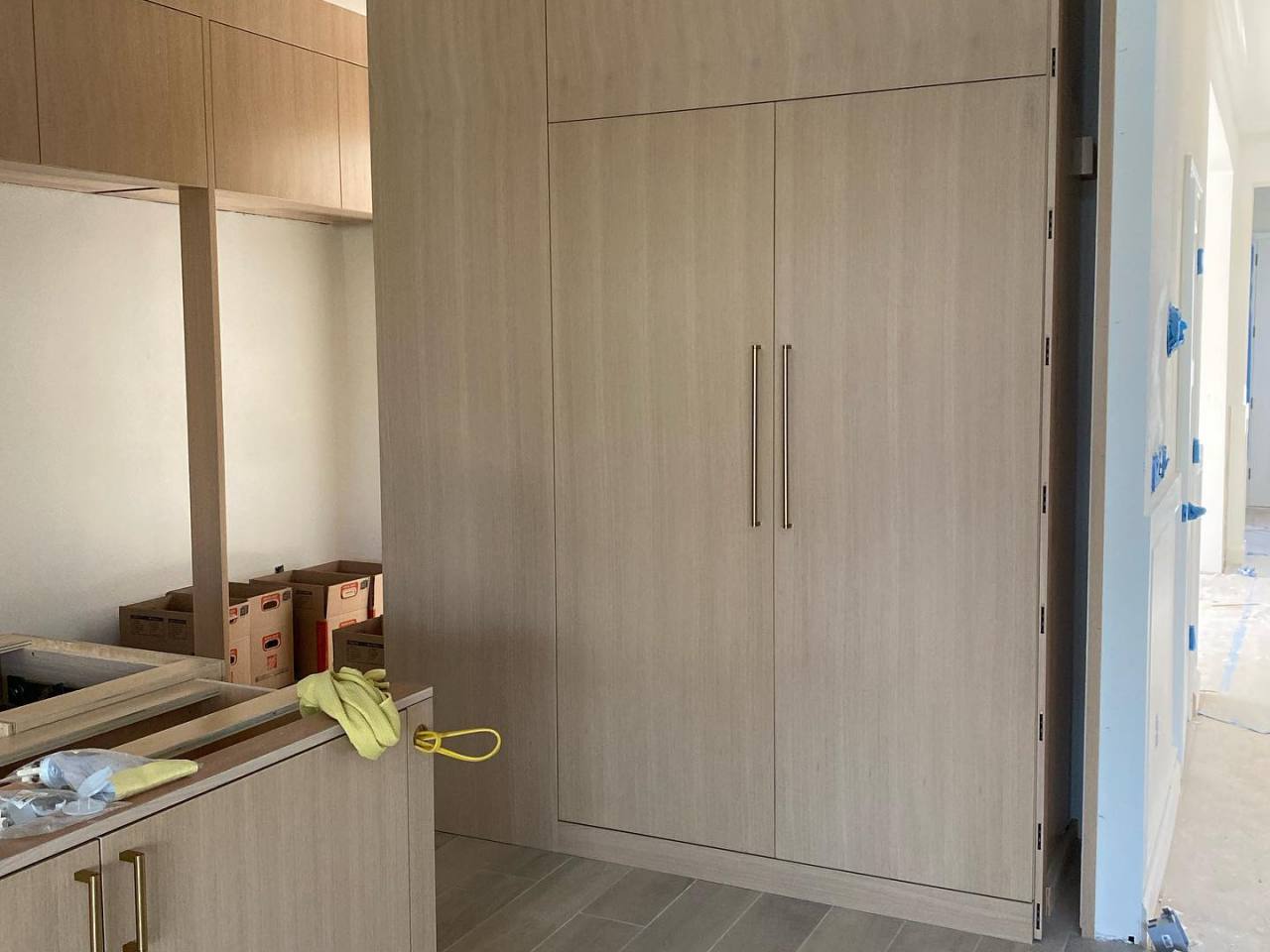
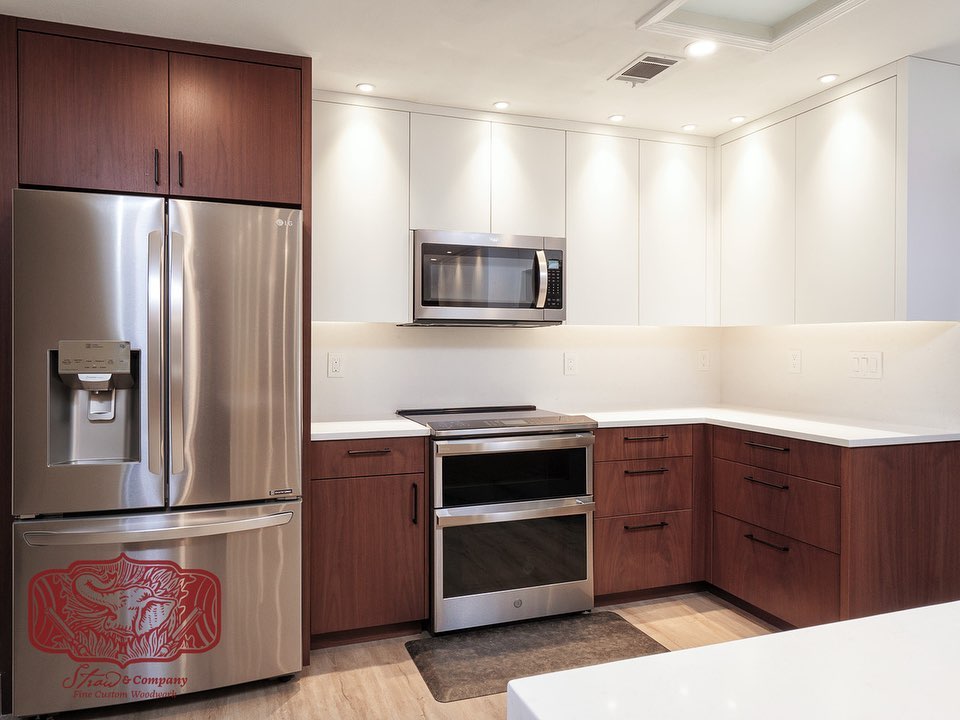
One of the defining characteristics of Italian-inspired kitchen design is the integration of appliances behind matching cabinet panels. Refrigerators, dishwashers, and in some cases ovens and warming drawers are concealed behind doors and drawer fronts that match the surrounding cabinetry exactly — in finish, in grain direction if wood veneer is used, and in hardware detail.

The result is a kitchen where the appliances disappear into the composition. The eye reads a continuous surface of cabinetry rather than a collection of different objects occupying the same space. This level of visual coherence is one of the most powerful tools in achieving the seamless, architectural quality that defines Italian-inspired kitchen design at its best.

Achieving true appliance integration requires careful planning and precise construction. The cabinet boxes that house integrated appliances must be built to exact tolerances, the panels must align perfectly with the surrounding doors and drawers, and the hardware must be consistent across every surface. This is work that demands a custom cabinet maker with experience in integrated appliance design — it is not a detail that can be improvised during installation.


Hardware as a Design Statement

In Italian-inspired kitchen design, hardware is never an afterthought. It is a design element in its own right, chosen with the same care as the cabinet finish and the countertop material. The options range from recessed finger pulls machined directly into the door edge — creating a completely handle-free surface — to long, architectural bar pulls in brushed brass, matte black, or satin nickel that run the full height of a door or the full width of a drawer front.

Each hardware choice communicates a different design intent. Handleless doors push the aesthetic toward the most minimal and architectural expression of Italian design. Long vertical pulls add a sense of scale and drama. The choice should be made in relation to the proportions of the doors, the finish of the cabinetry, and the other metal finishes present in the kitchen — plumbing fixtures, lighting hardware, and appliance trim.

In a luxury Italian-inspired kitchen, the hardware is the punctuation of the design. It should be chosen last, after all other decisions are made, and it should feel inevitable — as though no other choice could have been right.


Why Custom Construction Is the Only Path to Authentic Italian-Inspired Design

Italian-inspired kitchen design cannot be achieved through production cabinetry. The proportions, the finish quality, the material choices, the appliance integration, and the hardware detail that define this aesthetic all require a level of customization and craft that production manufacturing is not designed to deliver.

A custom cabinet maker approaches an Italian-inspired kitchen as a single unified composition. Every decision is made in relation to every other decision. The result is a kitchen that has the coherence, the quality, and the quiet confidence that Italian design has always represented — a space that does not need to announce itself because its quality speaks clearly on its own.


Straw Woodwork builds custom Italian-inspired kitchen cabinetry with the material quality and construction precision this aesthetic demands. If you are planning a luxury kitchen renovation, we would love to hear about your vision.

Maximizing Storage With Custom Modern Cabinet Design

Storage is one of the most common frustrations in kitchen design. Homeowners invest in a renovation, choose finishes they love, and install appliances they have researched carefully — and then find themselves, six months later, running out of space for everyday items because the cabinetry was not designed with enough intentionality about how storage actually works. The problem is rarely a lack of cabinet quantity. It is almost always a lack of cabinet quality — specifically, a lack of custom interior design that makes every cubic inch of available space genuinely usable.

Custom modern cabinet design approaches storage differently. Rather than offering a fixed menu of interior configurations and asking the homeowner to adapt, it starts with how the space is actually used and builds the storage around that reality. The result is a kitchen where everything has a place, where that place makes intuitive sense, and where the daily experience of cooking, cleaning, and organizing feels effortless rather than effortful.


The Problem With Standard Cabinet Interiors

Production cabinetry is manufactured with standard interior configurations because standard configurations can be produced efficiently at scale. A base cabinet comes with one adjustable shelf. A drawer stack offers three drawers of fixed heights. An upper cabinet has two shelves positioned at intervals that approximate the needs of an average household.

The average household does not exist. Every kitchen is used differently, stocked differently, and organized around a different set of habits and priorities. Standard interior configurations force homeowners to organize their belongings around the constraints of the cabinet rather than designing the cabinet around their belongings. The result is wasted space — shelves too tall for the items stored on them, drawers too shallow for the cookware that needs to live there, corners that are difficult to access and easy to forget.

Custom modern cabinet design eliminates standard configurations entirely. Every interior is designed from scratch around the specific items it will store and the specific habits of the people who will use it.


Base Cabinet Storage: Where the Most Opportunity Lives

Base cabinets represent the largest storage volume in most kitchens, and they are also the most poorly utilized in standard production designs. A single adjustable shelf inside a deep base cabinet creates a situation where items stored at the back are difficult to reach and impossible to see without crouching down and peering into the darkness.

Custom base cabinet interiors resolve this problem through pull-out shelving, drawer stacks, and interior organizers designed for specific storage categories.

Pull-out shelves bring the back of the cabinet to the front. Rather than reaching into a dark recess, the homeowner pulls the shelf forward and has full access to everything stored on it. This simple mechanism transforms a base cabinet from a space where things get lost into one where everything is immediately visible and accessible.

Drawer stacks in base cabinets are one of the highest-impact upgrades available in custom modern kitchen design. Rather than a single door opening onto a shelf, a stack of three or four drawers provides organized, fully accessible storage for pots, pans, utensils, dry goods, and everything else that typically ends up stacked and buried at the back of a base cabinet. Full-extension undermount drawer slides ensure that the entire drawer — including the back — is accessible without straining, and soft-close mechanisms mean the drawers close quietly and completely every time.


Tall Cabinets and Pantry Storage

Tall cabinets — pantry towers, utility cabinets, and full-height storage columns — represent some of the highest-density storage available in a kitchen. They also represent some of the most commonly wasted space in production kitchen design, where a tall cabinet is often nothing more than a series of fixed shelves that are difficult to access at the top and poorly organized throughout.

Custom tall cabinet interiors can be configured with pull-out pantry systems that bring every shelf forward for full visibility and access, dedicated zones for different storage categories, interior lighting that illuminates the full depth of the cabinet, and adjustable shelf positions that can be reconfigured as storage needs change over time.

A well-designed pantry cabinet in a custom modern kitchen can replace the need for a separate pantry room in many homes — consolidating dry goods, small appliances, and kitchen supplies into a single organized, accessible, and visually cohesive storage system that occupies no more floor space than a standard cabinet column.


Upper Cabinets: Rethinking What Goes Above the Countertop

Upper cabinets are often treated as secondary storage — the place where items used less frequently are kept out of the way. In a custom modern kitchen, upper cabinet interiors can be designed to be considerably more functional than this.

Glass-front upper cabinets with interior lighting transform display storage into an organized and intentional design feature. Open shelving sections positioned at the most accessible heights keep frequently used items within easy reach without requiring a door to be opened. Deep upper cabinets configured with pull-down shelf systems bring items stored at height within comfortable reach without the need for a step stool.

The key is designing upper cabinet interiors with the same intentionality applied to base cabinets — thinking carefully about what will be stored there, how frequently it will be accessed, and what interior configuration makes that access as easy and intuitive as possible.


The Island: A Storage Opportunity Often Underutilized

A kitchen island represents a significant storage opportunity that production design frequently underutilizes. Standard island cabinets offer the same base cabinet configurations available in the perimeter cabinetry — a shelf, perhaps a drawer stack — without taking full advantage of the island’s unique position in the kitchen.

A custom modern island can be designed with storage configurations that complement rather than duplicate the perimeter cabinetry. Deep drawer stacks on one side for pots and pans. Pull-out recycling and waste management systems integrated into the end panel. A dedicated beverage station with wine storage and glass organization. Charging drawers for devices. A combination of open shelving and closed storage that makes the island a genuinely multifunctional element of the kitchen rather than simply an additional work surface with some cabinets underneath.


Storage That Works Is Storage You Will Use

The measure of good storage design is not how much space is available. It is how much of that space is genuinely used. A kitchen full of cabinets that are poorly configured, difficult to access, or organized around standard assumptions rather than actual habits will always feel like it lacks storage — regardless of how many linear feet of cabinetry it contains.

Custom modern cabinet design starts from the opposite direction. It asks how the kitchen is used, what needs to be stored, and where each category of storage makes the most intuitive sense. It then builds cabinetry around those answers — with interiors engineered for accessibility, hardware selected for durability and smooth operation, and configurations that make the most productive use of every available inch.

The result is a kitchen where storage is not a problem to be managed. It is a solution that works quietly and effectively every single day.

Straw Woodwork designs and builds custom modern cabinetry with storage solutions tailored to how you actually use your kitchen. If you are ready to replace frustration with function, we would love to talk about your project.
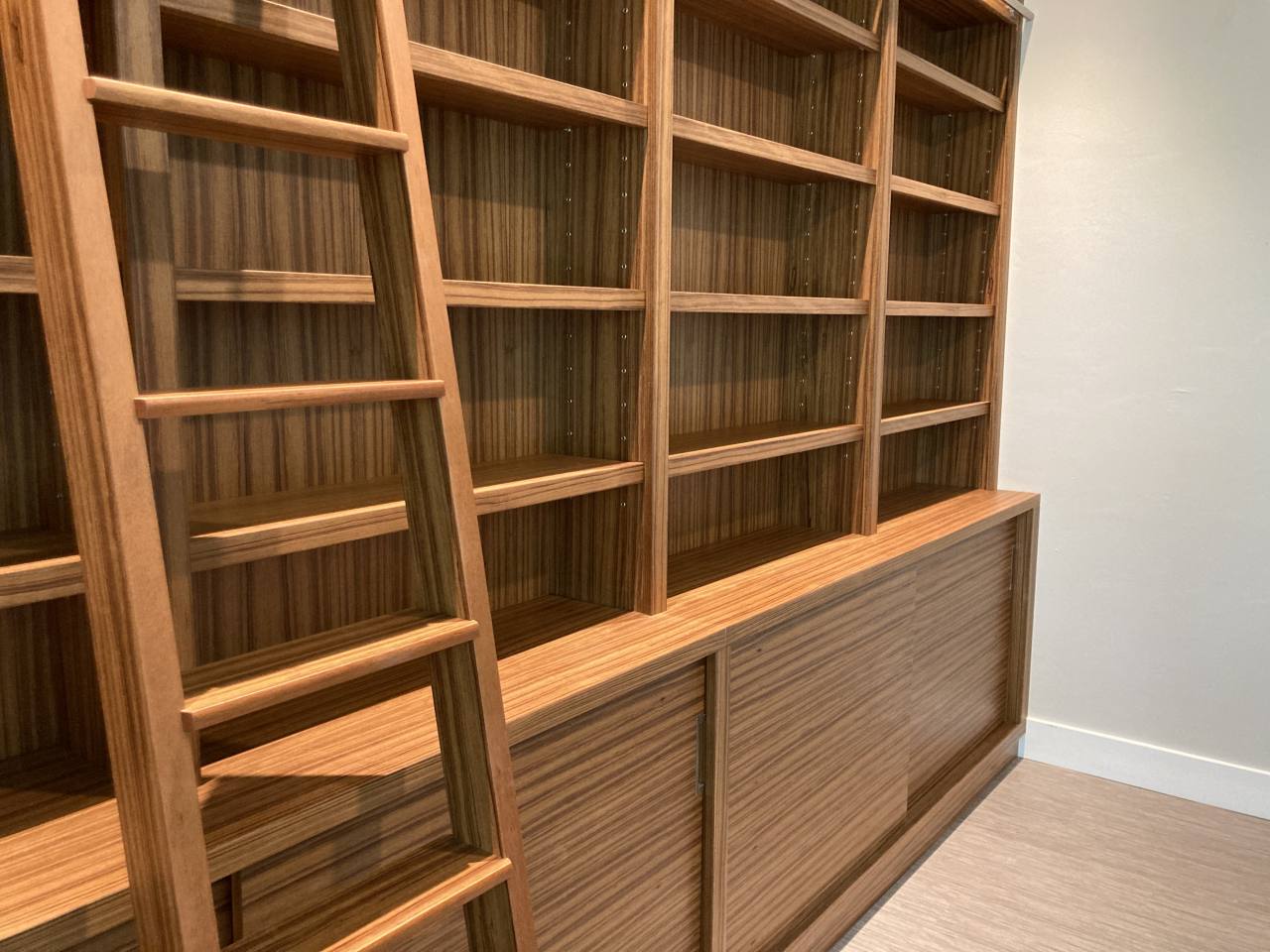
 

Custom Library Design: Built-In Bookcases That Transform Any Room

A custom library is one of the most enduring and personally meaningful investments available in residential cabinetry. It is not a trend-driven addition that dates quickly or a purely functional installation that serves a single purpose. A well-designed custom library transforms a room architecturally, creates a space that reflects the personality and intellectual life of the people who inhabit it, and delivers a level of craft and permanence that freestanding furniture and production shelving simply cannot approach.

Whether it is a dedicated home library, a study lined with floor-to-ceiling bookcases, a living room wall of built-in shelving, or a reading nook carved out of an underutilized corner, custom library design brings together proportion, material quality, and craftsmanship in a way that elevates any room it enters.


Why Custom Library Design Is Fundamentally Different

The difference between a custom library and a production shelving system is not simply a matter of quality — though the quality difference is significant. It is a matter of design intent. Production shelving systems are designed to fit into rooms. Custom libraries are designed to become part of them.

A custom library built-in is designed around the specific architecture of the room it occupies. It accounts for ceiling height, window placement, door swings, existing trim profiles, and the proportional relationships between the wall it occupies and the other elements in the space. The result is a library that looks as though it has always been there — as though the room was designed around it rather than the shelving added to it afterward.

This level of architectural integration is impossible to achieve with freestanding furniture or modular production systems, regardless of their quality. The gap between the top of a bookcase and the ceiling, the visible side panel that does not quite meet the adjacent wall, the baseboard that runs behind rather than through the unit — these are the details that reveal a production solution and prevent it from ever fully becoming part of the room.


Floor-to-Ceiling Design: The Most Powerful Statement in Library Design

Floor-to-ceiling bookcases are the defining element of a serious custom library, and for good reason. When shelving runs from the floor to the ceiling without interruption, it transforms the wall into a unified architectural composition. The room gains height, the books and objects displayed become part of the design rather than accessories to it, and the overall effect is one of permanence and intentionality that no other residential cabinetry installation can quite match.

The design of floor-to-ceiling library built-ins requires careful attention to proportion. The relationship between shelf height and shelf depth, the visual weight of the vertical dividers between bays, the profile of the cornice detail at the ceiling, and the design of the base that connects the unit to the floor all contribute to whether the finished library feels resolved and considered or merely tall.

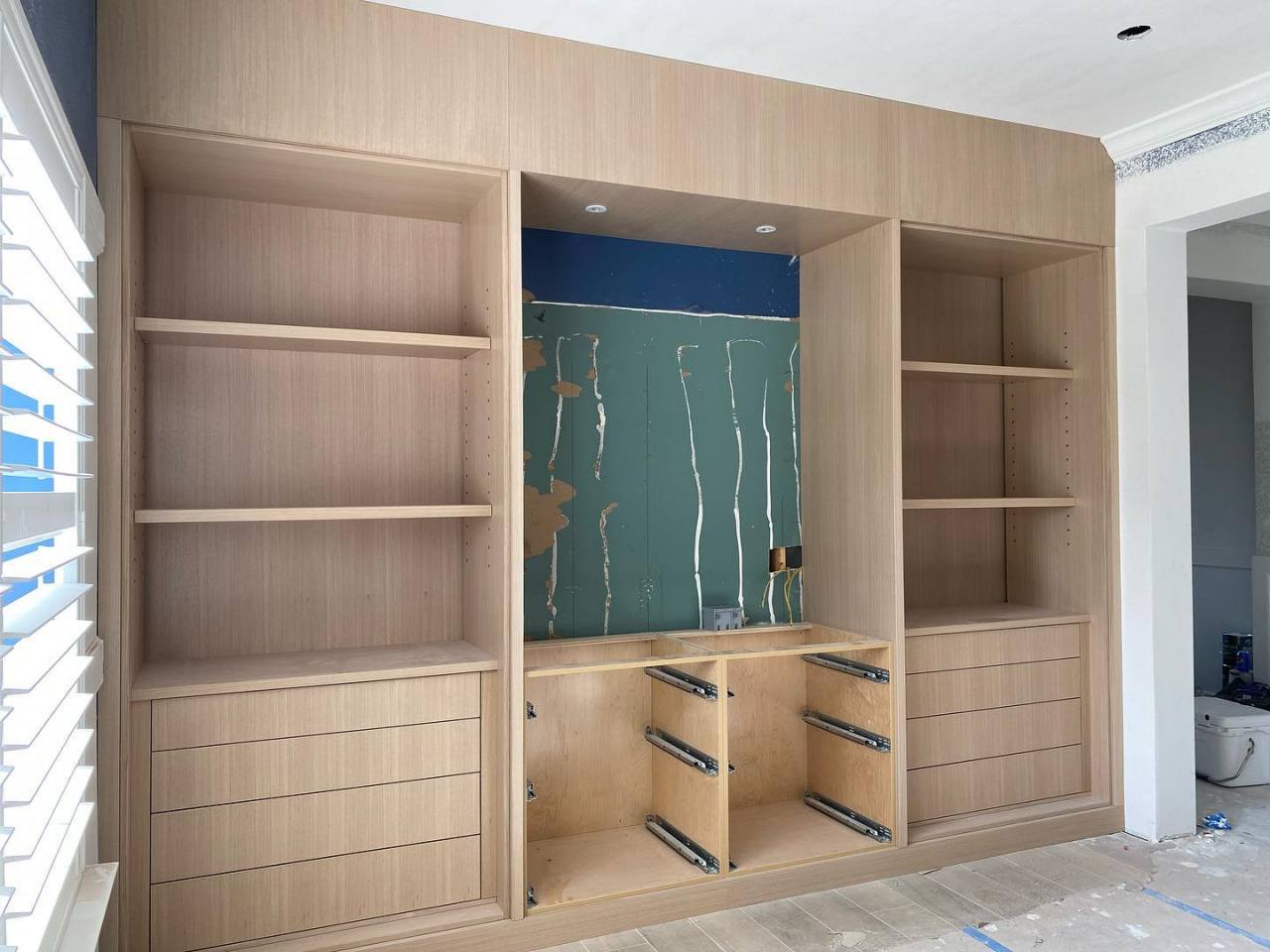
In rooms with standard ceiling heights, floor-to-ceiling built-ins typically include a combination of open shelving in the upper section and closed cabinet storage in the lower section. The closed base cabinets provide concealed storage for items that do not need to be displayed — media equipment, files, supplies, seasonal items — while keeping the visual focus on the open shelving above. The transition between the closed lower section and the open upper section is one of the most important design decisions in a floor-to-ceiling library, and it deserves careful thought about both proportion and detail.

In rooms with higher ceilings, a library ladder running on a rail system is both a practical necessity for reaching upper shelves and one of the most evocative details available in residential design. A well-chosen library ladder — in solid brass hardware, in a wood that complements the shelving, running on a rail that is integrated into the cornice detail — transforms a library from a storage solution into a genuine architectural feature.


Material Selection: Wood Species and Finish in Library Design

The material choices made in a custom library have a direct and lasting impact on the character of the room. A library built in white oak with a natural oil finish communicates something fundamentally different from a library built in painted MDF with a high-gloss lacquer. Neither is wrong — they simply express different design intentions and suit different room aesthetics.

For traditional and transitional libraries, hardwoods with rich grain and warm color are the natural choice. Walnut produces a library of deep, sophisticated warmth — its color darkens beautifully with age and its grain figure rewards close inspection. Cherry offers a lighter, warmer tone that develops a rich patina over time, making it one of the most satisfying wood choices for a library that is meant to age gracefully. White oak brings a more neutral, contemporary quality to a library while retaining the warmth and authenticity of natural wood.

For contemporary libraries, painted finishes in carefully chosen colors can produce results of extraordinary refinement. A library painted in a deep, complex color — a warm charcoal, a rich navy, a muted sage — with carefully detailed shelving and a contrasting interior back panel creates a room with genuine drama and sophistication. The key to a painted library built-in is the quality of the finish system — a cabinet-grade catalyzed finish that produces a smooth, durable surface capable of handling the daily contact that library shelving receives.

Grain matched and sequenced real wood veneer brings the highest level of material craft to a custom library. When the veneer is sequenced across the vertical panels, door fronts, and shelf edges of a library built-in, the wood reads as a continuous composition rather than a collection of individual components. The grain flows from one panel to the next with an intentionality that communicates genuine craftsmanship and elevates the finished library from fine cabinetry to something closer to furniture making at its highest level.


Lighting: The Detail That Brings a Library to Life

Lighting is one of the most transformative details available in custom library design, and it is one of the most commonly overlooked until the shelving is already installed. A well-lit library is a fundamentally different experience from an unlit one — not just practically, but atmospherically.

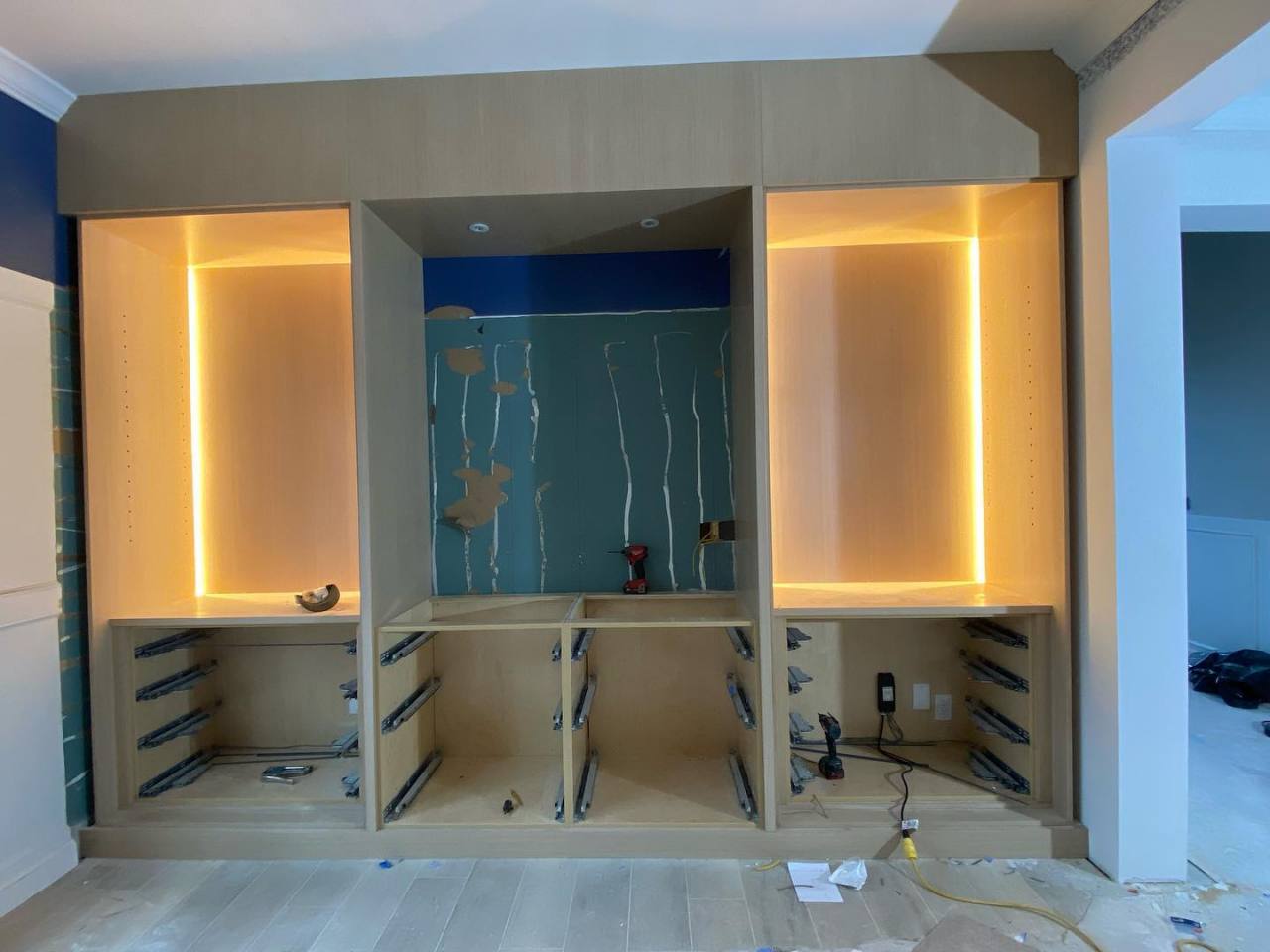
Integrated LED lighting within the library built-in can take several forms. Shelf lighting — LED strips mounted at the front edge of each shelf, directed downward onto the books and objects below — creates a warm, layered effect that makes the library feel inhabited and alive even when the room’s overhead lighting is off. Cabinet interior lighting illuminates the contents of closed lower cabinets and makes them genuinely usable rather than dark and inaccessible.

Picture lights or directional spots mounted in the cornice detail at the top of the unit can wash the face of the shelving with light, emphasizing the depth of the bays and the texture of the books and objects displayed. In a library with high ceilings, this type of lighting draws the eye upward and reinforces the architectural scale of the installation.

The most important principle in library lighting design is that it should be planned before the built-in is constructed, not added afterward. Wiring channels, LED driver locations, and switch positions can all be integrated into the cabinetry during construction in a way that makes the finished installation look completely intentional — because it was.


Display and Storage: Designing for How a Library Is Actually Used

A custom library is not just a place to store books. It is a space that reflects the intellectual and personal life of the people who use it, and its design should account for the full range of what will be displayed and stored within it.

Open shelving is the natural home for books, but the proportions of the shelves matter. Shelves designed exclusively for standard book heights waste space and look rigid. A library designed with a range of shelf heights — some sized for tall art books and oversized volumes, some for standard hardcovers and paperbacks, some deliberately open for objects, artwork, and personal items — feels genuinely curated rather than purely functional.

Integrated display niches, framed openings within the shelving composition, and dedicated spaces for artwork or sculpture add a layer of design sophistication that distinguishes a thoughtfully designed library from a room that simply has a lot of shelves. These details require planning during the design phase and cannot be retrofitted into a completed installation.

Closed storage within the library — whether in base cabinets, in cabinets integrated into the shelving above, or in a dedicated media section — should be designed with the same intentionality as the open shelving. The proportion of open to closed storage, the placement of closed sections within the overall composition, and the detail of the door design all contribute to whether the library reads as a unified architectural element or a combination of mismatched storage solutions.


A Room Worth Designing Well

A custom library is one of the few residential investments that genuinely improves with time. The books accumulate, the wood develops its patina, the objects and art collected over years find their places on the shelves, and the room becomes increasingly personal and irreplaceable. It is a space that rewards the investment made in its design and construction every time it is used — which, in a well-designed library, is every single day.


Straw Woodwork designs and builds custom library built-ins for homeowners who want shelving that becomes a permanent and meaningful part of their home. If you are ready to bring a custom library to life, we would love to talk about your project.
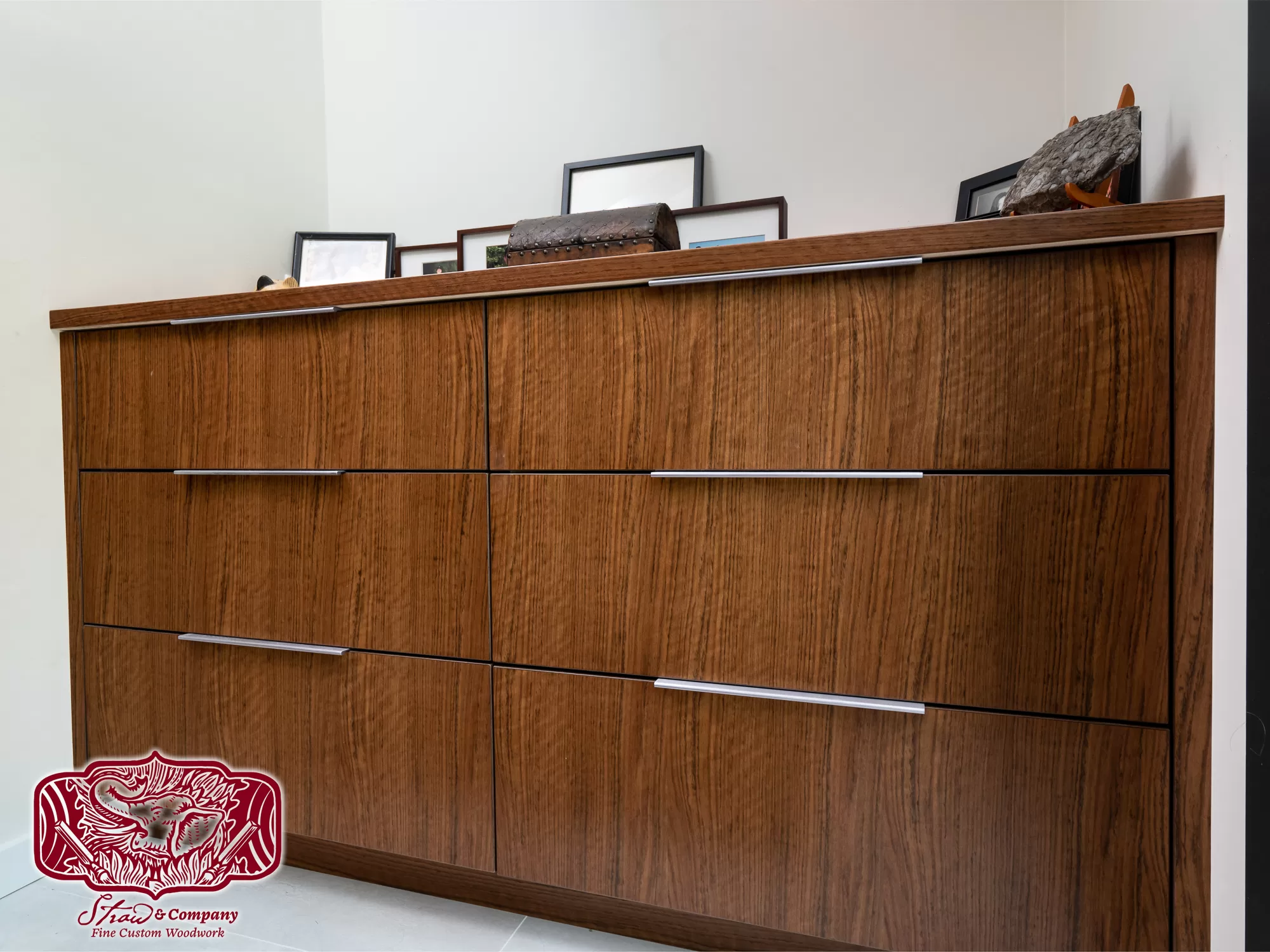
Why Real Wood Veneer Is the Right Answer for Florida’s Climate

For homeowners who want the warmth, character, and authenticity of natural wood in a Florida kitchen or bathroom, grain matched and sequenced real wood veneer represents the most technically sound and visually compelling solution available. It combines the genuine beauty of natural wood with a construction approach engineered to handle the demands of Florida’s humid subtropical climate.

A real wood veneer cabinet presents a surface that looks, feels, and responds to light exactly like solid wood — because it is solid wood at its face. The difference lies in how the core is engineered to manage the humidity cycling that Gainesville’s climate demands, providing the dimensional stability that allows the veneer to perform beautifully year after year without warping, cracking, or finish failure.

This is not a compromise or an approximation of wood. It is a construction method refined over decades precisely because it delivers better long-term performance than solid wood in demanding climate conditions — while preserving everything that makes natural wood the most desirable material in custom cabinetry.


Grain Matching: Where Craft Becomes Visible

The quality of a real wood veneer kitchen is determined not just by the species and cut of veneer selected but by how that veneer is matched across every door, drawer front, and cabinet surface in the room. This is where the craft of custom cabinetry becomes immediately and powerfully visible.

Book matching is the process of opening consecutive veneer leaves like the pages of a book and joining them at their center edges to create a mirrored, symmetrical grain pattern across the face of a door. When executed with precision, book matched veneer produces a surface with a natural elegance and visual balance that draws the eye and rewards close inspection. The symmetry is organic, produced by the natural character of the wood itself, and no two book matched doors are identical.

Slip matching places consecutive veneer leaves side by side in the same orientation, creating a repeating pattern that reads as more subtle and contemporary. For kitchens where the design intent is quiet and restrained, slip matched veneer produces a surface of understated sophistication that complements rather than competes with the other elements in the room.

Both methods require careful veneer selection and a high level of skill in execution. The joins must be precise, the grain alignment must be deliberate, and the result must look intentional across every surface in the kitchen.


Sequence Matching: A Kitchen That Reads as One Composition

Sequence matching represents the highest standard of craftsmanship available in real wood veneer cabinetry. Every door and drawer front is cut from the same consecutive sequence of veneer leaves, ensuring that grain pattern, color, and figure are as consistent as possible across every surface in the room.

The result is a kitchen that reads not as a collection of individual cabinets but as a single unified composition. The grain flows from one door to the next with a coherence and intentionality that is immediately apparent. It is the difference between a kitchen where the wood was chosen and a kitchen where the wood was orchestrated.

In Florida’s climate, sequence matching also has a practical dimension. Because all veneer leaves come from the same flitch, the color and density of the wood are highly consistent across every surface. This consistency means the wood responds to humidity cycling uniformly, reducing the risk of visible variation in surface movement or finish behavior between adjacent doors over time.


The Finishing System: The Climate’s Last Line of Defense

The finishing system applied to real wood veneer cabinetry is as important as the veneer selection and the grain matching. A finish that does not seal the wood completely allows moisture to enter and begin the cycle of expansion and contraction that leads to finish failure over time.

A quality finish applied in multiple coats with sanding between each coat provides the level of protection that Gainesville’s climate demands. It seals the veneer surface completely, resists the effects of cooking heat and steam, and maintains its adhesion and clarity over years of daily use. This level of finishing is a hallmark of custom cabinet making built to a high standard — and in Florida’s climate it is not optional. It is the difference between cabinetry that performs beautifully for decades and cabinetry that begins to show the effects of its environment within a few years of installation.


Built for Florida, Built to Last

Real wood veneer cabinetry, grain matched and sequence matched to the highest standard of craftsmanship and finished with a system engineered for Florida’s climate, represents the most compelling and technically sound choice available for homeowners who want a kitchen or bathroom that is genuinely beautiful, genuinely durable, and genuinely worth the investment.

It brings the warmth and authenticity of natural wood into a space without the dimensional instability that solid wood construction can present in a humid subtropical climate. It rewards the eye with a level of visual coherence and craft that production cabinetry cannot approach. And it performs — year after year, through heat and humidity — in a way that justifies every dollar invested in its construction.

Straw Woodwork builds custom grain matched and sequence matched real wood veneer cabinetry for Gainesville and North Central Florida homeowners. If you are ready to invest in cabinetry built to the highest standard and engineered for Florida’s climate, we would love to talk about your project.
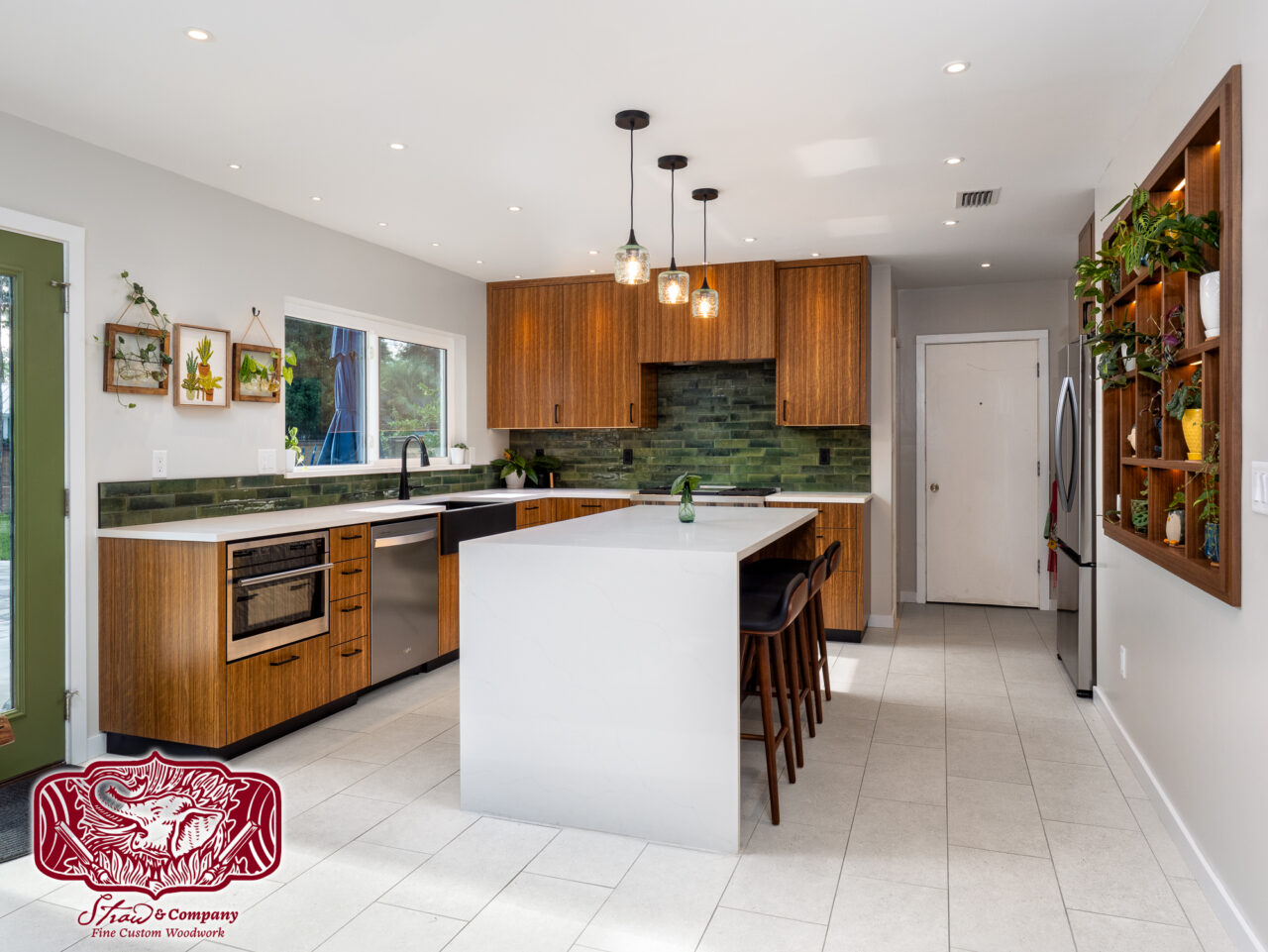
 

How Lighting and Cabinets Work Together in the Kitchen

The kitchen is one of the most functional spaces in any home, and two elements define how well it works and how good it looks: cabinetry and lighting. Most homeowners think about these separately — cabinets during the design phase, lighting almost as an afterthought. But when lighting and cabinets are planned together from the start, the result is a kitchen that is not only beautiful but genuinely easier to use every day.

This post breaks down how lighting and cabinets interact, the types of lighting worth considering, and how to approach the planning process so both elements work in harmony.


Why Lighting and Cabinet Design Are Inseparable

Cabinetry defines the structure and layout of your kitchen. It determines where your walls are, where your upper cabinets sit, where your island begins and ends, and how your storage is organized. Lighting, in turn, responds to all of that structure.

If lighting is added after cabinetry is installed without any prior planning, you often end up with shadows in the wrong places, under-lit work surfaces, and fixtures that compete visually with your cabinet design rather than complement it. The relationship between the two is not decorative — it is functional and structural.

When a custom cabinetry project is designed thoughtfully, lighting becomes part of the plan. Recessed channels, interior cabinet wiring, and toe kick details can all be built directly into the cabinetry before installation, making the finished result look intentional and clean.


Task Lighting: Illuminating Where You Actually Work

Task lighting is the most practical category of kitchen lighting, and cabinets are its natural home. Under-cabinet lighting is the most common form — fixtures mounted to the underside of upper cabinets that direct light directly onto the countertop below.

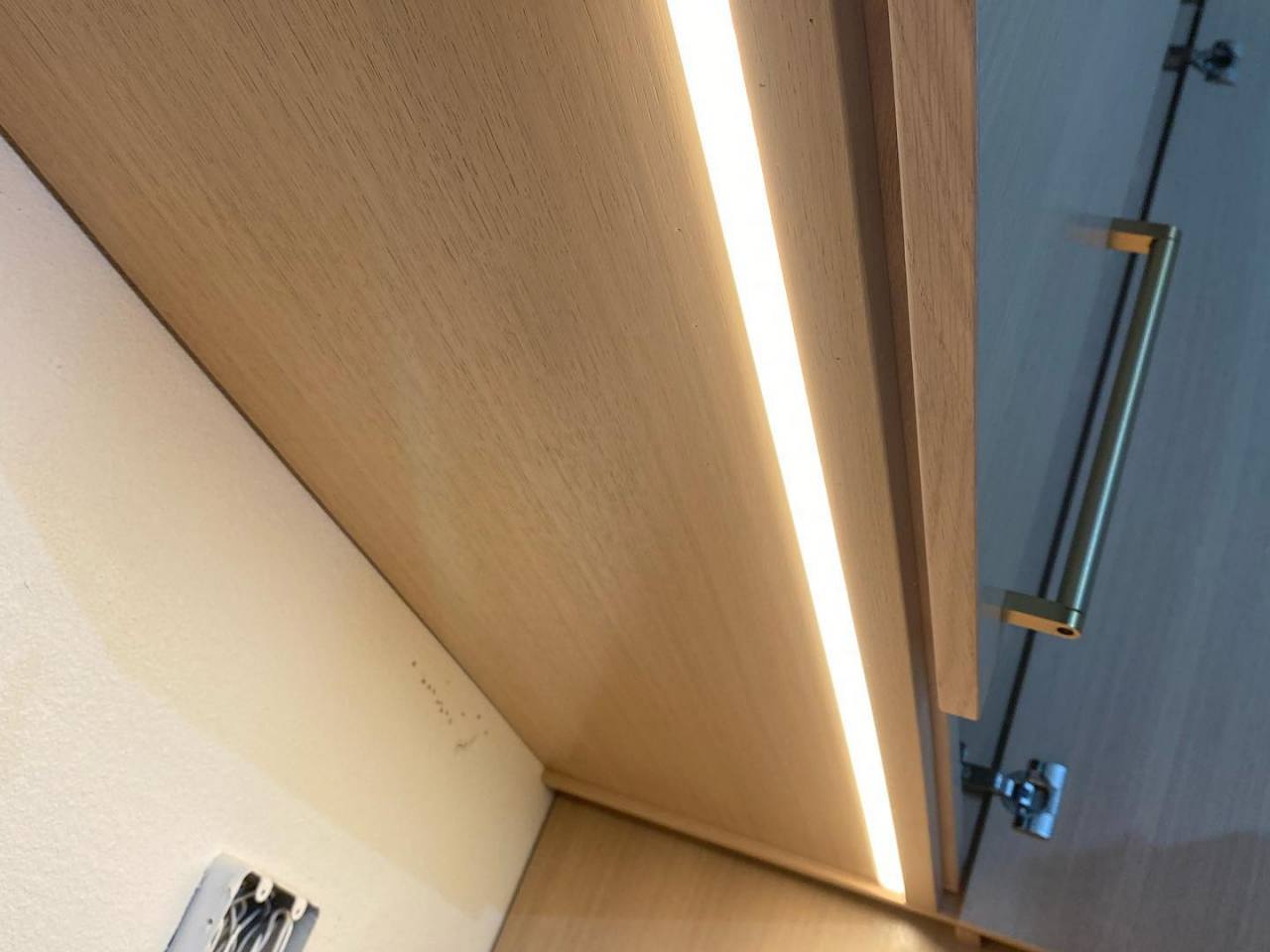
For custom modern kitchens, LED strip lighting integrated flush into the cabinet base is the preferred approach. It avoids the visible hardware of surface-mounted puck lights and creates an even wash of light across the entire countertop rather than isolated bright spots.

The quality of this light matters. Color temperature — measured in Kelvins — affects how food, surfaces, and finishes look. A range between 2700K and 3000K produces warm white light that flatters wood tones and natural stone without making the kitchen feel clinical. For kitchens with a colder, more modern aesthetic, 3500K to 4000K can work well, but should be chosen carefully in relation to the cabinet finish.

When designing custom cabinetry, the depth and profile of the upper cabinet base can be modified to conceal LED drivers and wiring, keeping the installation invisible from normal sightlines.


Ambient Lighting and How Cabinets Frame It

Ambient lighting provides the general illumination of the kitchen — the baseline level of light that fills the room when you walk in. Recessed ceiling fixtures are the most common source, but the placement of those fixtures is directly influenced by cabinet layout.

Upper cabinets that extend to the ceiling, for example, affect where recessed lights can be positioned. An island’s footprint determines where pendant fixtures make sense. A tall pantry cabinet or refrigerator surround changes how light travels through the room.

Working with a custom cabinet maker early in the process means these relationships can be mapped out before anything is built or installed. Ceiling lighting can be positioned to avoid casting shadows onto work surfaces, and the overall light plan can account for how cabinet depth and door swing will interact with each fixture.


Interior Cabinet Lighting: Function and Detail

Interior cabinet lighting has become increasingly common in custom kitchen design, and for good reason. Glass-front upper cabinets, open shelving sections, and deep pantry cabinets all benefit from interior light sources.

For glass-front cabinets, interior LED lighting transforms display storage into a design feature. The light draws the eye, adds depth to the kitchen, and makes the cabinet contents — whether glassware, dishware, or decorative objects — look deliberate and curated.

For deep pantry cabinets or tall storage towers, interior lighting is a practical necessity. Without it, items stored toward the back of a shelf are difficult to see and easy to forget. A simple LED strip mounted at the front edge of each shelf solves this problem entirely.

In custom cabinetry, interior lighting can be wired directly through the cabinet box during construction, with door-activated switches that turn the light on when the door opens and off when it closes — the same principle as a refrigerator. This level of integration is only possible when lighting is considered during the build, not after.


Toe Kick Lighting: Subtle but Effective

Toe kick lighting is one of the more understated details in a well-designed kitchen, and one that most homeowners only notice when it’s done well. LED strips mounted in the toe kick recess at the base of lower cabinets cast a soft glow along the floor, creating the appearance that the cabinets float slightly above the surface.

Beyond the visual effect, toe kick lighting serves a practical purpose. It provides low-level ambient light for nighttime kitchen use without requiring overhead lights to be turned on — useful for early mornings, late evenings, or households with young children.

Custom cabinetry makes toe kick lighting straightforward to integrate. The channel is built into the base during construction, wiring is routed cleanly, and the finished result looks like it was always meant to be there.


Planning Lighting and Cabinets Together: The Practical Approach

The most important takeaway is that lighting should be part of the cabinet design conversation, not a separate one. When you work with a custom cabinet maker, bring your lighting intent to the first meeting. Know whether you want under-cabinet lighting, interior lighting, or toe kick details. Have a general sense of your fixture choices for the ceiling.

This allows the cabinetry to be designed around the lighting plan — with the right base profiles, wiring channels, and structural details built in from the start. The result is a kitchen where nothing looks like it was added later, because nothing was.

Good lighting does not just illuminate a kitchen. It reveals the craftsmanship of the cabinetry, defines the character of the space, and makes the room more functional every single day. When the two are designed together, the difference is immediately visible — and felt every time you walk into the room.


Straw Woodwork specializes in custom cabinetry built to work with your home’s unique design. If you’re planning a kitchen project, we’d love to be part of the conversation from the beginning.


Why Custom Cabinetry Is Worth the Investment

When homeowners begin planning a kitchen renovation or bathroom remodel, the conversation about cabinetry almost always arrives at the same question: is custom cabinetry worth the additional investment over stock or semi-custom options? It is a fair question. Custom cabinetry costs more upfront, and in a renovation where budgets are already under pressure from multiple directions, the difference in price between production and custom can feel difficult to justify.

But the question itself is often framed incorrectly. The real question is not whether custom cabinetry costs more. It does. The real question is what that additional investment delivers — in quality, in fit, in longevity, and in the way the finished space looks and functions every single day. When the comparison is made on those terms, the case for custom cabinetry becomes considerably more compelling.


Built for Your Space, Not Adapted to It

The most fundamental difference between custom cabinetry and every other option is that custom cabinetry is designed and built for your specific space. Every cabinet box is sized to fit the actual dimensions of your room — not the nearest standard size available in a production catalog.

This distinction matters more than most homeowners realize until they have lived with the alternative. Stock cabinetry is manufactured in fixed increments — typically three-inch width intervals — and installed kitchens and bathrooms are almost never perfectly divisible by those increments. The result is filler strips, awkward gaps, and compromises in layout that affect both the appearance and the function of the finished space.

Custom cabinetry eliminates those compromises entirely. If your kitchen is 14 feet and 7 inches wide, your cabinetry is built to 14 feet and 7 inches. Every cabinet is proportioned correctly for the space it occupies, and the finished result looks like it was always meant to be there — because it was designed to be.

This precision extends beyond width. Custom cabinetry accounts for out-of-plumb walls, uneven floors, architectural details like beams and soffits, and the specific requirements of appliance integration. A custom cabinet maker measures, accounts for, and resolves every variable in your specific space before a single piece of material is cut.


Material Quality That Production Cabinetry Cannot Match

Stock and semi-custom cabinetry is manufactured to meet price points. The materials used — the substrate of the cabinet box, the quality of the door construction, the thickness of the veneer or laminate, the grade of the hardware — are all selected to allow the product to be sold at a competitive retail price. This is not a criticism. It is simply the reality of how production manufacturing works.

Custom cabinetry is built to a quality standard rather than a price point. The substrate is chosen for the specific application — whether that means furniture-grade plywood for the cabinet box, MDF for painted door faces, or wood veneer over a stable engineered core for a natural wood finish. The construction method is selected for long-term performance rather than manufacturing efficiency. The hardware is specified for durability and smooth operation over decades of daily use rather than for its cost at scale.

The difference in material quality between production and custom cabinetry is not always visible on the day of installation. It becomes visible over time — in doors that hold their shape rather than warping, in finishes that remain consistent rather than yellowing or delaminating, in drawer systems that operate smoothly after ten years of use rather than beginning to fail after two or three.


Storage Designed Around How You Actually Live

Production cabinetry offers a fixed range of interior configurations. You choose from what is available and organize your belongings around the constraints of the cabinet rather than designing the cabinet around your needs.

Custom cabinetry inverts that relationship entirely. The interior of every cabinet is designed around how you actually use your kitchen or bathroom. Drawer inserts sized for your specific cookware. Pull-out shelves positioned at the depth that suits your pantry storage. A drawer stack in the location that makes the most ergonomic sense for your workflow. A vanity interior configured for the exact combination of items you store there every day.

This level of personalization is not a luxury detail. It is the difference between cabinetry that makes a space genuinely more functional and cabinetry that simply occupies the space. In a kitchen where the same storage is accessed multiple times every day, the cumulative effect of well-designed interior organization is significant — in time saved, in frustration avoided, and in the simple daily pleasure of a space that works the way it should.


Longevity That Changes the Financial Equation

The upfront cost of custom cabinetry is higher than production alternatives. But the financial comparison between the two is incomplete if it only accounts for the initial purchase price.

Quality custom cabinetry, built from the right materials and finished correctly, has a functional lifespan measured in decades. It does not need to be replaced when a kitchen is refreshed. Doors and drawer fronts can be refinished or replaced while the cabinet boxes remain in place. Hardware can be updated. The bones of the kitchen — the structure that defines its layout and proportion — remain sound and serviceable for the life of the home.

Production cabinetry has a shorter functional lifespan. The materials and construction methods used to meet retail price points are not engineered for decades of daily use in a kitchen environment. When production cabinetry begins to fail — through warping, delamination, hardware breakdown, or structural compromise — the remedy is often replacement rather than repair. The cost of that replacement, factored against the original savings, frequently closes or reverses the financial gap between production and custom.


The Resale Value of a Well-Designed Kitchen

A kitchen is consistently among the highest-return renovation investments in residential real estate. But not all kitchen renovations return equal value. A kitchen with quality custom cabinetry — one that is clearly well-built, well-proportioned, and finished with care — communicates something to a prospective buyer that a kitchen with production cabinetry simply does not.

It communicates that the home has been maintained and improved to a high standard. It signals quality throughout. And in a competitive real estate market, that signal translates into buyer confidence, stronger offers, and a faster sale.

Custom cabinetry is not just an investment in how you live in your home today. It is an investment in the value of the home itself — one that compounds over time as the quality of the materials and construction becomes more apparent with every passing year.


The Right Cabinet Maker Makes the Difference

Custom cabinetry is only as good as the cabinet maker who builds it. The value of the investment depends entirely on the quality of the design process, the materials selected, the precision of the construction, and the care taken during installation.

Working with a cabinet maker who asks the right questions, who understands how design decisions affect long-term performance, and who builds every cabinet to a consistent standard of quality is what separates a custom cabinetry investment that delivers lasting value from one that simply costs more than a production alternative.

The difference between good and exceptional custom cabinetry is craft. And craft, in cabinetry as in anything else, is always worth investing in.

Straw Woodwork designs and builds custom cabinetry for kitchens, bathrooms, and living spaces throughout the region. If you are ready to invest in cabinetry built to last, we would love to talk about your project.
 

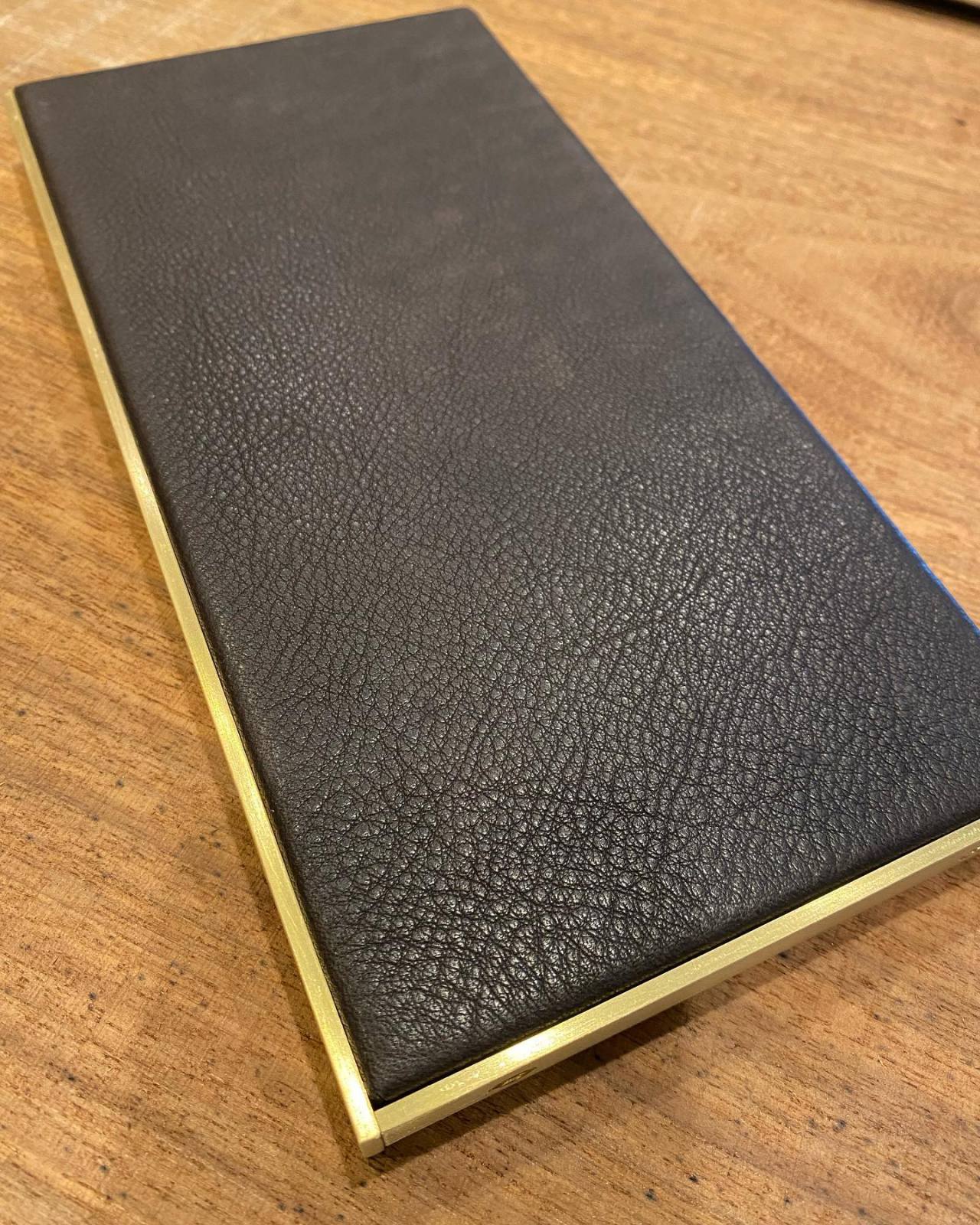
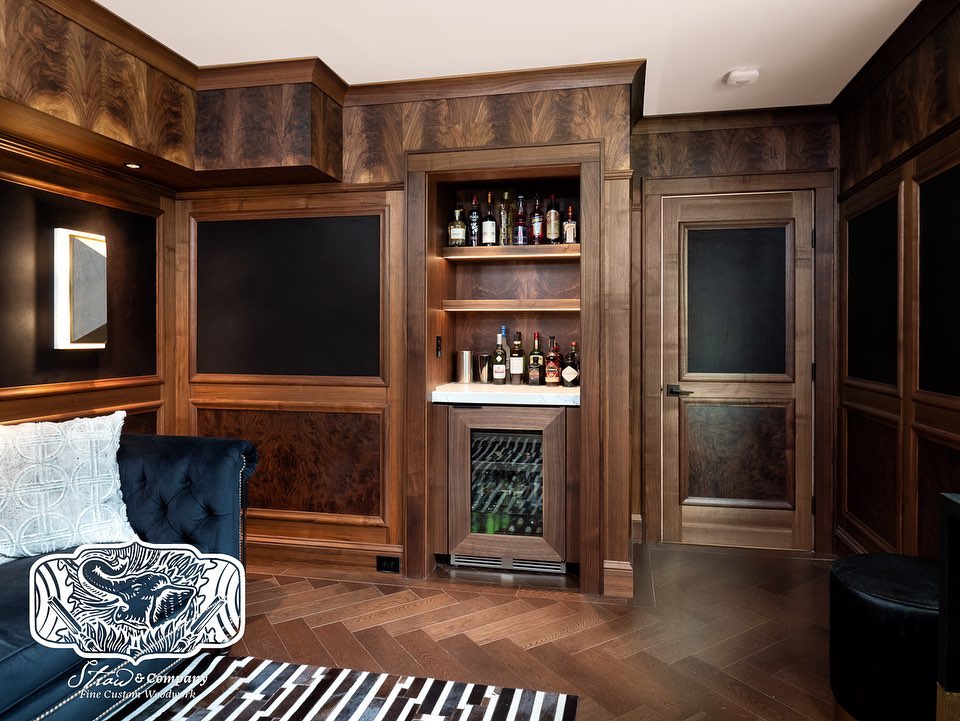
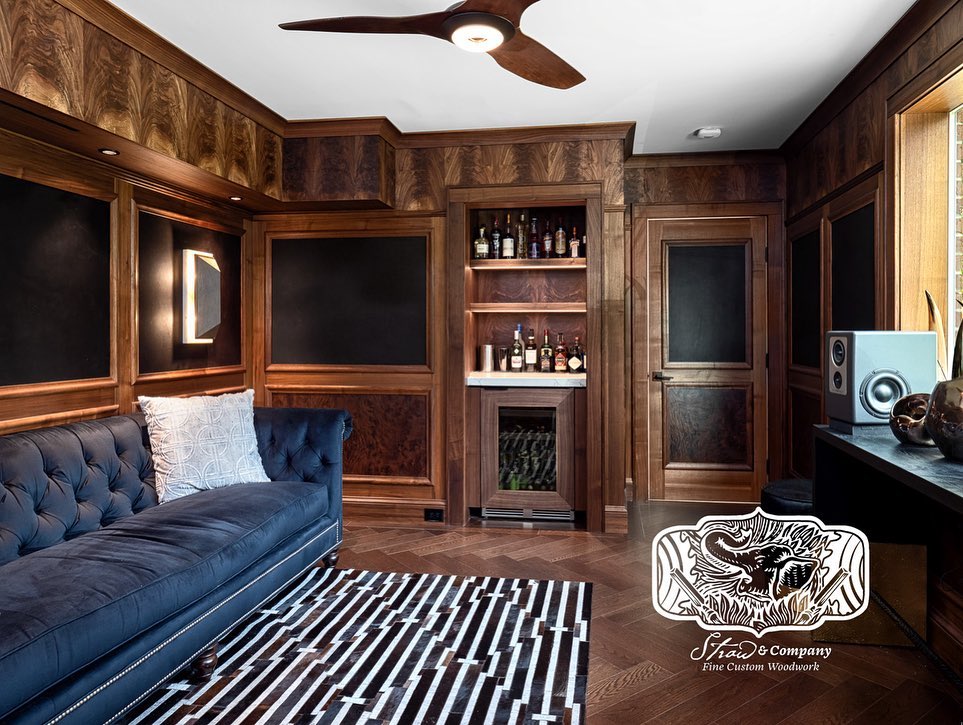
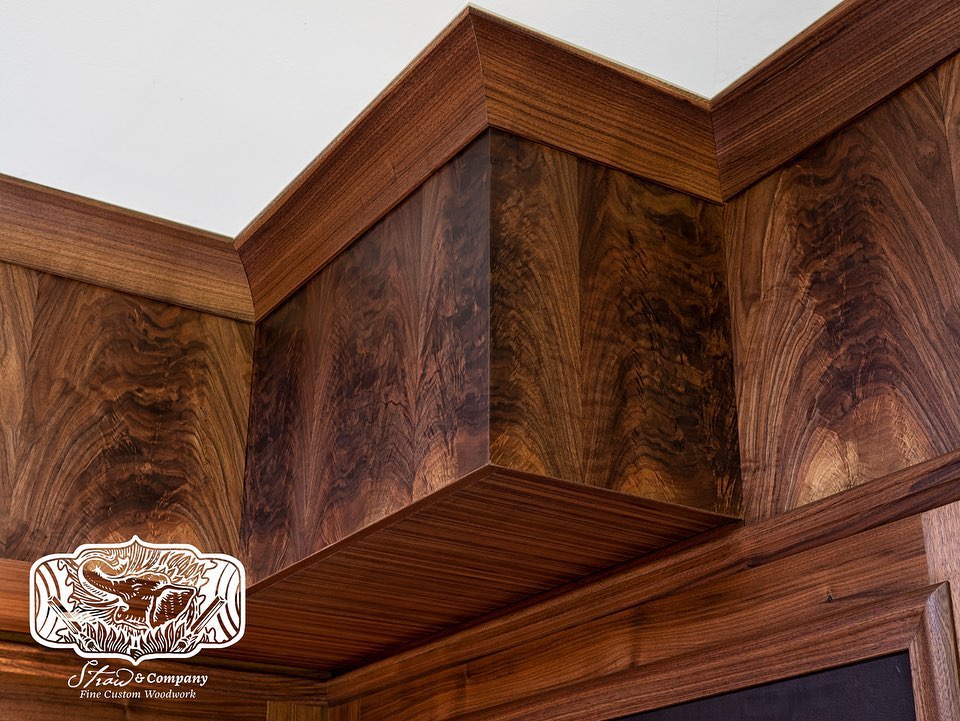
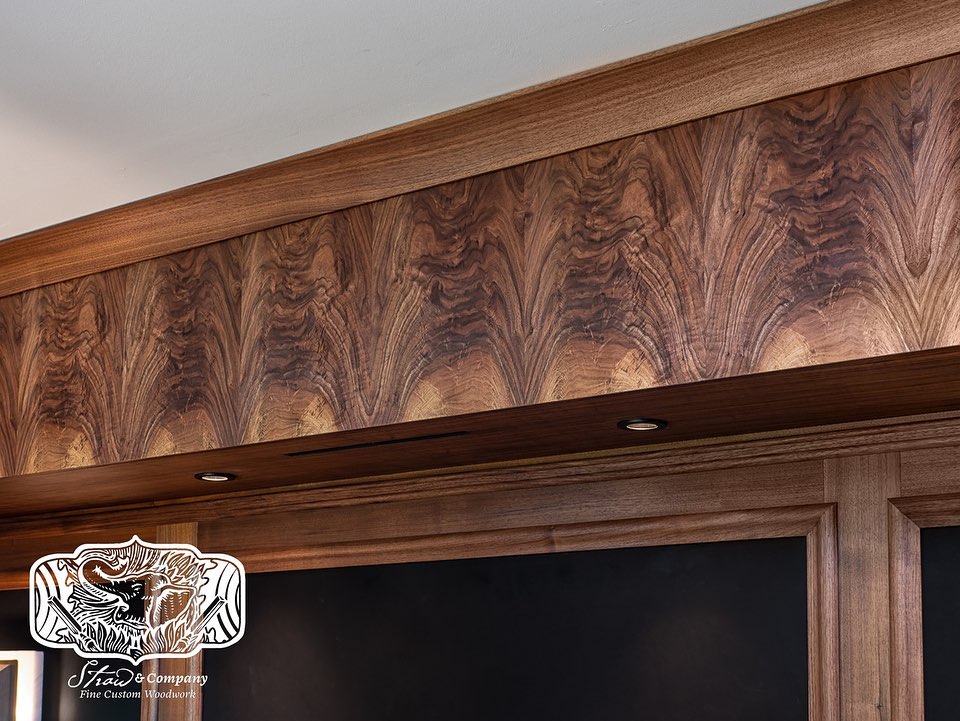
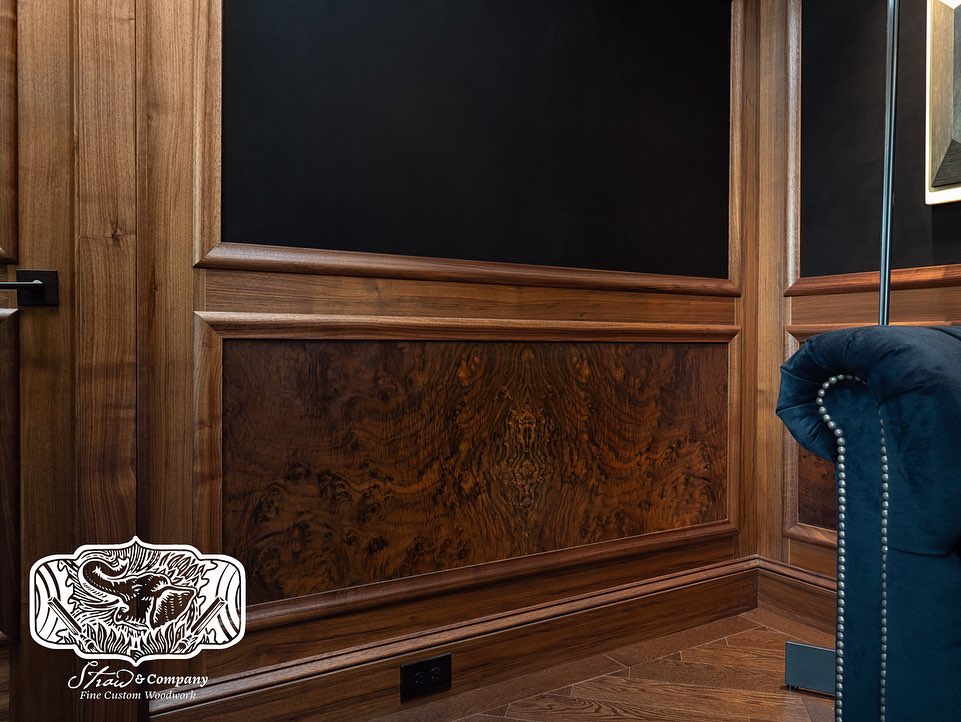
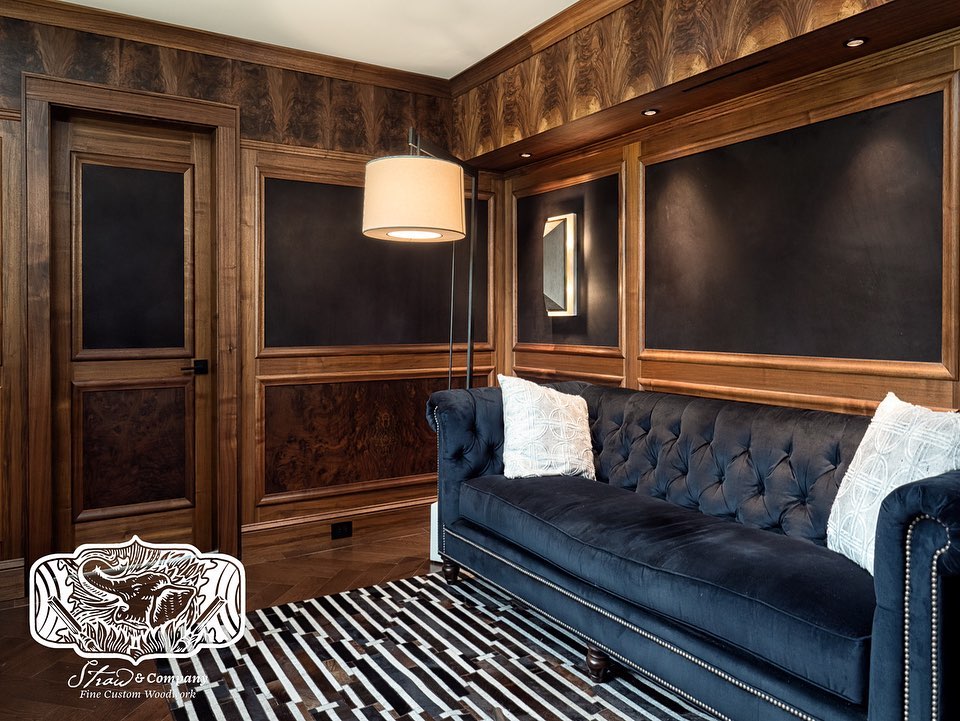
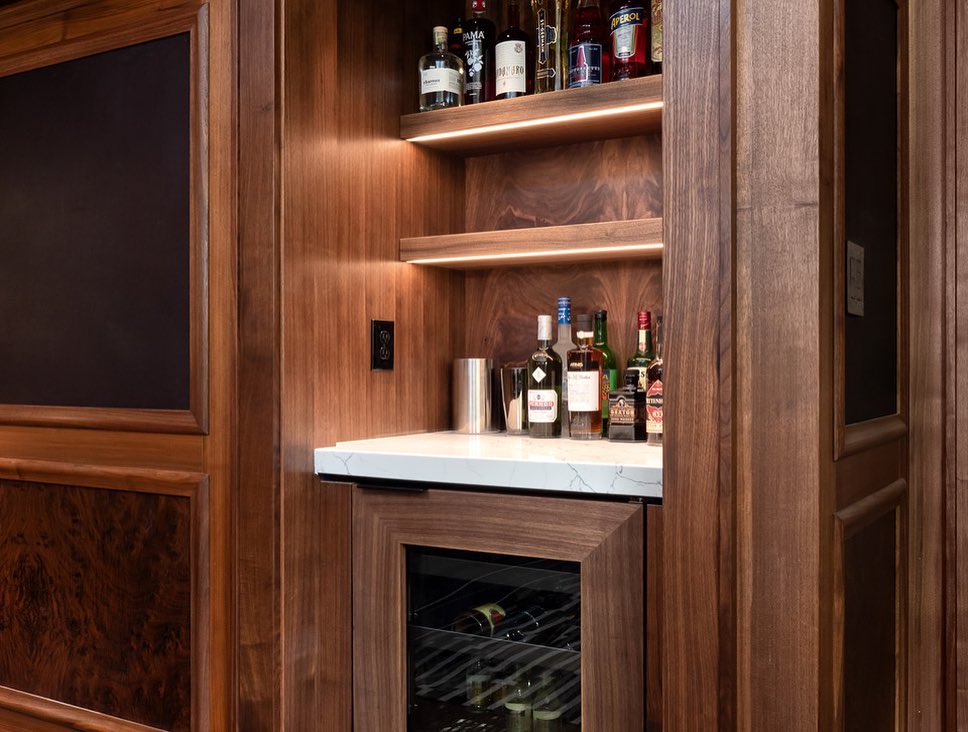
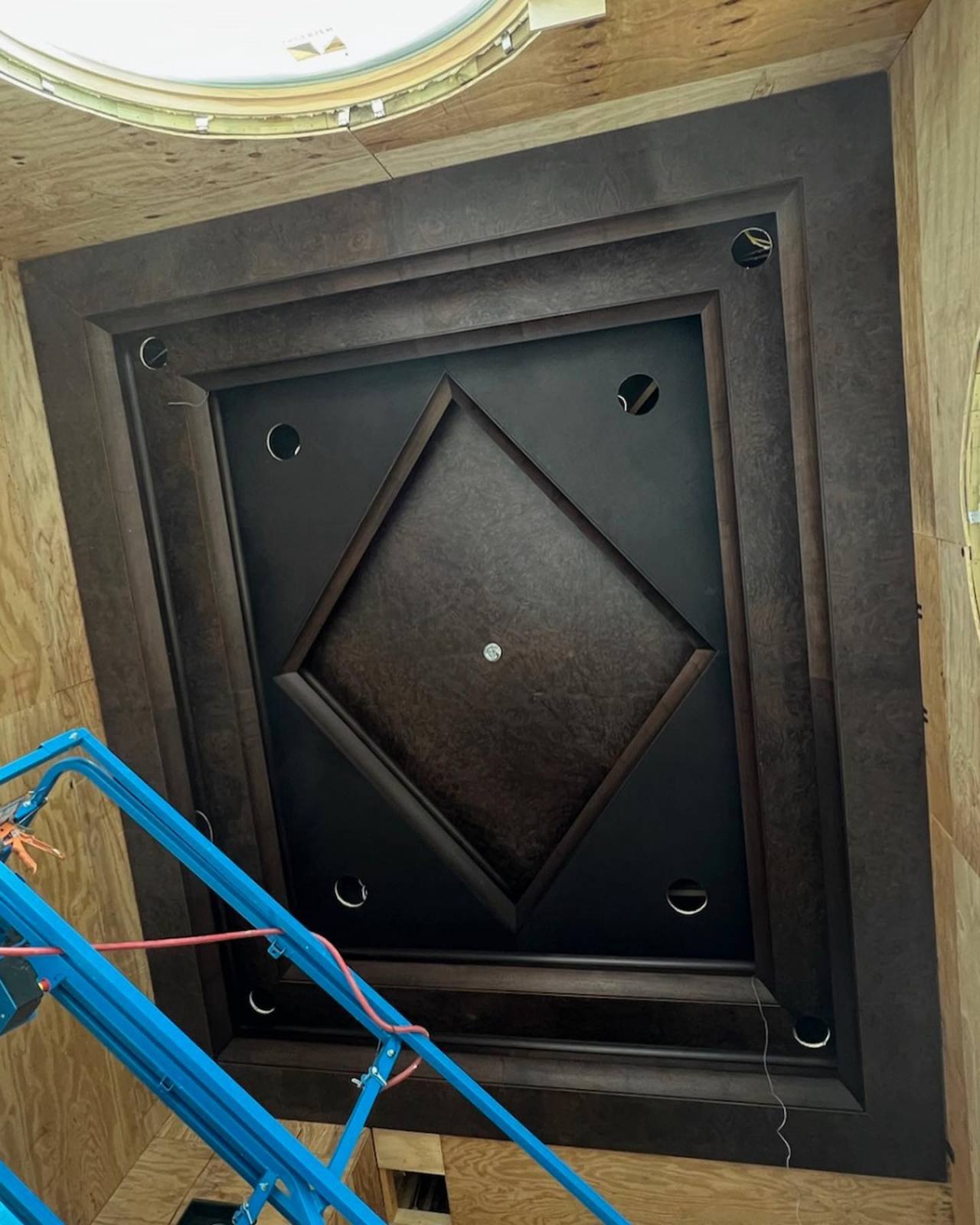
Walnut burl, crotch wood, and leather panels. All sequenced and grain matched. All of our moldings are made in house out of premium qtr. sawn material. It’s an entire composition. #strawwoodwork #leatherwall #walnutwalls #interiordesigner #interiordesign thanks @sarah.cain.design

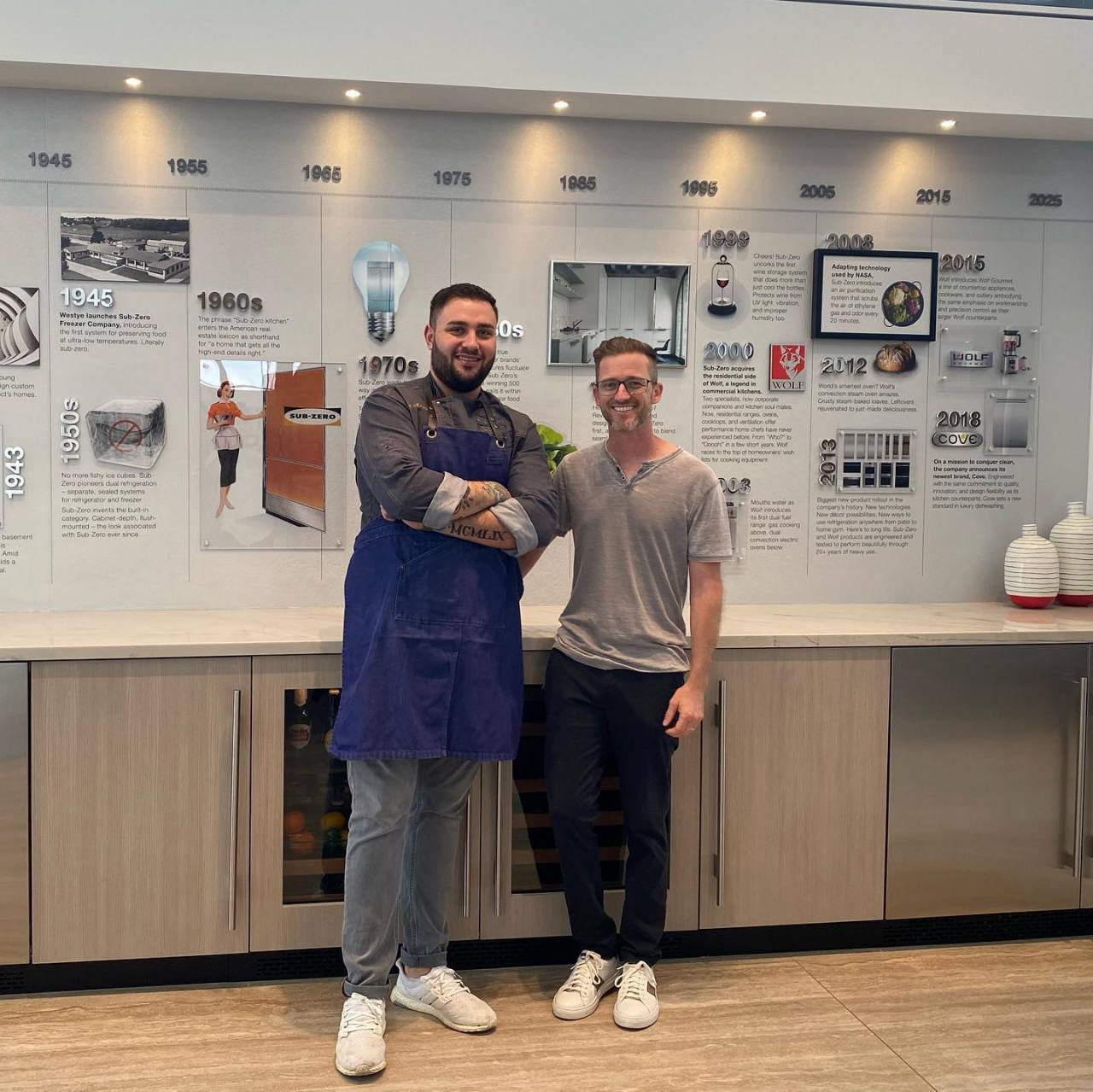
Mike, my good friend and former rep @subzeroandwolf gave me a tour of the subzero showroom and several of the “high end” cabinet design studios. I am posting images of the @wynwoodwallsofficial cause these murals are way more awesome than what i saw in those factory showrooms. #strawwoodwork

Delivered and installed in Tampa, 48 hrs in 4 days. Couldn’t and wouldn’t do it without the Company of people who have surrounded me. #interiordesign #floridainteriordesign #tampainteriordesign #babyjojo

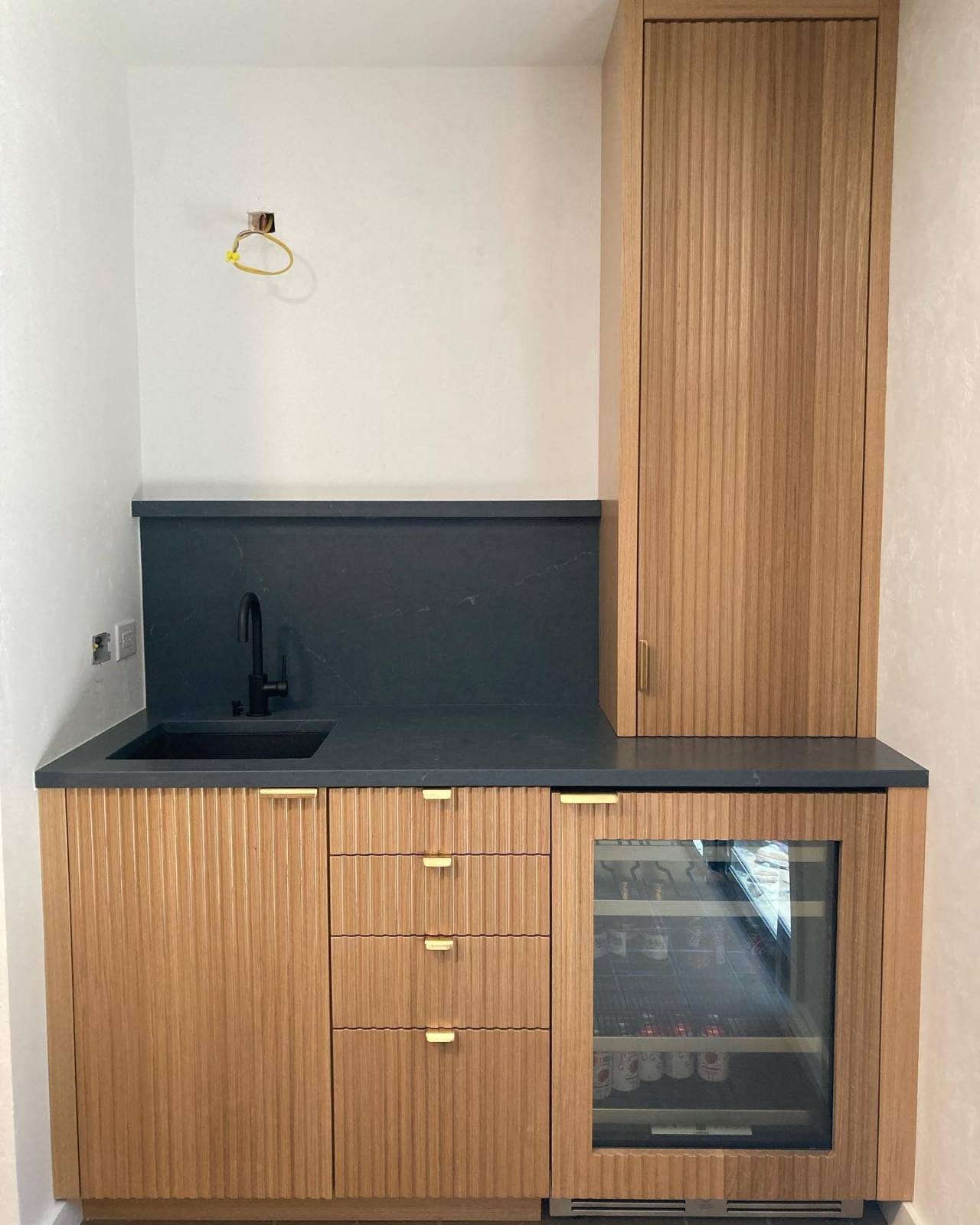
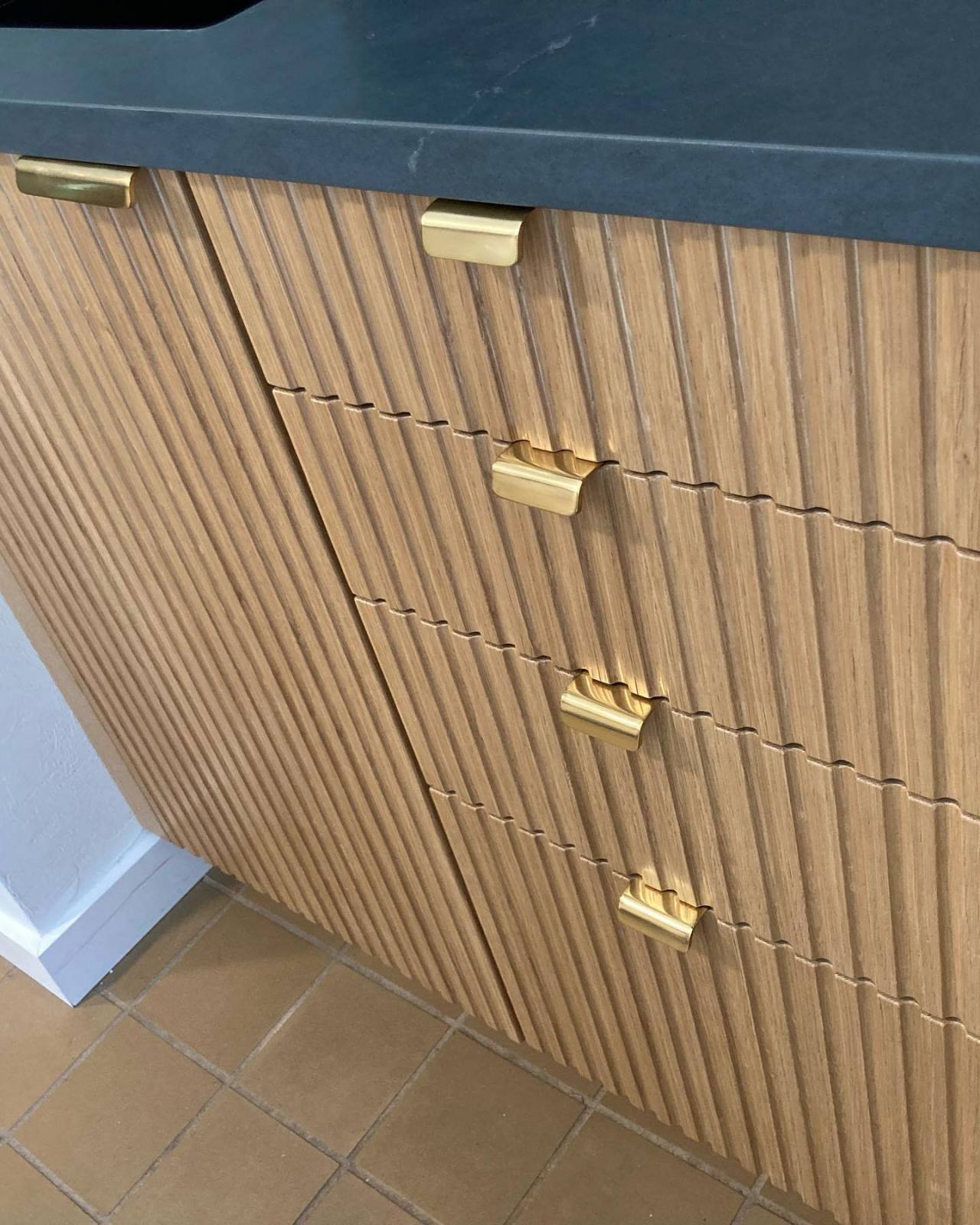
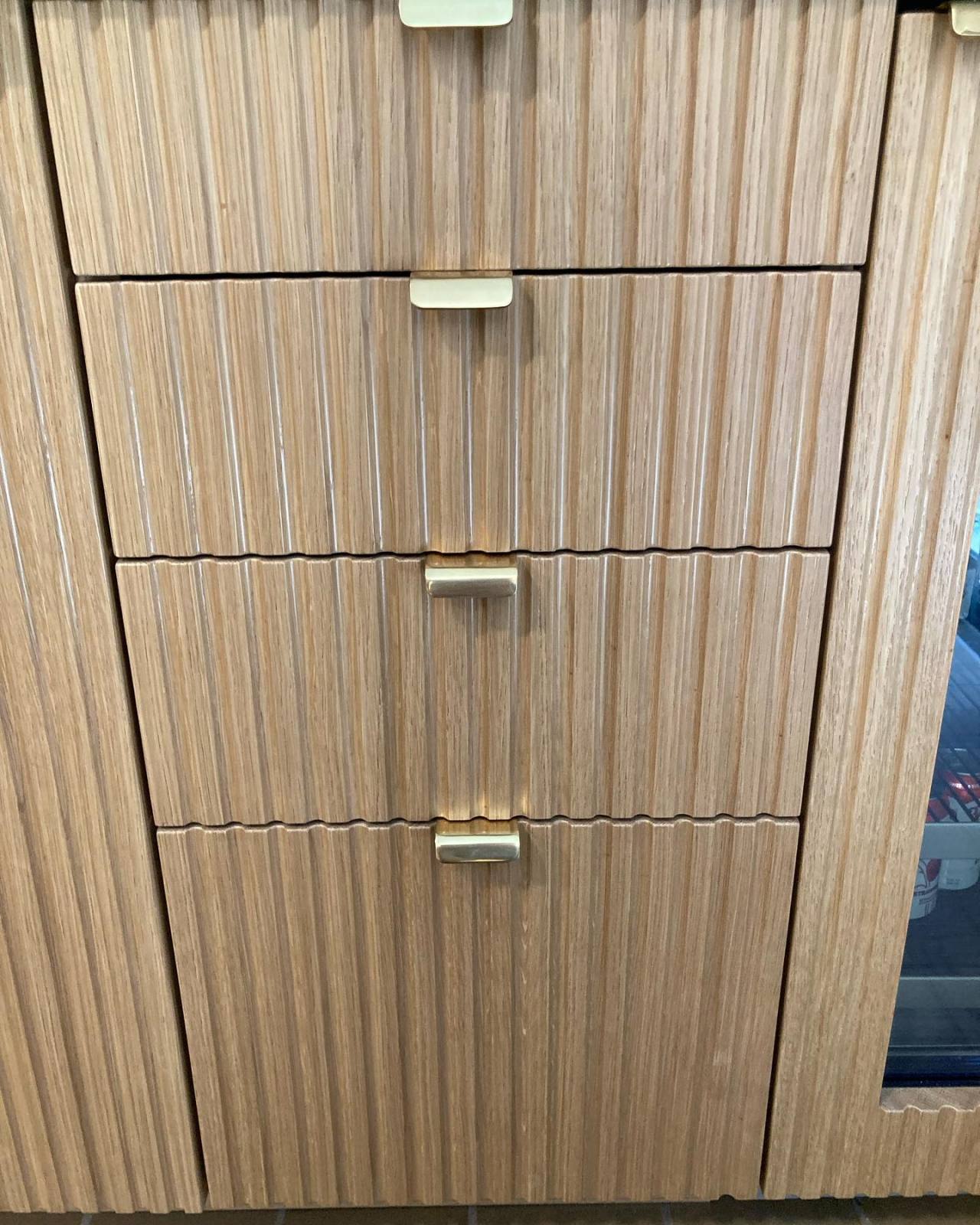
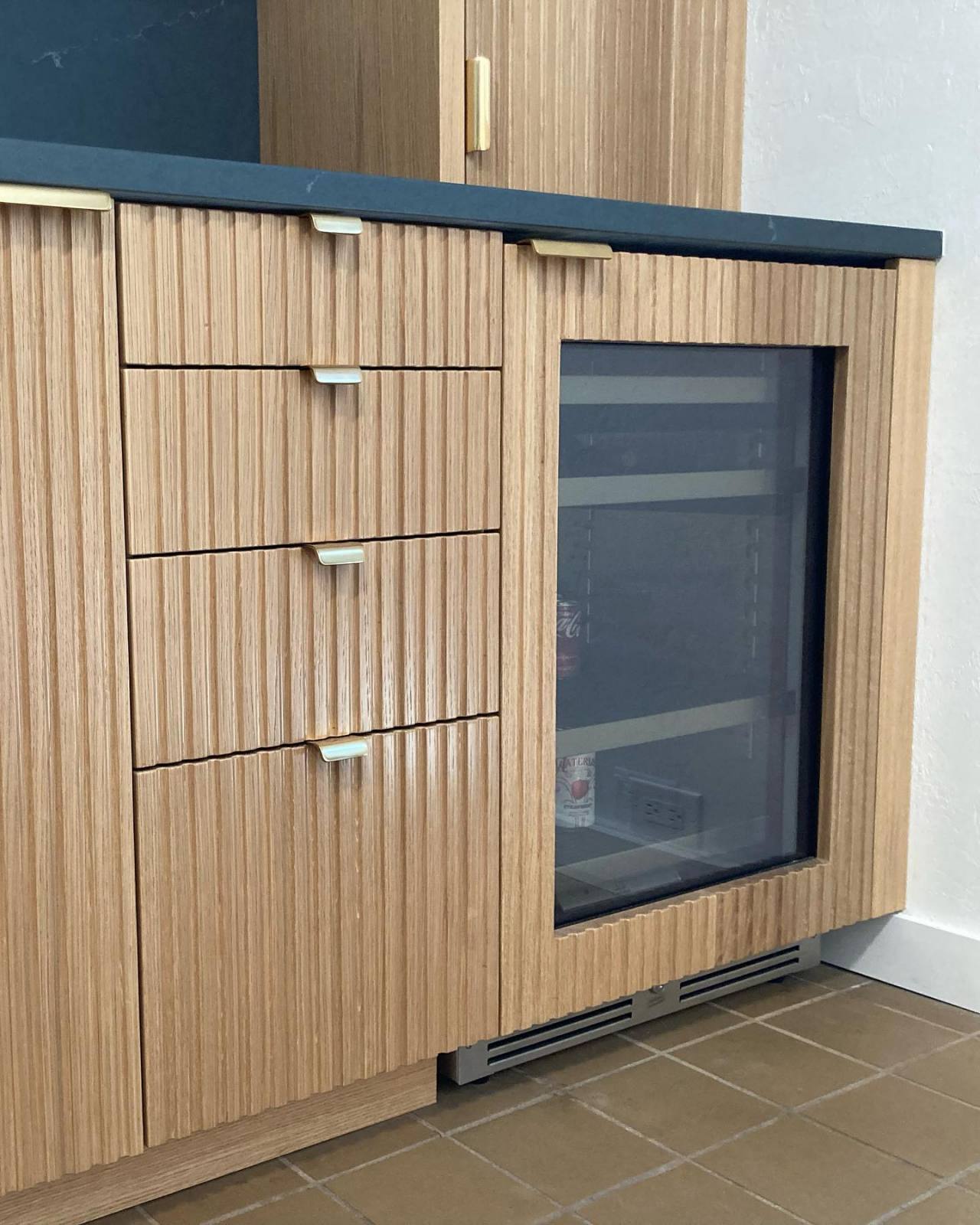
Reeded solid white oak from the mind of @amanda7055 Built and installed #strawwoodwork #reededwhiteoak #interiordesign #interiordesigner

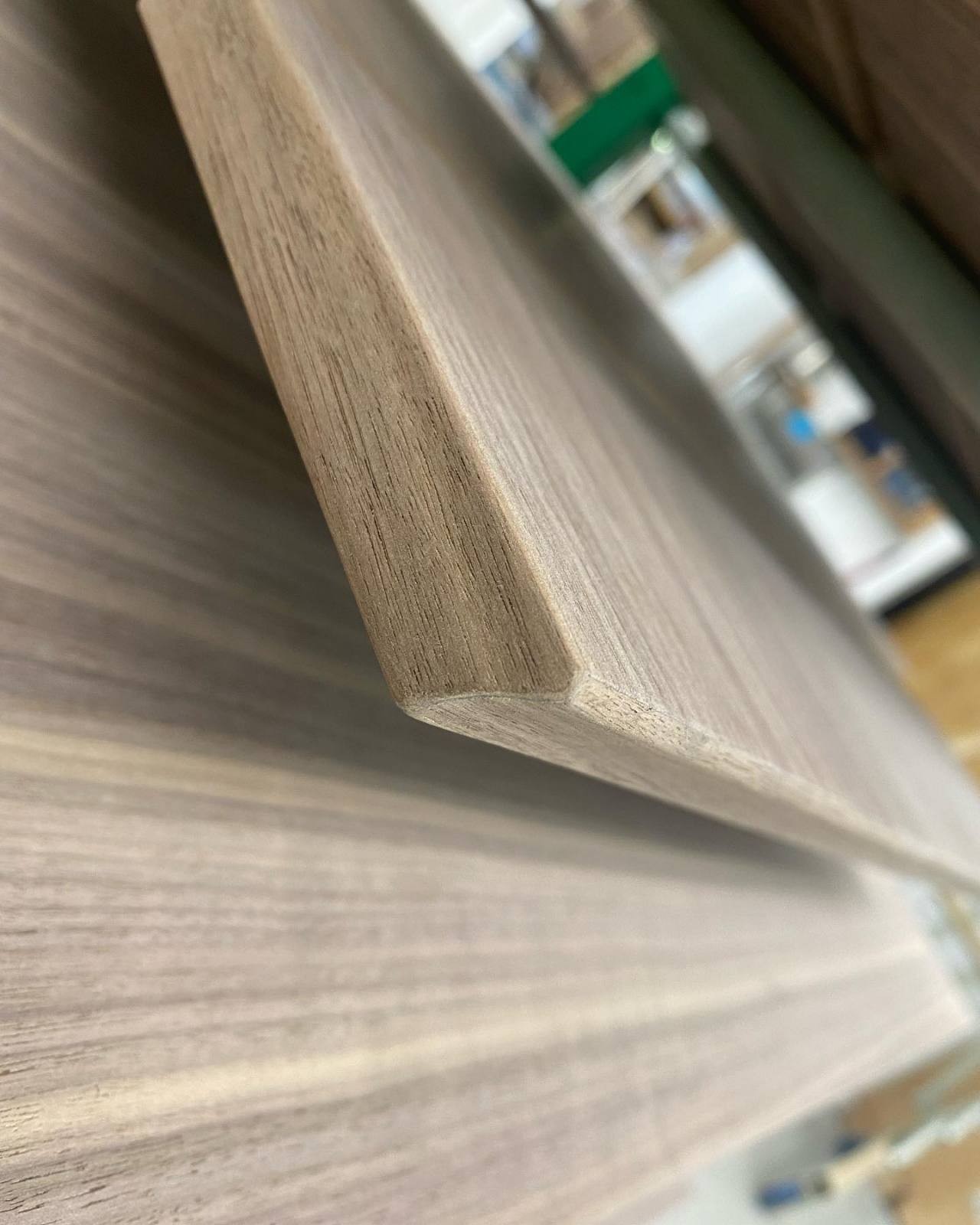
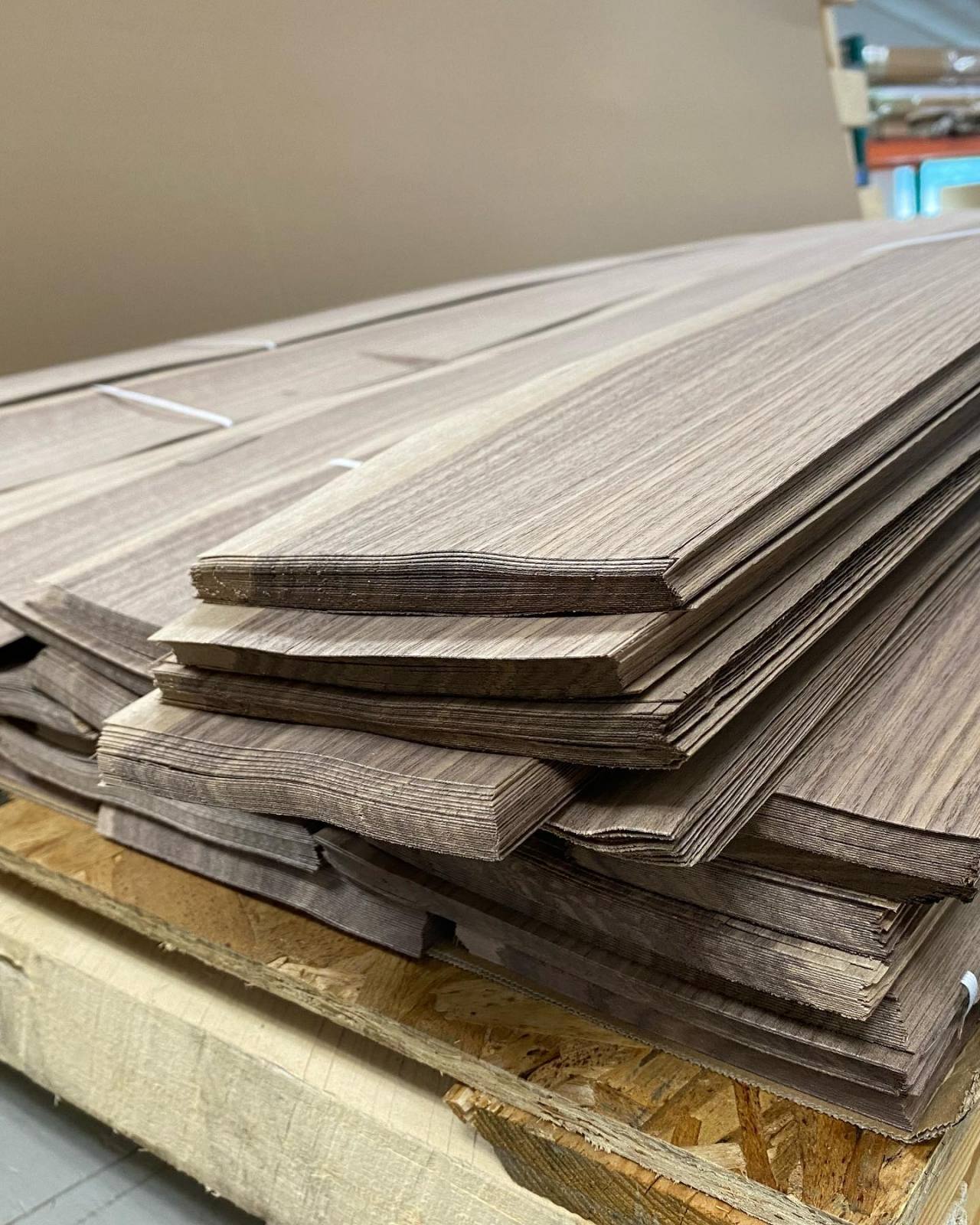
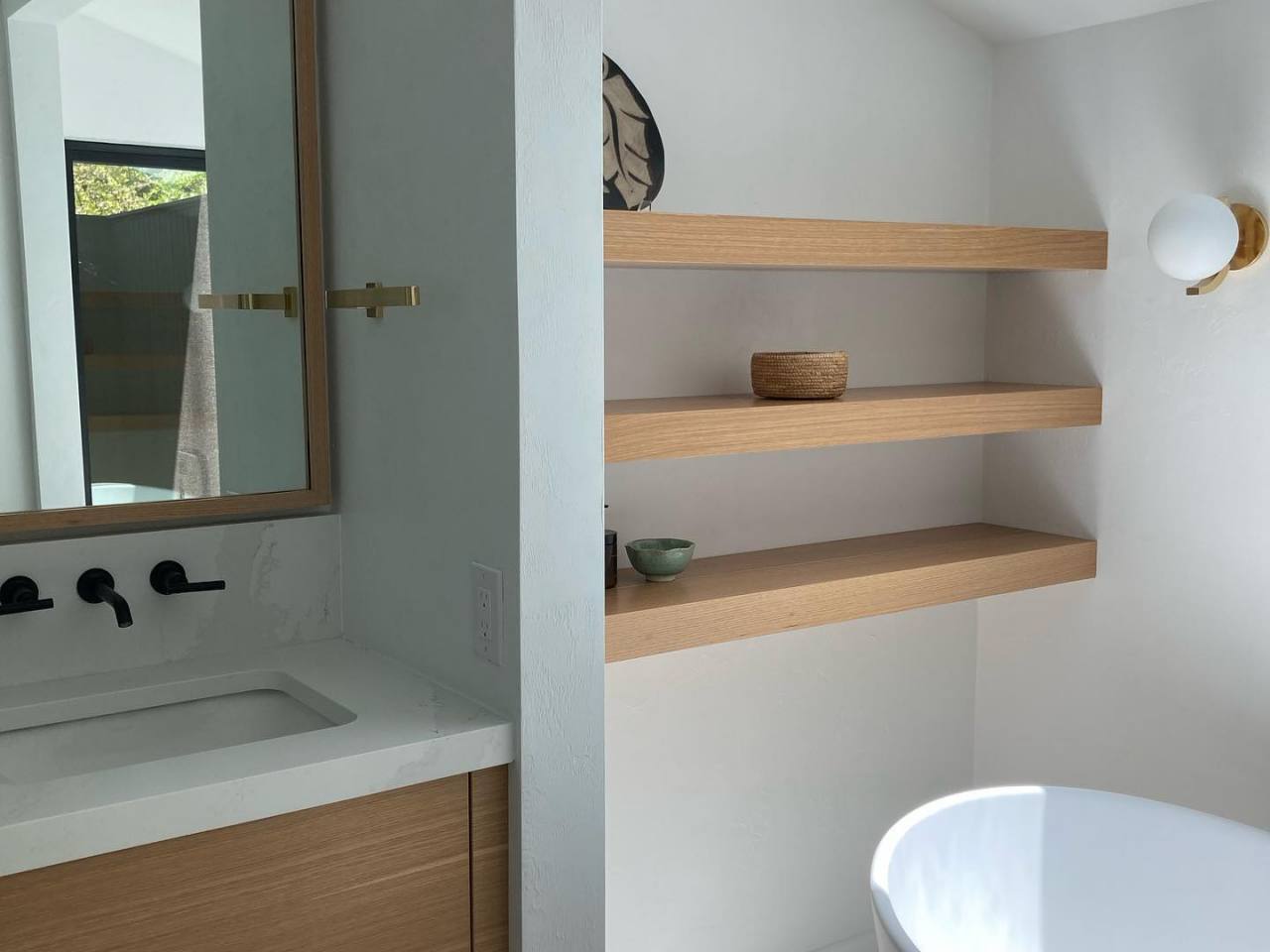
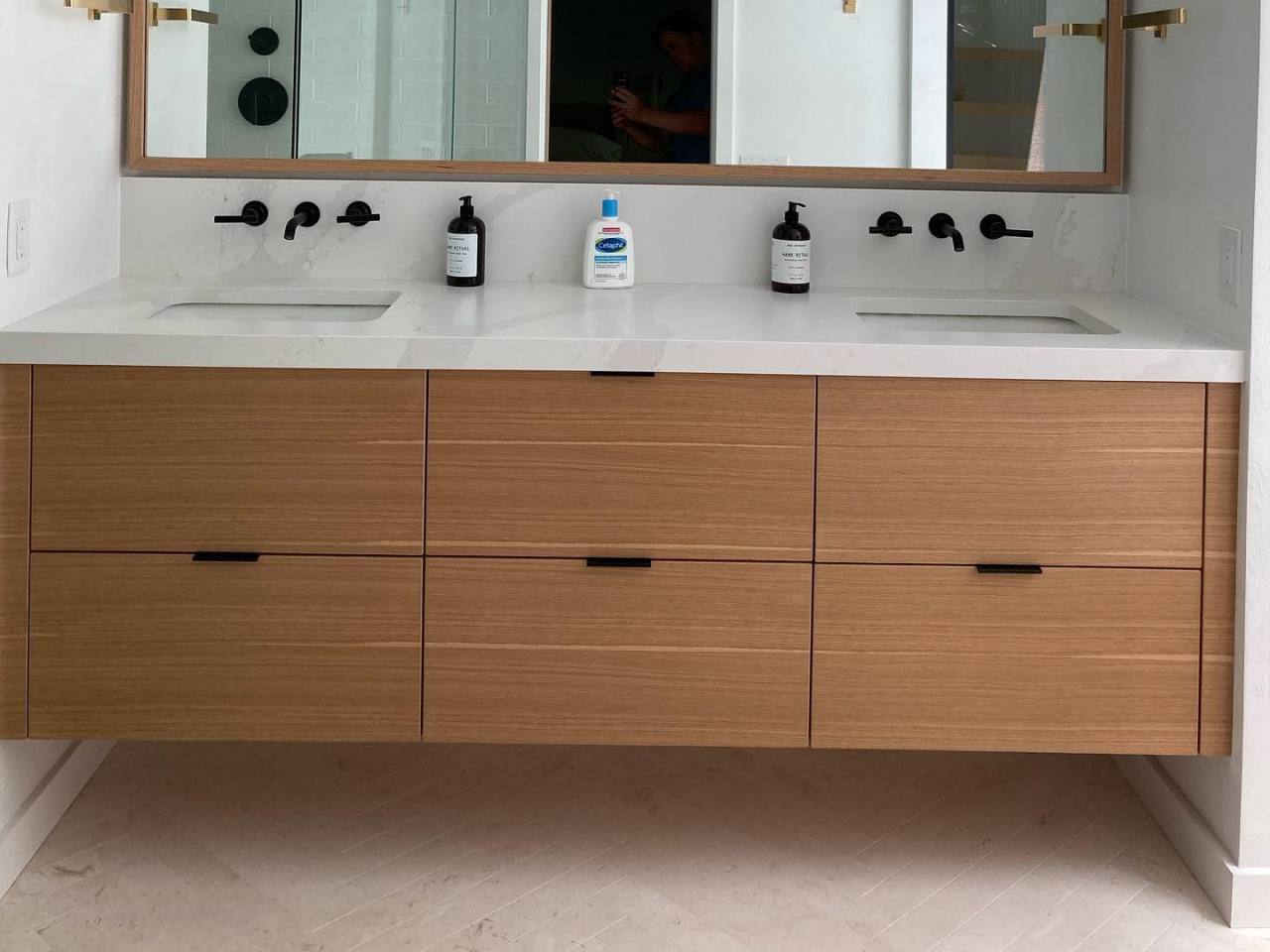
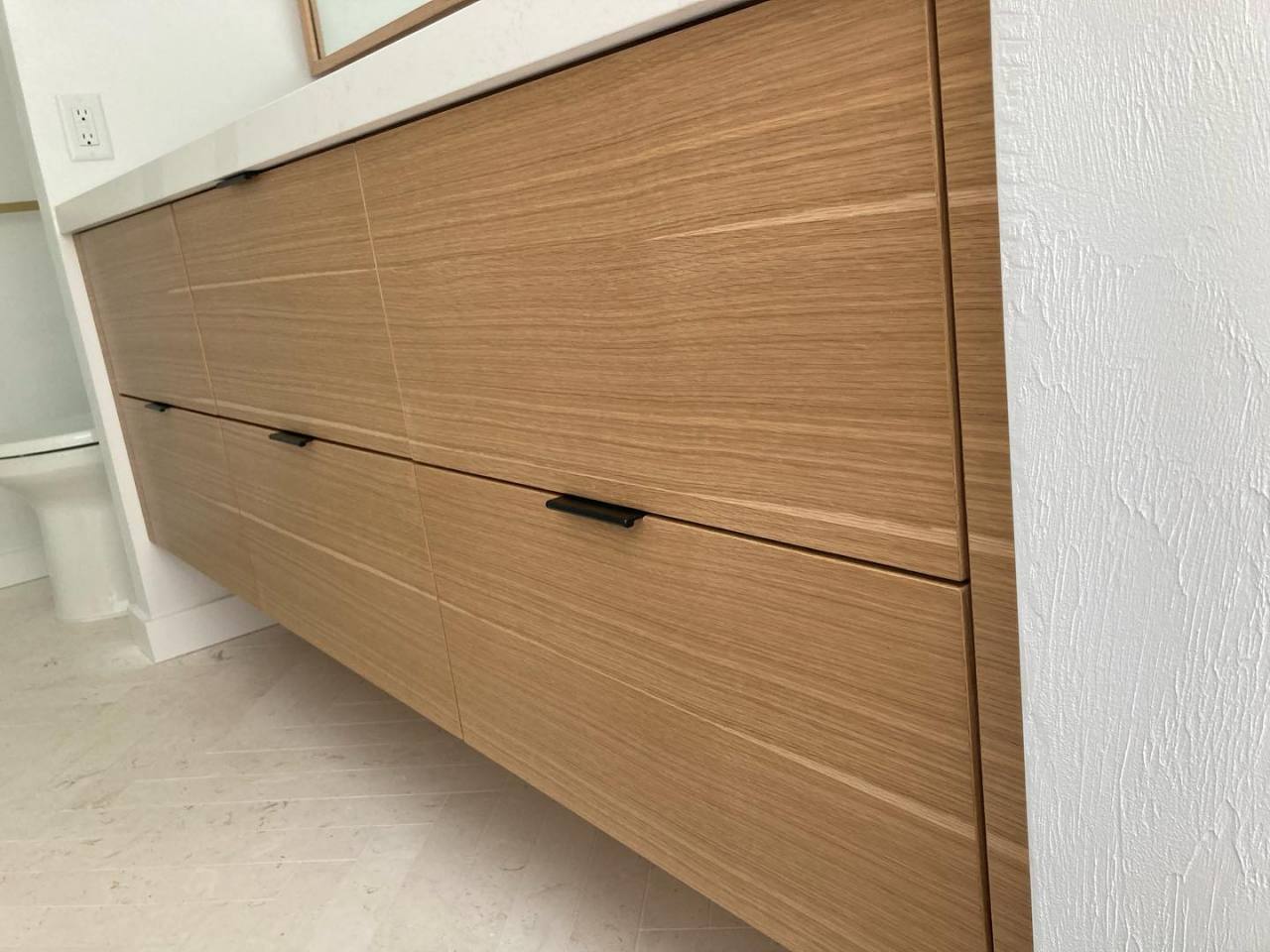
Rift white oak vanity. Grain matched and sequenced. We do all our own veneer work, in-house. There are very few shops that press their own veneer. Thanks @amanda7055 for your impeccable design work, again! #strawwoodwork #riftwhiteoak #interiordesign