
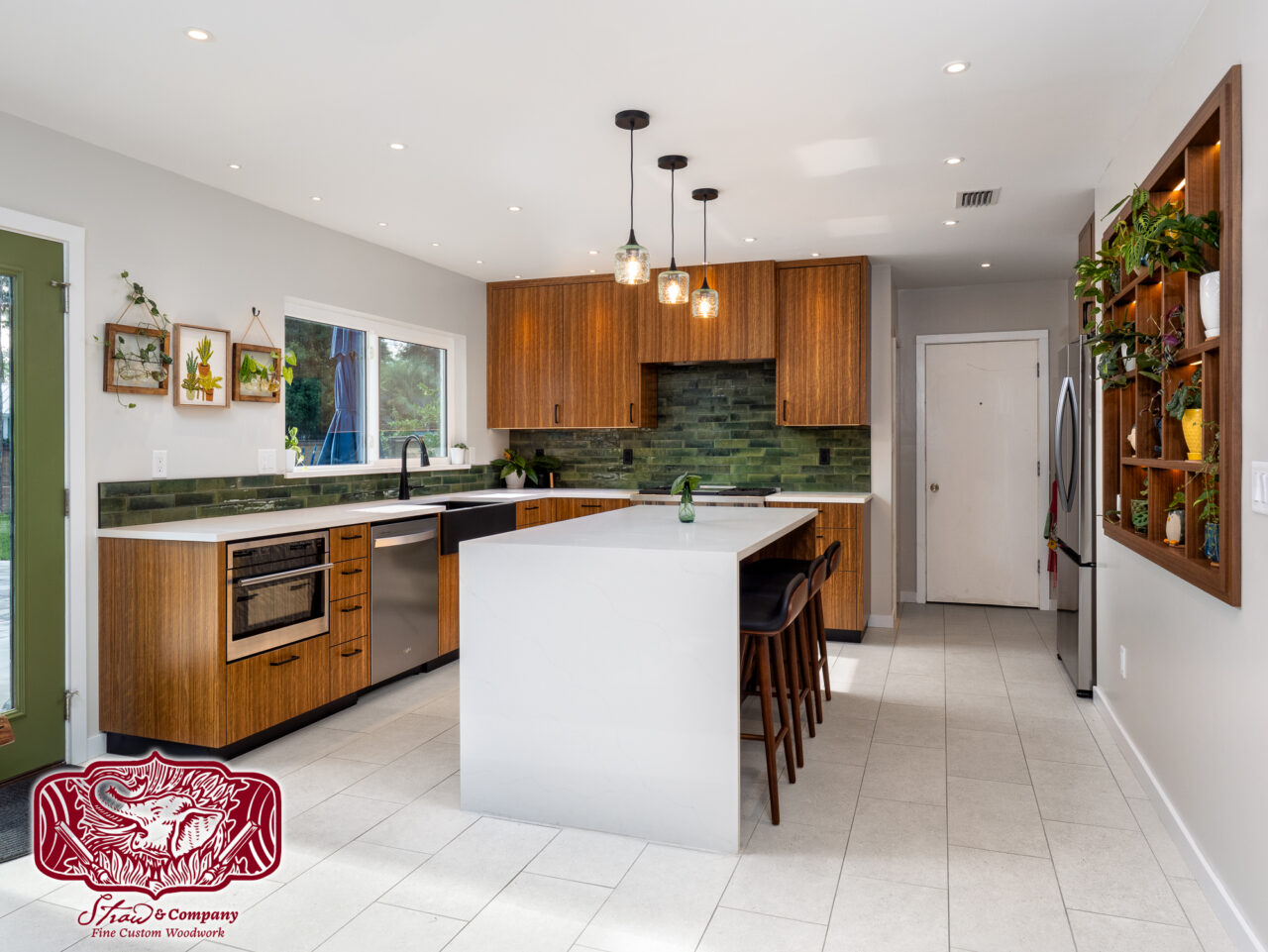
The kitchen is one of the most functional spaces in any home, and two elements define how well it works and how good it looks: cabinetry and lighting. Most homeowners think about these separately — cabinets during the design phase, lighting almost as an afterthought. But when lighting and cabinets are planned together from the start, the result is a kitchen that is not only beautiful but genuinely easier to use every day.
This post breaks down how lighting and cabinets interact, the types of lighting worth considering, and how to approach the planning process so both elements work in harmony.
Why Lighting and Cabinet Design Are Inseparable
Cabinetry defines the structure and layout of your kitchen. It determines where your walls are, where your upper cabinets sit, where your island begins and ends, and how your storage is organized. Lighting, in turn, responds to all of that structure.
If lighting is added after cabinetry is installed without any prior planning, you often end up with shadows in the wrong places, under-lit work surfaces, and fixtures that compete visually with your cabinet design rather than complement it. The relationship between the two is not decorative — it is functional and structural.
When a custom cabinetry project is designed thoughtfully, lighting becomes part of the plan. Recessed channels, interior cabinet wiring, and toe kick details can all be built directly into the cabinetry before installation, making the finished result look intentional and clean.
Task Lighting: Illuminating Where You Actually Work
Task lighting is the most practical category of kitchen lighting, and cabinets are its natural home. Under-cabinet lighting is the most common form — fixtures mounted to the underside of upper cabinets that direct light directly onto the countertop below.
For custom modern kitchens, LED strip lighting integrated flush into the cabinet base is the preferred approach. It avoids the visible hardware of surface-mounted puck lights and creates an even wash of light across the entire countertop rather than isolated bright spots.
The quality of this light matters. Color temperature — measured in Kelvins — affects how food, surfaces, and finishes look. A range between 2700K and 3000K produces warm white light that flatters wood tones and natural stone without making the kitchen feel clinical. For kitchens with a colder, more modern aesthetic, 3500K to 4000K can work well, but should be chosen carefully in relation to the cabinet finish.
When designing custom cabinetry, the depth and profile of the upper cabinet base can be modified to conceal LED drivers and wiring, keeping the installation invisible from normal sightlines.
Ambient Lighting and How Cabinets Frame It
Ambient lighting provides the general illumination of the kitchen — the baseline level of light that fills the room when you walk in. Recessed ceiling fixtures are the most common source, but the placement of those fixtures is directly influenced by cabinet layout.
Upper cabinets that extend to the ceiling, for example, affect where recessed lights can be positioned. An island’s footprint determines where pendant fixtures make sense. A tall pantry cabinet or refrigerator surround changes how light travels through the room.
Working with a custom cabinet maker early in the process means these relationships can be mapped out before anything is built or installed. Ceiling lighting can be positioned to avoid casting shadows onto work surfaces, and the overall light plan can account for how cabinet depth and door swing will interact with each fixture.
Interior Cabinet Lighting: Function and Detail
Interior cabinet lighting has become increasingly common in custom kitchen design, and for good reason. Glass-front upper cabinets, open shelving sections, and deep pantry cabinets all benefit from interior light sources.
For glass-front cabinets, interior LED lighting transforms display storage into a design feature. The light draws the eye, adds depth to the kitchen, and makes the cabinet contents — whether glassware, dishware, or decorative objects — look deliberate and curated.
For deep pantry cabinets or tall storage towers, interior lighting is a practical necessity. Without it, items stored toward the back of a shelf are difficult to see and easy to forget. A simple LED strip mounted at the front edge of each shelf solves this problem entirely.
In custom cabinetry, interior lighting can be wired directly through the cabinet box during construction, with door-activated switches that turn the light on when the door opens and off when it closes — the same principle as a refrigerator. This level of integration is only possible when lighting is considered during the build, not after.
Toe Kick Lighting: Subtle but Effective
Toe kick lighting is one of the more understated details in a well-designed kitchen, and one that most homeowners only notice when it’s done well. LED strips mounted in the toe kick recess at the base of lower cabinets cast a soft glow along the floor, creating the appearance that the cabinets float slightly above the surface.
Beyond the visual effect, toe kick lighting serves a practical purpose. It provides low-level ambient light for nighttime kitchen use without requiring overhead lights to be turned on — useful for early mornings, late evenings, or households with young children.
Custom cabinetry makes toe kick lighting straightforward to integrate. The channel is built into the base during construction, wiring is routed cleanly, and the finished result looks like it was always meant to be there.
Planning Lighting and Cabinets Together: The Practical Approach
The most important takeaway is that lighting should be part of the cabinet design conversation, not a separate one. When you work with a custom cabinet maker, bring your lighting intent to the first meeting. Know whether you want under-cabinet lighting, interior lighting, or toe kick details. Have a general sense of your fixture choices for the ceiling.
This allows the cabinetry to be designed around the lighting plan — with the right base profiles, wiring channels, and structural details built in from the start. The result is a kitchen where nothing looks like it was added later, because nothing was.
Good lighting does not just illuminate a kitchen. It reveals the craftsmanship of the cabinetry, defines the character of the space, and makes the room more functional every single day. When the two are designed together, the difference is immediately visible — and felt every time you walk into the room.
Straw Woodwork specializes in custom cabinetry built to work with your home’s unique design. If you’re planning a kitchen project, we’d love to be part of the conversation from the beginning.